
✓ 24/7 automatic processing of online orders
✓ Knowledgeable and professional Product & Technical Support
✓ Fast and reliable (re)-ordering
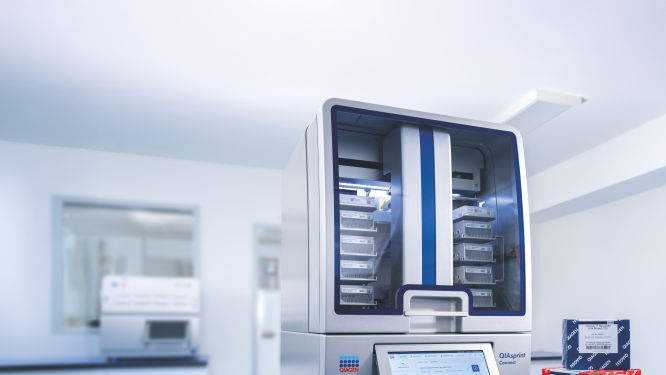
QIAsprint Connect
Cat no. / ID. 9001234
Benchtop instrument for automated magnetic particle based nucleic acid purification from up to 2x96 samples in parallel using QIAsprint extraction chemistry; includes required instrument accessories, and 1-year warranty on parts and labor.
Product TypeKit
QIAsprint Connect
QIAsprint Consumables
Accessories
Services
QIAsprint Connect are intended for molecular biology applications. The products are neither intended for the diagnosis, prevention, or treatment of a disease, nor have they been validated for such use either alone or in combination with other products.
✓ 24/7 automatic processing of online orders
✓ Knowledgeable and professional Product & Technical Support
✓ Fast and reliable (re)-ordering
Features
- Process up to192 samples of DNA/RNA per run to meet the demands of high-throughput labs
- Purify DNA/RNA even from complex matrices
- Customize protocols for specialized applications using the modular kit system
- Prevent cross-contamination in sensitive assays with built-in decontamination
- Monitor runs remotely via QIAsphere to maximize walk-away efficiency
- Cut plastic consumable waste by up to 50% compared to standard consumables in the market through our novel thin-walled plates
Product Details
The QIAsprint Connect is a magnetic bead extraction system designed for automated high-throughput nucleic acid purification for up to 2 x 96 samples. The system features two plate hotels and integrated heating and cooling capabilities to support efficient lysis and overnight runs. With a compact benchtop footprint, the instrument can fit seamlessly into high-throughput labs. QIAsprint Connect features 21 CFR Part 11 readiness, secure user management, electronic records and full audit traceability.
Researchers can run QIAGEN-validated protocols or customize their own via an intuitive touchscreen interface that makes it easy to use, even for new users. The instrument supports diverse sample types including cells, tissue, whole blood, plant material and microbiome samples through the modular kit system. This allows for maximum flexibility for different applications (see Applications).
A novel consumable concept reduces plastic use by up to 50% and packaging volume by 40% compared to standard consumables in the market helping labs scale more sustainably without compromising performance.
For labs under pressure to increase throughput, control waste and maintain flexibility, QIAsprint Connect brings performance, usability and sustainability together in one compact platform (see QIAsprint AR tool).
For Research Use Only. Not for use in diagnostic procedures.
Principle
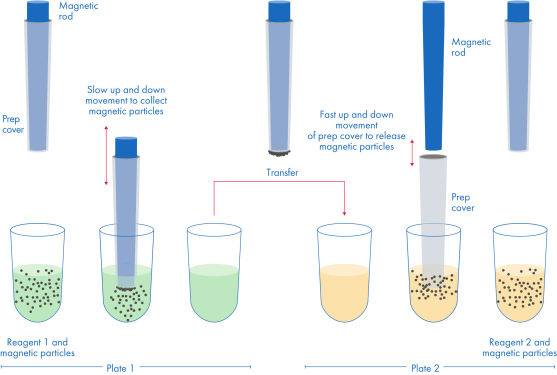
QIAsprint Connect uses an automated magnetic rod technology to purify nucleic acids with precision and consistency at high-throughput levels. A magnetically driven rod enclosed in a protective prep cover is lowered into each sample well, capturing magnetic particles bound to nucleic acids and lifting them from the solution (see Working principle of the QIAsprint Connect).
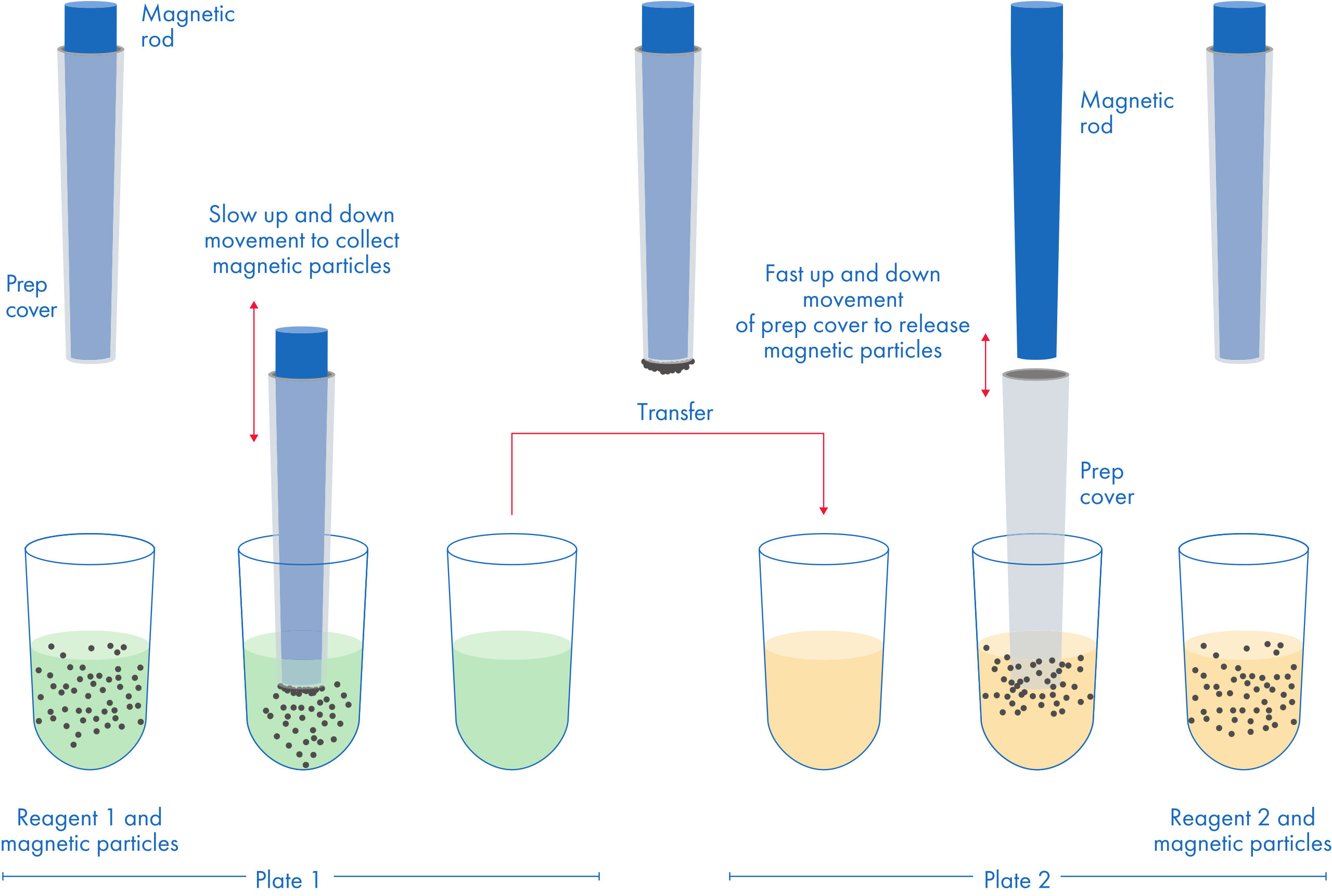
The particles are then transferred into the next well containing wash buffer. When the magnet retracts, the particles are released and gently resuspended and mixed through controlled up-and-down movement of the prep cover. This bind, transfer and release sequence is repeated across multiple wells to ensure thorough purification and reliable results.
With an integrated magnetic head containing 96 rods, QIAsprint Connect processes up to 96 samples in parallel, supporting scalable, reproducible nucleic acid purification in demanding lab environments.
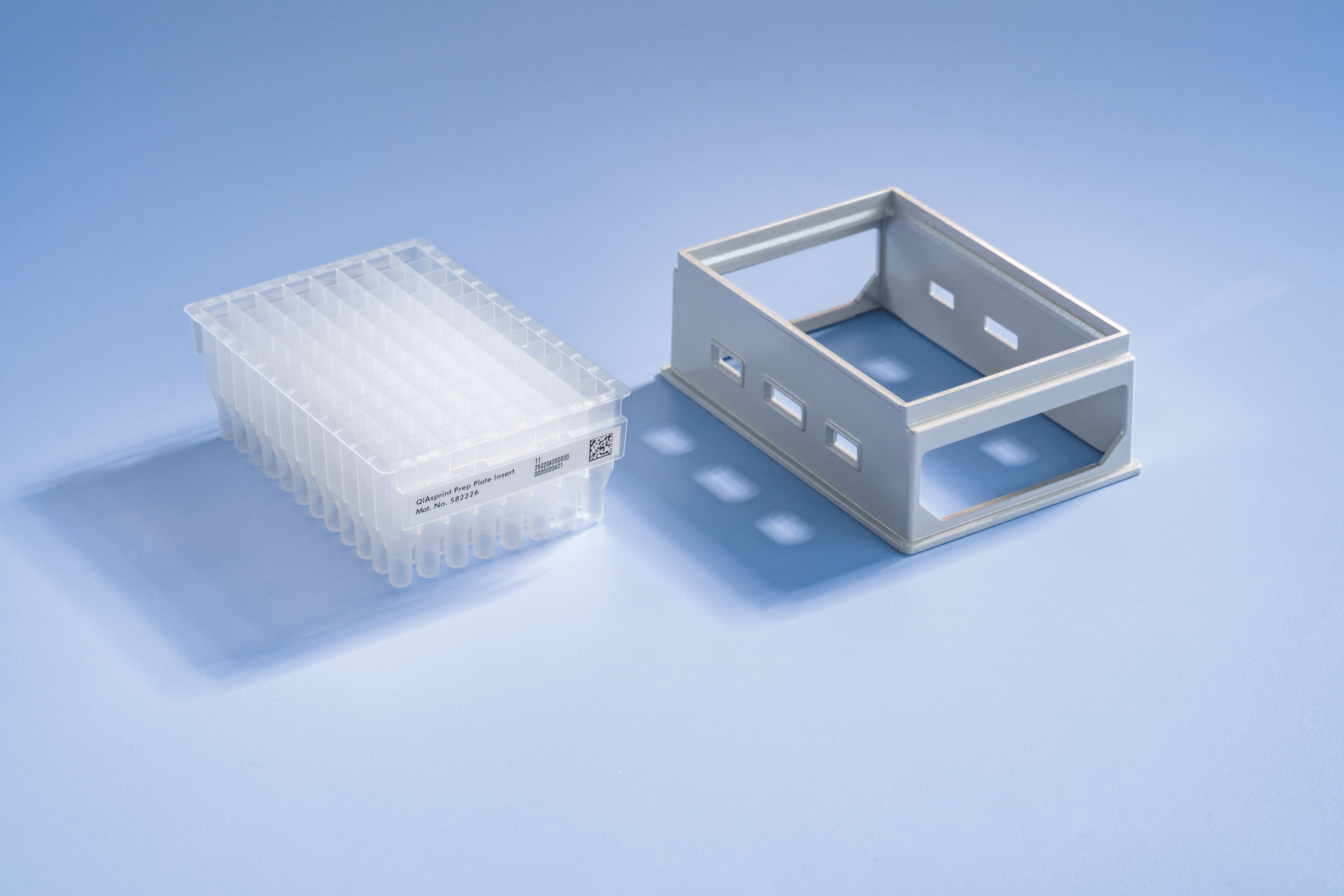
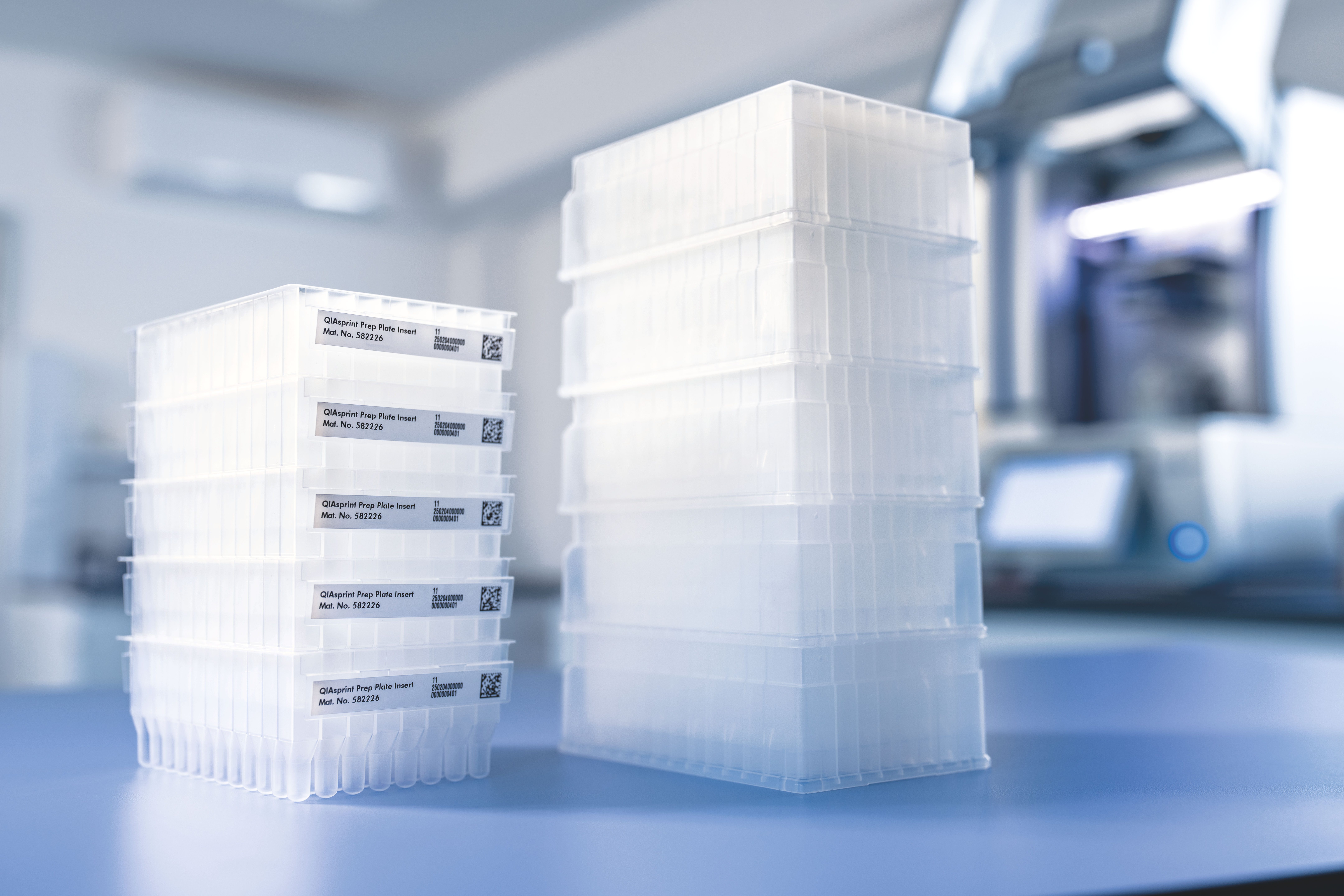
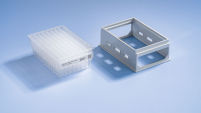
The system also features a redesigned consumable concept to support more sustainable operations. Based on internal comparisons, reusable metal frames combined with thin plastic inserts reduce plastic consumption by up to 50% compared to standard deep-well plates (see Thin-walled consumables paired with a reusable metal frame). Stackable plate inserts reduce kit box volume by up to 40%, optimizing storage space and improving shipping efficiency without compromising performance (see Stackable prep plates that reduce storage and logistics burden).
Procedure
Running samples on the QIAsprint Connect is designed to be straightforward and efficient. Samples and reagents are prepared according to the application protocol and loaded together with the required consumables. Through the touchscreen interface, users select the appropriate protocol and confirm that all plates and modules are correctly positioned. Protocols can also be modified or created from scratch to match specific workflow requirements. Once the run starts, the system performs the magnetic-bead purification workflow automatically, transferring particles between wells and executing the bind, wash and elution steps with minimal user intervention. When the run is complete, purified nucleic acids are ready for downstream applications and the instrument can be quickly prepared for the next batch.
Applications
QIAsprint Connect supports a growing portfolio of validated applications across key biological samples:
- DNA
- RNA
- Microbiome and pathogens
With QIAGEN validated protocols on QIAsprint Connect, users can obtain high quality nucleic acid, suitable for demanding downstream applications, including next-generation sequencing (NGS), digital PCR (dPCR), qPCR and RT-PCR.
Modular Kit Concept
The QIAsprint modular kit system is built around a highly flexible, modular design that works like a set of building blocks. Each workflow is assembled by combining a sample-specific PrepSet with the appropriate Essential Kit and optional Add-on modules. This structure allows users to configure exactly the workflow they need – whether purifying DNA, RNA, miRNA, viral nucleic acids, plasmid DNA or microbial DNA (see Modular kit system concept). By mixing and matching these modules, laboratories can easily adapt to new applications, scale their throughput and maintain consistent purification performance across all workflows. In addition to combining different modules, nearly all buffers and reagents used within the system are available as standalone items, offering additional customization options for specialized workflows (see QIAsprint sets and consumables finder).
| PrepSets | Essential Kits | Add-ons |
|
Sample-specific pretreatment PrepSets provide lysis and pretreatment chemistry optimized for various sample types. PrepSets address differences in complexity and inhibitors to ensure consistent input for automated extraction. |
The automation backbone The Essential Kit drives the automated bind, wash and elute steps using proven magnetic particle technology. One Essential Kit can be paired with multiple Prep Sets, keeping workflows consistent. |
Targeted adaptation when needed Add-ons introduce optional chemistry for specific workflow needs, such as QIApHish for plasmid workflows or DNase treatment for RNA applications. These targeted additions allow protocol adaptation without complicating the core process. |
Services
Protect your instrument with diverse service solutions from QIAGEN. Learn more about a specific service agreement to match your needs.
Supporting data and figures
Working principle of the QIAsprint Connect
The QIAsprint Connect uses magnetic bead technology to isolate nucleic acids. The prep cover is used to mix buffers and beads. Magnetic rods inserted into the prep covers transfers the beads to the next plate, where the next step of the isolation process takes place.

Specifications
| Features | Specifications |
|---|---|
| Dimensions | 49 cm (19.3 in.) x 64 cm (25.2 in.) x 74 cm (29.1 in.) |
| Weight | 62 kg (137 lbs) |
| Touchscreen | T10’’ TFT Touchscreen |
| Operating temperature | 15–32°C (59–90°F) |
Sets & Consumables
QIAsprint Sets
Add ons
Consumables & Accessories
Resources
Operating Software (1)
User Manuals (1)
Technical Information (1)
Safety Data Sheets (1)
Certificates of Analysis (1)
FAQ
What needs to be ordered to run the instrument?
Is it possible to automate the QIAsprint chemistry on other platforms?
What is the best way to load the plates with buffers?
Can I trade in another instrument for a QIAsprint Connect?
Will there be pre-filled plates?
Can QIAGEN develop a customized protocol?
Does the QIAsprint do sample tracking?
Can I use other plastics than the QIAsprint Connect plastics on the instrument?