QIAprep Spin Miniprep Kit – 质粒纯化

用于纯化多达 20 μg 分子生物学级质粒 DNA

想首次尝试此解决方案吗?
立即联系我们的团队,为您的 QIAprep Spin Miniprep Kit (50) 试用版试剂盒索取报价。

QIAprep Spin Miniprep Kit (50)

目录编号 / ID.   27104

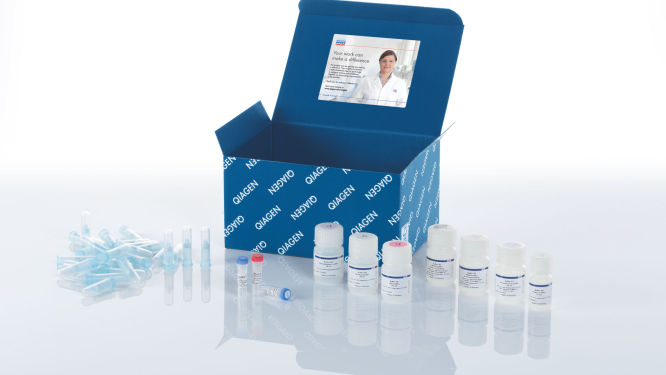
用于 50 次高纯度质粒小提:50 个 QIAprep 2.0 离心柱、试剂、缓冲液、收集管 (2 ml)
Kit离心柱
QIAprep Spin Miniprep Kit
QIAprep 2.0 Spin Miniprep Columns
Eco-friendlier kit
制备
50
250
1000
QIAprep Spin Miniprep Kit 旨在用于分子生物学应用。该产品不能用于疾病诊断、预防和治疗。
想首次尝试此解决方案吗?
立即联系我们的团队,为您的 QIAprep Spin Miniprep Kit (50) 试用版试剂盒索取报价。

特点

  • 数分钟内可纯化得到即用型质粒 DNA
  • 重复产出分子生物学级质粒 DNA
  • 对高拷贝和低拷贝载体都使用统一方案
  • 使用高产补充方案,产量更高
  • 改良版 QIAprep 2.0 Spin Column
  • GelPilot 加载染料,方便样本分析

产品详情

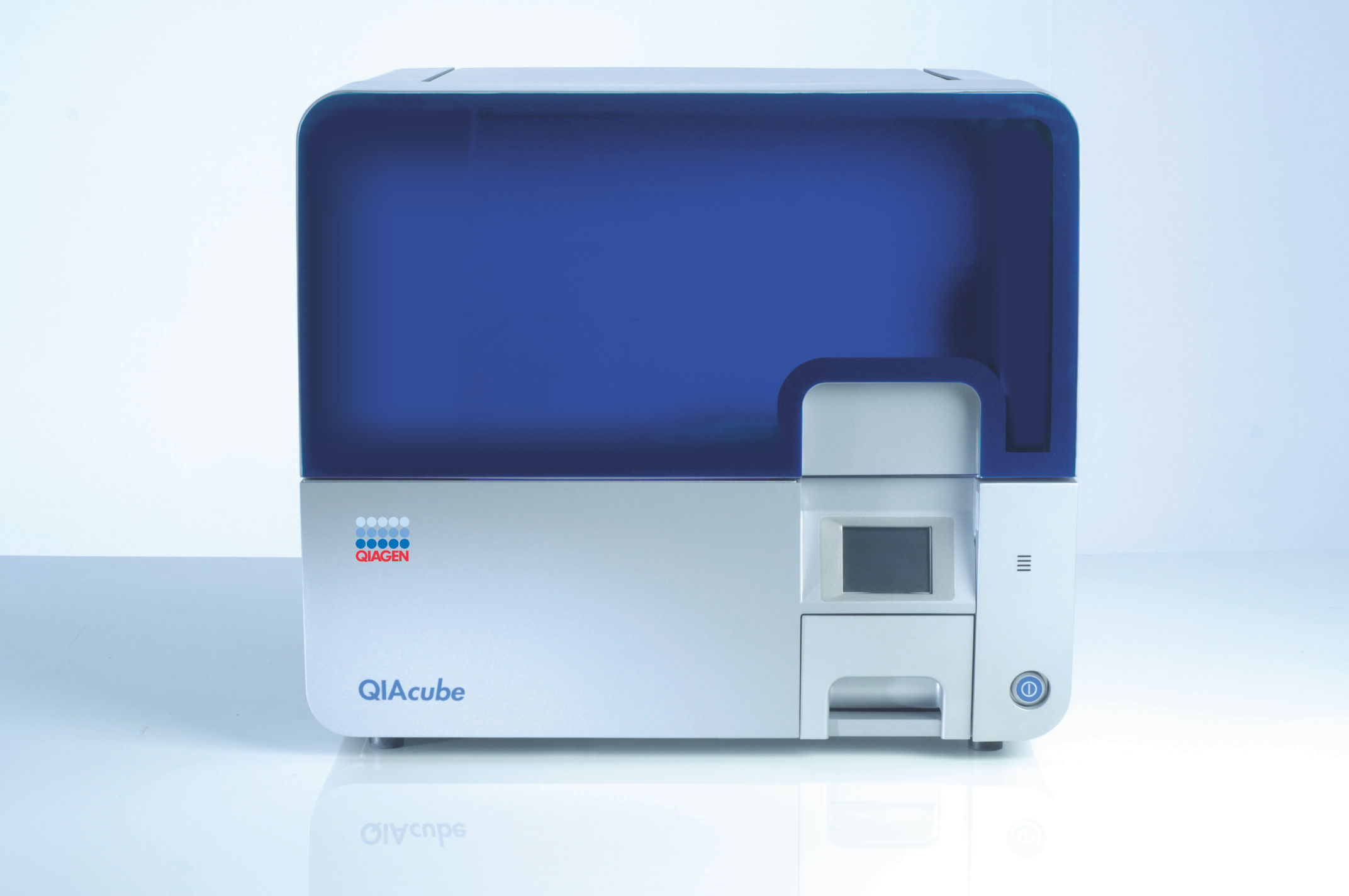
QIAprep Spin Miniprep Kit 专为分离高纯度质粒或柯斯质粒 DNA 而设计,产量高达 20 µg,适用于测序和克隆等各种分子生物学应用。使用高产补充方案可获得更高产量(高达 30 µg)。该试剂盒可在 QIAcube Connect 上自动运行。

想首次试用 QIAprep Spin Miniprep Kit 吗?获取试用试剂盒报价。

为获得最佳效果,我们建议将此试剂盒与 QIAvac 24 Plus 系统配对使用。

绩效

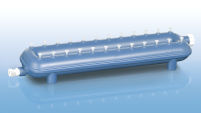
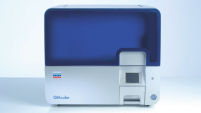
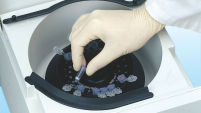
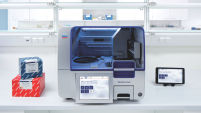
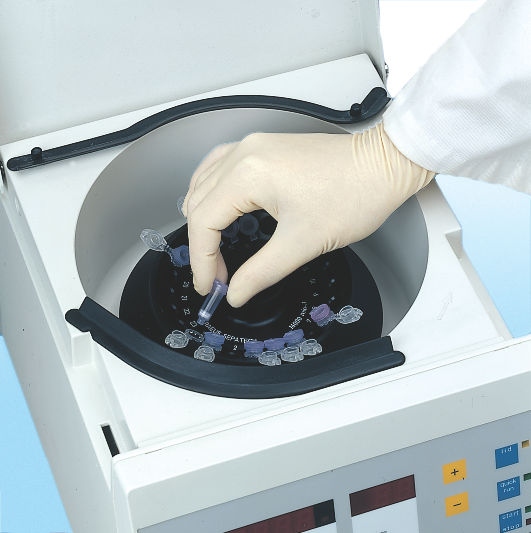
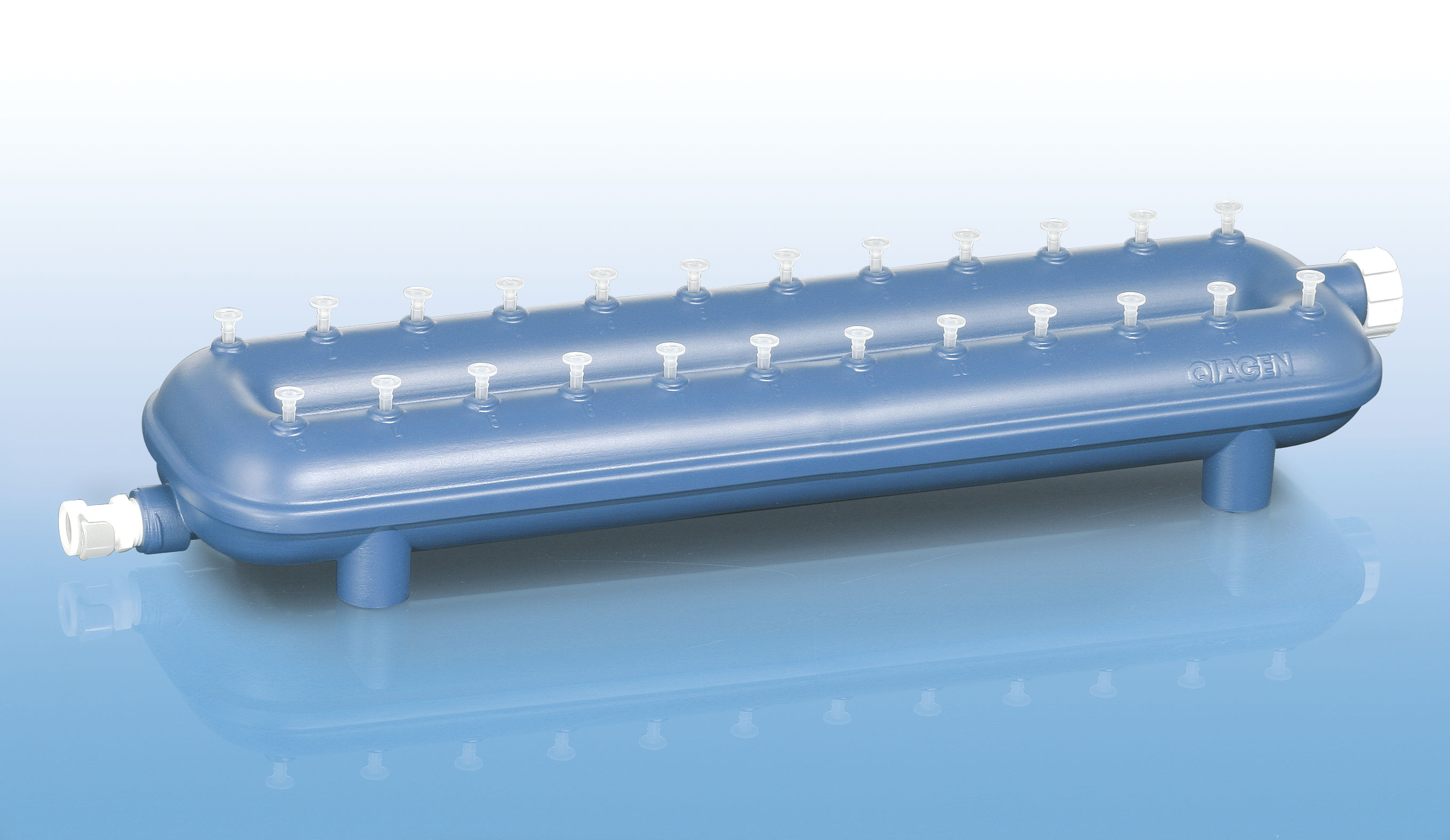
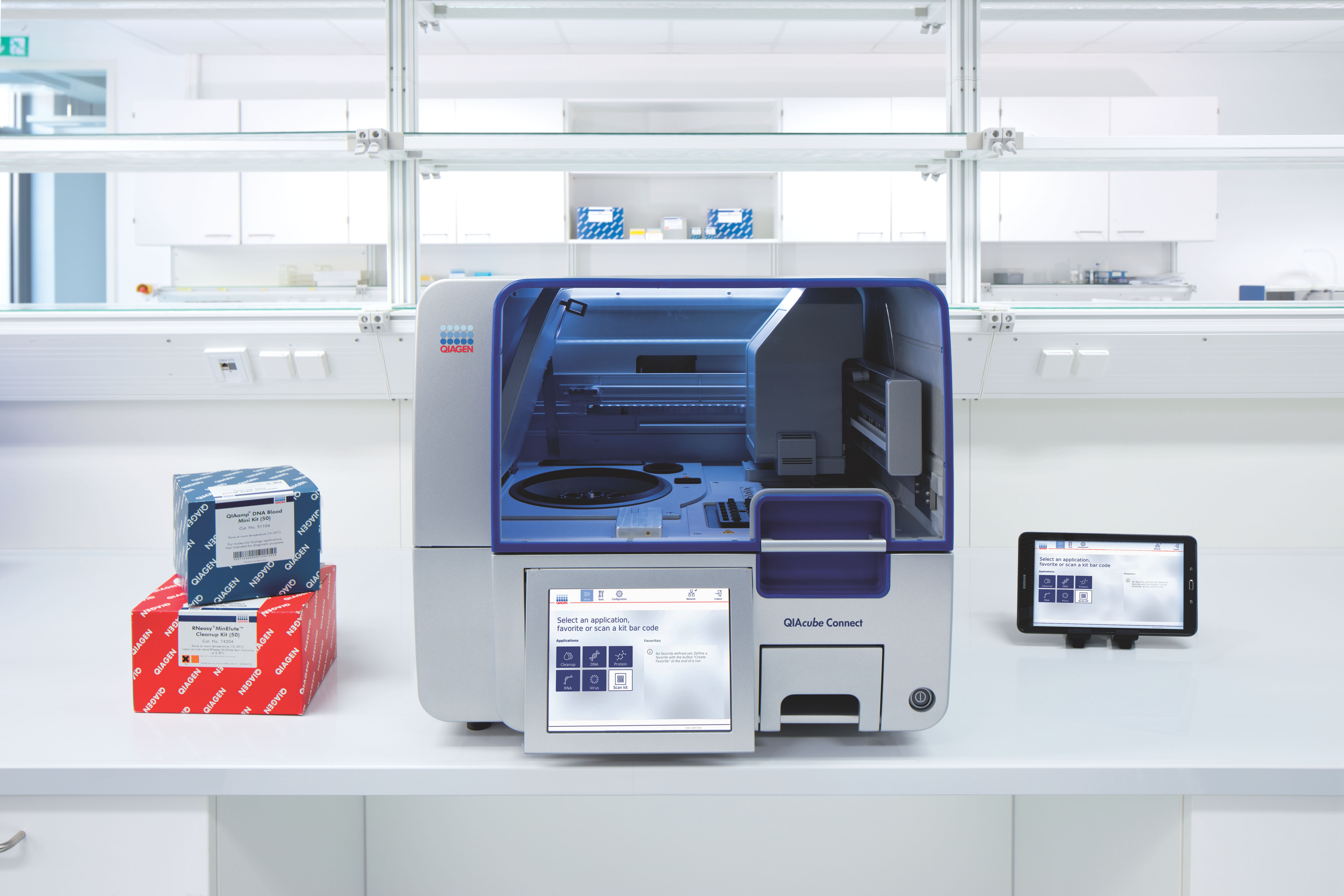
QIAprep Spin Miniprep Kit 或 QIAwave Plasmid Miniprep Kit 能够纯化多达 20 µg 分子生物学级质粒 DNA 或柯斯质粒 DNA,以用于常规分子生物学应用,如 PCR、测序和克隆。多功能 QIAprep 2.0 Spin Column 可用于微型离心机、真空歧管或 QIAcube (见图“QIAprep 2.0 Spin Column 处理选项  A B C”)。真空程序操作简单并可加快样本处理。QIAprep 2.0 Spin Column 可用 QIAvac 24 Plus 或任何其他带有鲁尔接头的商用歧管进行真空处理。QIAprep Spin Miniprep Kit 目前也可在 QIAcube Connect 上全自动运行(见图“ QIAcube Connect”)。

QIAwave Plasmid Miniprep Kit 和 QIAprep Spin Miniprep Kit 因化学技术相似而具有完全相同的性能。比较数据显示,这两种试剂盒的性能均优于竞品试剂盒(见图“QIAwave Kit 性能”)。


 QIAprep Spin 和 QIAwave Plasmid Miniprep Kit
格式 离心柱
纯化模块 QIAprep 2.0 Spin Column
通量 1–24 个样本
制备时间 30 分钟内完成 24 个小提
所需设备 微型离心机或真空歧管;使用 QIAcube Connect 进行全自动运行
裂解物澄清 离心
柱储液罐容量 800 µl
最小洗脱缓冲液体积 50 µl
高拷贝质粒培养容量 1–5 ml
低拷贝质粒/科斯质粒培养容量 1–10 ml

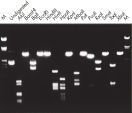
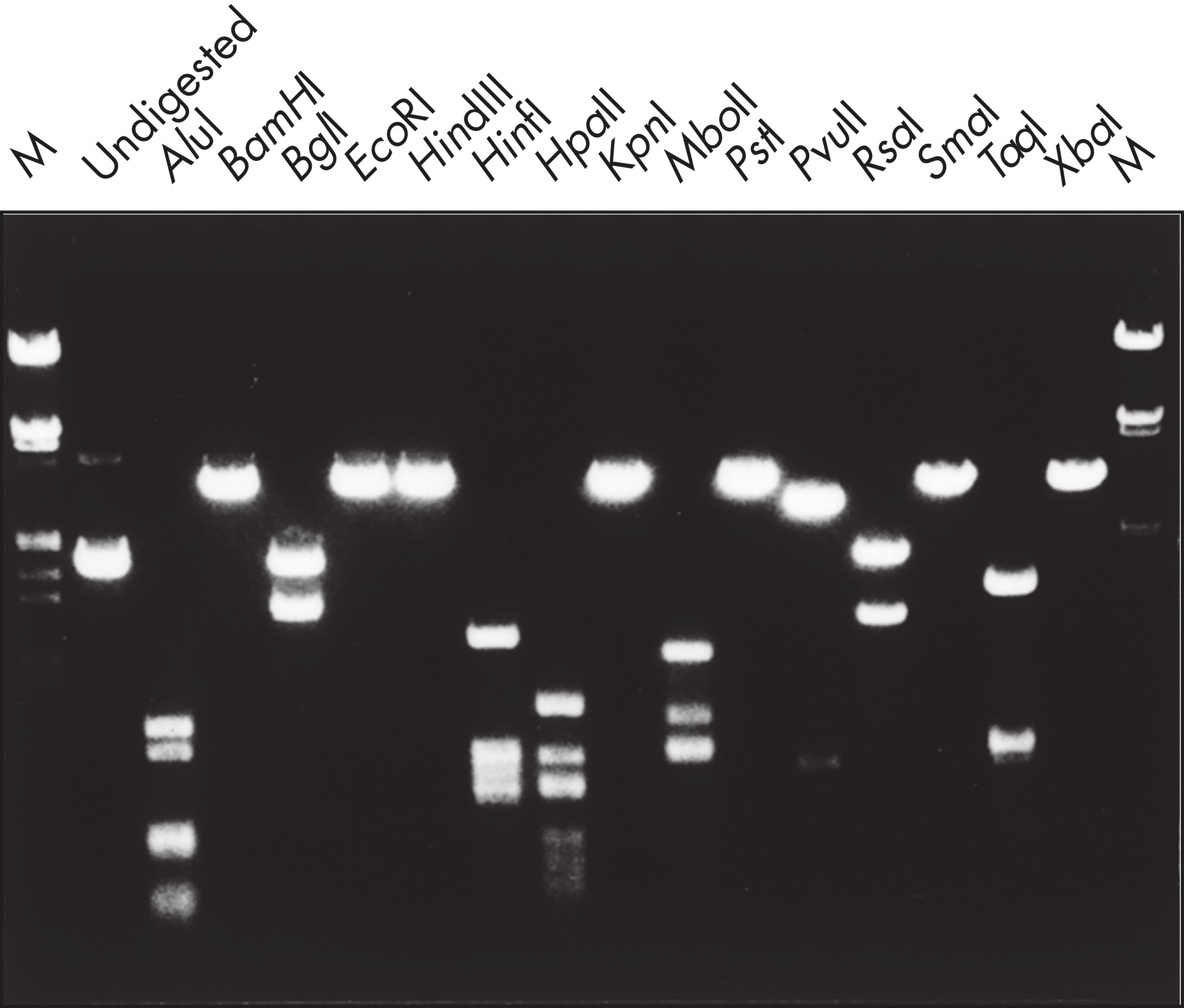
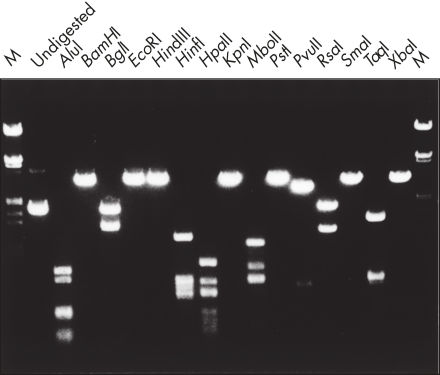
纯化得到的 DNA 可用于限制性酶切(参见图“ 用各种限制性内切酶进行完全酶切”)。 

原理

QIAprep 2.0 Spin Column 含独特的硅胶膜,在高浓度离液盐中可结合多达 20 μg DNA,然后用少量低盐缓冲液洗脱。QIAprep 膜技术去除了耗时的苯酚/氯仿提取和乙醇沉淀,并解决了树脂松散和稀浆带来的问题与不便。从 QIAprep 2.0 Spin Column 洗脱得到的高纯度质粒 DNA 可直接使用,无需沉淀、浓缩或脱盐。
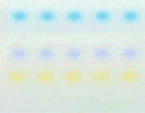
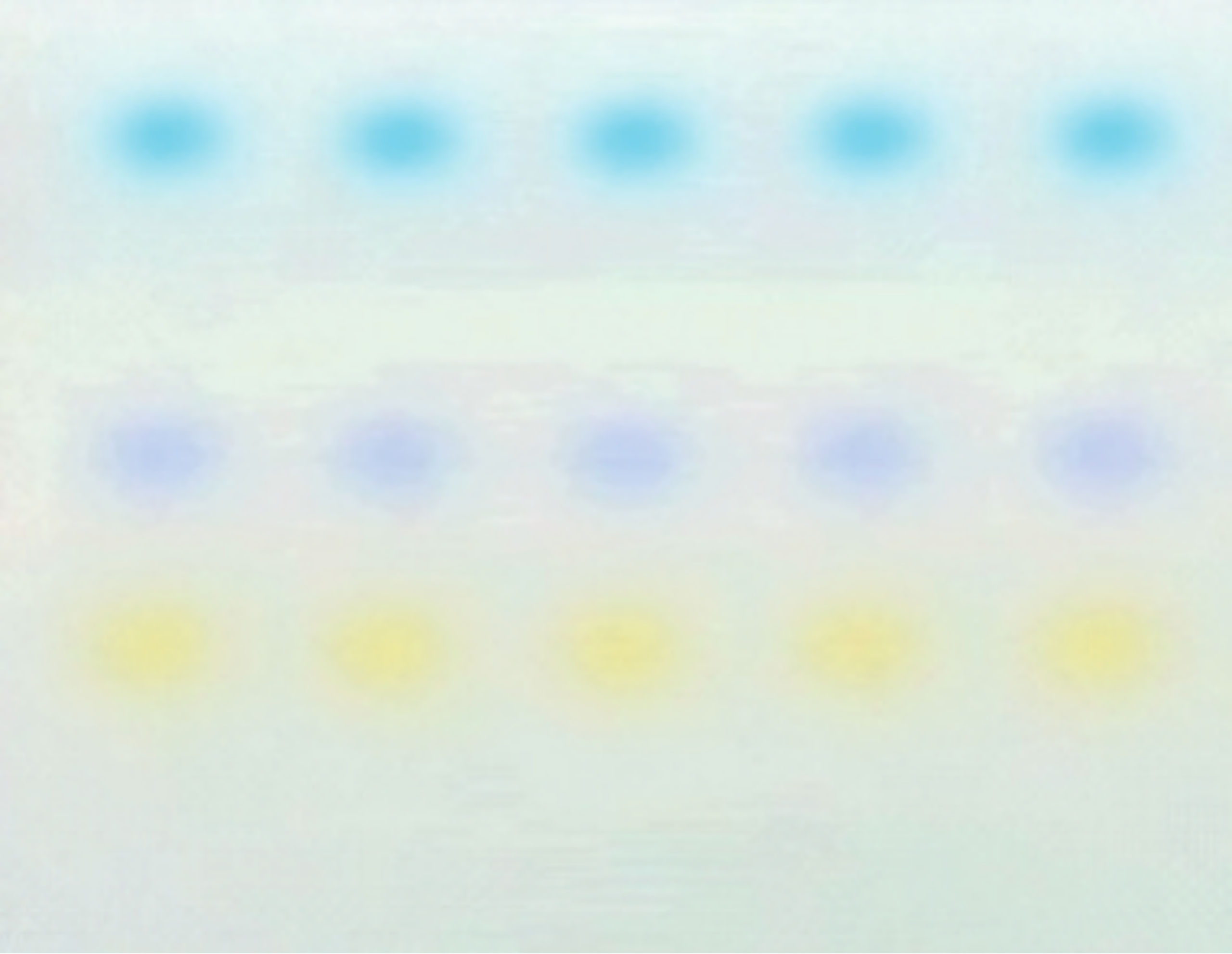
为了更快、更方便地进行样本处理和分析,试剂盒中提供了凝胶加载染料。GelPilot Loading Dye 包含 3 种跟踪染料(二甲苯胍青、溴酚蓝和橙黄 G),便于优化琼脂糖凝胶的运行时间,防止较小的 DNA 片段迁移过远(见图“ GelPilot Loading Dye”)。

如需可持续性更强的替代品,我们有 QIAwave Plasmid Miniprep Kit。这款试剂盒可分别减少高达 22% 和 14% 的塑料和纸板用量。它的废液管由 100% 再生塑料制成,可在整个过程中重复使用。浓缩形式 QIAwave 缓冲液每瓶可减少高达 93% 的塑料用量。尽管在外观上有所区别,但 QIAwave Kit 的化学技术和性能与标准试剂盒完全相同,易用性得到保持。

请注意,您需要无菌玻璃瓶来储存重组缓冲液。

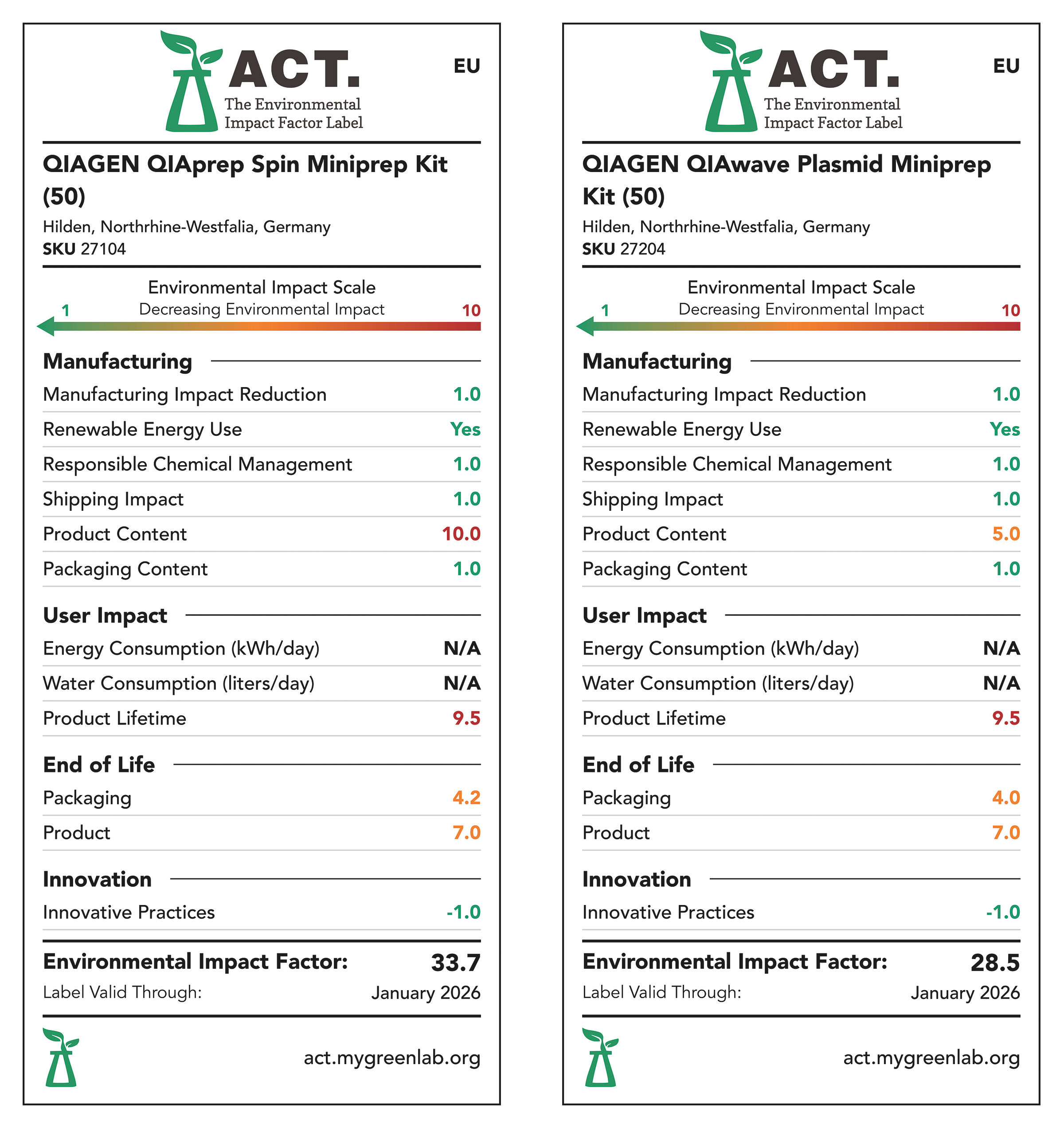
通过与 My Green Lab 合作,我们还评估了 QIAprep Spin Miniprep Kit (50/250) 和 QIAwave Plasmid Miniprep Kit (50/250) 对环境的影响。My Green Lab ACT 标签旨在根据若干可持续性标准对产品进行评估和评分。其中包括: 

• 制造 
• 负责任的化学品管理 
• 产品和包装材料中的可持续内含物 
• 包装报废时的处置 

 
除能耗和水耗分别按每 kWh 或每加仑 1 分计分外,其他产品均按 1-10 分计分。分数低意味着对环境的影响较小——(见图“Plasmid Miniprep Kits ACT 环境影响因子标签 US ( 50/ 250)、EU ( 50/ 250) 和 UK ( 50/ 250)。” 

程序

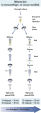
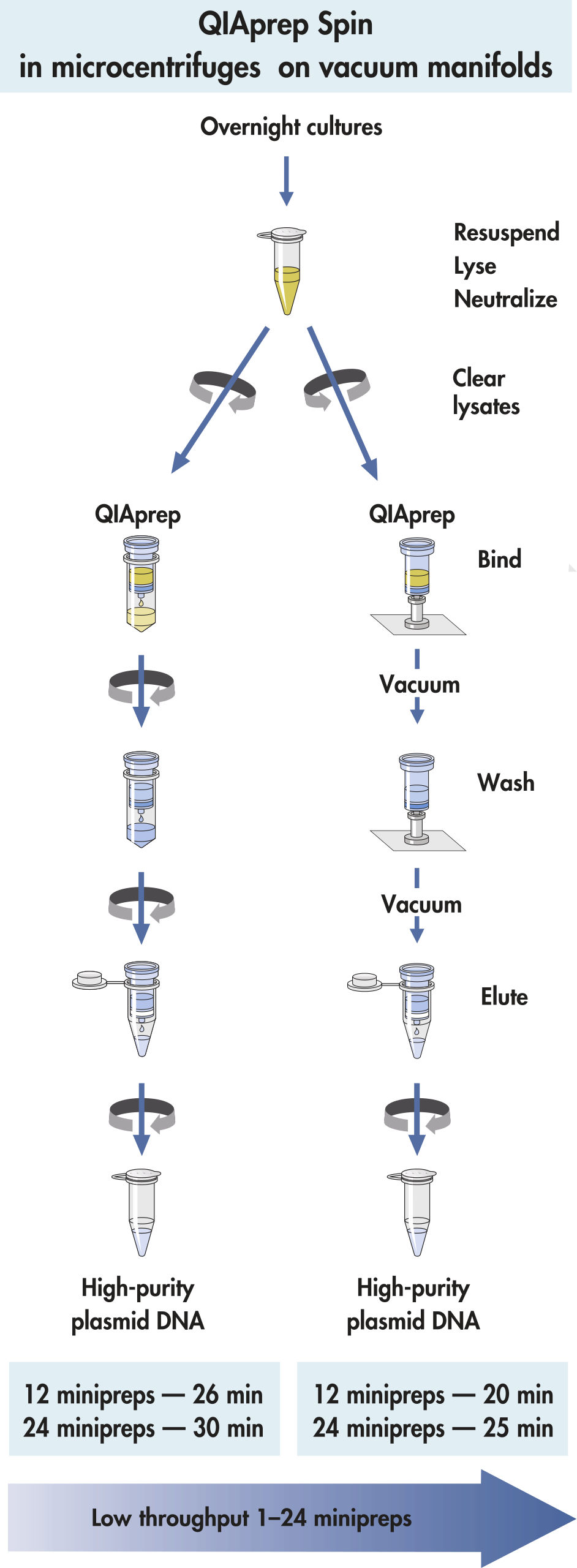
使用 QIAprep Kits 和 QIAwave Plasmid Miniprep Kit 进行质粒纯化只需遵循简单的结合-洗涤-洗脱程序(见流程图“ QIAprep 程序”)。首先,裂解细菌培养基,裂解物通过离心澄清。然后将澄清裂解物加到 QIAprep 2.0 模块中,让质粒 DNA 吸附到硅胶膜上。洗去杂质后,用少量洗脱缓冲液或水洗脱,得到纯 DNA。
除了从 大肠杆菌 纯化得到质粒外,QIAprep Kit 还可以用于从 酿酒酵母枯草杆菌农杆菌 中纯化得到质粒 DNA。如需获取相关应用的实验方案,请与 QIAGEN 技术服务部门或您的本地经销商联系。

为了改善您的体验,可将 TRACKMAN Connected 系统与 PIPETMAN M Connected 移液器(均来自 Gilson)结合使用来执行标准方案。该系统不仅能指导研究人员完成方案,还能自动调整支持蓝牙的移液器设置。下载更多信息。

应用

QIAprep Spin 和 QIAwave Plasmid Miniprep Kit 可重复提取高纯度 DNA,后者适合用于大多数应用,包括:
  • PCR
  • 限制性酶切
  • 连接和转化
  • 测序
  • 筛选

辅助数据和图表

规格

特点规格
Applications荧光和放射性测序(包括毛细管测序)、连接、克隆、转化等
Processing手动(真空或离心)或自动 (QIAcube Connect)
Plasmid type高拷贝、低拷贝、柯斯质粒 DNA
Culture volume/starting material1–10 mL 培养液量
Elution volume50 µl(最小)
Technology硅胶膜技术
Time per run or prep per run<30 分钟
Yield<20 µg
Samples per run (throughput)每次运行 1 至 24 个样本
Number of preps per run每次运行 1 至 24 个样本

资源

Brochures and Guides (5)
Protocols (18)
Step up your sustainability by recycling your labware. This handy guide will show you how to quickly and easily recycle kit components and reduce plastic waste in your lab.
The procedure has been used successfully for isolation of a single-copy, 14.5 kb, binary plasmid, p35S GUS INT, from Agrobacterium tumefaciens strain GV2260 (1).
For purification of up to 30 μg plasmid DNA
Safety Data Sheets (1)
Download Safety Data Sheets for QIAGEN product components.
Certificates of Analysis (1)

常见问答

Where can I find a protocol for cleanup of already purified plasmid DNA?

When using the silica-based QIAprep Spin Miniprep Kit, a protocol is contained in the QIAprep Miniprep Handbook, in Appendix C: Special Applications. The protocol is called: 'Purification of plasmid DNA prepared by other methods'.

For our anion-exchange based Plasmid Purification Kits, a protocol can be accessed online at our Plasmid Resource Center, and is called 'Re-Purification of Plasmid DNA Prepared by Methods other than QIAGEN Tips'.


FAQ-1031
I am seeing a precipitate after adding LyseBlue reagent to Buffer P1. What should I do about that?

A precipitate forming upon adding LyseBlue reagent to Buffer P1 is a normal observation. This precipitate will completely dissolve after addition of Buffer P2. Please be sure to shake Buffer P1 vigorously before use to completely resuspend LyseBlue particles.

FAQ-1045
What are the additional plasmid bands I see on my gel?

Open circular plasmid, resulting from single strand nicks, usually migrates slower in agarose gels and forms (faint) bands above the supercoiled plasmid DNA band. Sometimes an additional band of denatured supercoiled DNA migrates just below the supercoiled form. This form may result from prolonged alkaline lysis with Buffer P2 and is resistant to restriction digestion.

For a detailed description on how to run and interpret an analytical gel, please see Appendix A in the QIAGEN Plasmid Purification Handbook: "Agarose Gel Analysis of the Purification Procedure", or visit this link.

FAQ-1059
Can I use QIAprep Miniprep kits for low-copy plasmids and cosmids?

All QIAprep Miniprep Kits can be used for preparation of low-copy number plasmids and cosmids up to 50 kb. Below are recommendations for processing low-copy constructs using QIAprep technology:

  • Use up to 10 ml overnight E. coli cultures grown in LB medium
  • Be sure to include the optional Buffer PB wash step for all bacterial strains
  • When plasmids or cosmids are larger than 10 kb, pre-heat Buffer EB (or water) to 70°C prior to eluting DNA from the QIAprep membrane
  • When using 10 ml culture volume, it is recommended to double the volumes of Buffers P1, P2, and N3

See also QIAGEN News 1998, Issue 5 for an article entitled 'Isolation of a low-copy plasmid from agrobacterium using QIAprep technology'. Alternatively, the R.E.A.L. Prep 96 Plasmid Kit can be used for high-throughput purification of larger plasmids (e.g., BACs, PACs, and P1s). See QIAGEN News 1999, Issue 2 for an article entitled 'High-throughput purification of BACs with the new R.E.A.L. Prep 96 protocol'.

FAQ-127
What is the recommended culture medium for the QIAprep System?
Luria-Bertani (LB) broth is the recommended culture medium for use with QIAprep Kits, since richer broths such as TB (Terrific Broth) or 2x YT lead to extremely high cell densities, which can overload the purification system. Please review the section 'Culture Media' of Appendix A in the QIAprep Miniprep Handbook or visit our Plasmid Resource Center for additional information on optimal plasmid culturing and extraction conditions for all QIAGEN Plasmid Purification Kits.
FAQ-154
What is the RNase A concentration and composition of Buffer P1?

The composition of Buffer P1 is:

  • 50 mM Tris·Cl, pH 8.0
  • 10 mM EDTA
  • 100 µg/ml RNase A

After RNase A addition, the buffer should be stored at 2–8°C.

Buffer P1 is the resuspension buffer used in a variety of QIAGEN kits for plasmid DNA purification. Details on buffer preparation and storage are presented in Appendix B of the QIAGEN Plasmid Purification Handbook.

FAQ-198
What is the composition of Buffer EB?

The composition of Buffer EB is:

  • 10 mM Tris-Cl, pH 8.5

Buffer EB is the elution buffer used in the QIAquick PCR, Gel Extraction, Nucleotide Removal Kits, and MinElute Kits for DNA cleanup, and the QIAprep Miniprep Kits for small-scale plasmid purification. The purified DNA can also be eluted in TE (10 mM Tris-Cl, 1 mM EDTA, pH 8.0), but the EDTA may inhibit subsequent enzymatic reactions.

FAQ-199
What is the composition of Buffer P2?

The composition of Buffer P2 is:

  • 200 mM NaOH
  • 1% SDS (w/v)

It should be stored at room temperature. Buffer P2 is the lysis buffer used in a variety of QIAGEN kits for plasmid DNA purification. Details on buffer preparation and storage are presented in Appendix B of the QIAGEN Plasmid Purification Handbook.

FAQ-203
What is the recipe for LB?
Preparation of LB medium: Dissolve 10 g tryptone, 5 g yeast extract, and 10 g NaCl in 800 ml dH2O. Adjust the pH to 7.0 with 1 N NaOH. Adjust the volume to 1 liter with dH2O. Sterilize by autoclaving.
FAQ-212
What is the recipe for 2x YT?
2x YT medium, per liter 16 g tryptone 10 g yeast extract 5 g NaCl Media Preparation and Bacteriological Tools. Edited by: Fred M. Ausubel, Roger Brent, Robert E. Kingston, David D. Moore, J.G. Seidman, John A. Smith, Kevin Struhl Current Protocols in Molecular Biology (1994), Section 1.1.3.
FAQ-213
What is the composition of Buffer PB?
Buffer PB contains a high concentration of guanidine hydrochloride and isopropanol. The exact composition of Buffer PB is confidential. However, this buffer can be purchased separately: Buffer PB.
FAQ-2791
How do I perform a DNA precipitation to concentrate my sample?
  • Add 1/10 volume of 3 M Na-Acetate pH 5.2, and 2 to 2.5 volumes of ice-cold 100% ethanol to the DNA sample
  • Mix, and store at –20°C for at least 1 h to precipitate the DNA
  • Recover the precipitated DNA by centrifugation at full speed in a microcentrifuge for 15–20 min
  • Pour off the ethanol and wash the pellet twice with room-temperature 70% ethanol
  • Allow the DNA pellet to air-dry
  • resuspend the DNA in a suitable volume of sterile TE buffer or distilled water
FAQ-305
What is the expected level of endotoxins in plasmid DNA purified with QIAprep spin miniprep kit?

QIAprep spin miniprep kit is based on silica extraction chemistry. Average endotoxin levels that we have observed for Silica gel slurry is around 1200 EU/µg DNA.

FAQ-3081
Can Buffers N3 and P3 be used interchangeably?
No. Although both Buffers N3 of the QIAprep Spin Miniprep and P3 of the QIAGEN Plasmid Kits perform the neutralization step in an alkaline lysis procedure, they are completely different. Buffer N3 contains a proprietary formula that sets up binding conditions for the QIAprep Miniprep column's silica-gel-membrane. Buffer P3 sets up binding conditions for QIAGEN anion-exchange columns. Our website explains QIAGEN's nucleic acid purification technologies in more detail.
FAQ-310
Do you have a protocol for obtaining > 20 µg plasmid DNA using the QIAprep Spin Miniprep Kit?
Are QIAprep and QIAquick Spin columns interchangeable?
No. While columns from the QIAprep Spin Miniprep Kit and the QIAquick PCR Purification- and Gel Extraction Kits are based on silica-gel-membrane technology, each is designed to work optimally within its own kit format. In addition, the binding capacity and DNA recovery size cut-offs of the QIAprep and QIAquick Spin columns are different. QIAprep Spin columns bind up to 20 ug of plasmid DNA up to 50 kb in length, while the QIAquick Spin columns bind up to 10 ug of DNA with a maximum fragment size of 10 kb.
FAQ-311
How do I know if my plasmid is a high- or low copy number type?

Find out which origin of replication your plasmid contains, and look at the table below for classification into high-copy or low-copy types. This table can also be found online at the QIAGEN Plasmid Resource Center in the section 'Growth of bacterial cultures; Plasmid Copy Number' . A way to determine experimentally if the copy number of your plasmid is high or low is to perform a miniprep. A high-copy plasmid should yield between 3-5 ug DNA per 1 ml LB culture, while a low-copy plasmid will yield between 0.2-1 ug DNA per ml of LB culture.


Origins of replication and copy numbers of various plasmids and cosmids

DNA construct Origin of Replication Copy number Classification
Plasmids      
pUC vectors pMB1* 500–700 high copy
pBluescript® vectors ColE1 300–500 high copy
pGEM® vectors pMB1* 300–400 high copy
pTZ vectors pMB1* >1000 high copy
pBR322 and derivatives pMB1* 15–20 low copy
pACYC and derivatives p15A 10–12 low copy
pSC101 and derivatives pSC101 ~5 very low copy
Cosmids      
SuperCos pMB1* 10-20 low copy
pWE15 ColE1 10-20 low copy

* The pMB1 origin of replication is closely related to that of ColE1 and falls in the same incompatibility group. The high-copy plasmids listed here contain mutated versions of this origin.

FAQ-350
What is the white insoluble precipitate in my resuspended plasmid DNA pellet?

White insoluble material in the resuspended plasmid DNA pellet indicates carry-over of salts and/or carbohydrates. Ensure that isopropanol is used at room temperature for precipitation. Some bacterial strains, such as TG1 and JM100, naturally produce a high level of carbohydrates. However, carbohydrate contamination may also be observed when using other strains. The most common cause of this problem is over-growth of bacterial cultures. To avoid this, closely follow the guidelines for Plasmid DNA Preparation in the Handbook that was provided with the respective QIAGEN Plasmid Kit.

Useful hints and information on optimizing plasmid preparations can be found at the QIAGEN Plasmid Resource Center.

FAQ-352
Why do I get genomic DNA contamination in my plasmid prep?

Too vigorous mixing of the bacterial lysate causes genomic DNA to appear in the eluate. The lysate must be handled gently after addition of buffers P2 and P3 to prevent shearing of chromosomal DNA. The culture volume needs to be reduced if the lysate is too viscous for gentle mixing.

Use of LyseBlue Reagent enables visualization of efficient bacterial cell resuspension as a prerequisite for complete lysis, thereby helping to avoid overloading of the columns and additional difficulties related to highly viscous lysates.

Additional information for successful plasmid preparations using QIAGEN's broad selection of Plasmid Kits can be found at our Plasmid Resource Center.

FAQ-353
How do I prepare Buffer MP?

Here is the protocol for preparing buffer MP:


  1. Dissolve 3.3 g citric acid monohydrate in 3 ml high-purity water at room temperature (21°C) in a 10 ml tube.
  2. Stir the solution at 200 rpm for 5 min.
  3. Filter the solution through a 0.2 μm sterile filter using a syringe to give a final volume of 6 ml Buffer MP.
FAQ-3620
Can I eliminate RNase A from buffer P1 for my plasmid preparation to obtain RNase-free DNA for in-vitro transcription?
No, RNase A should not be omitted from buffer P1. It is required to prevent RNA contamination of the purified plasmid DNA. RNase A will not interfere with downstream in-vitro transcription experiments, since it will be efficiently removed during the plasmid purification procedures using QIAGEN Plasmid Kits.
FAQ-366
What water should I use to prepare the buffer concentrates?
We recommend using highly pure water for reconstitution. Ultrapure water (such as the one from MilliQ system, also known as type 1 water) with a resistivity of 18.2 MΩ-cm at 25°C can be used. In case you do not have access to type 1 water, QIAGEN offers Nuclease-Free Water (5 L, cat. No. 129117); and Nuclease-Free Water (1000 mL, cat. No. 129115). It is important that you do not use tap water as this may interfere with the extraction of the target analyte. 
FAQ-3986
What is the new Waste Tube made of?
The new Waste Tube is made from recycled plastic recovered from post-consumer plastic waste. Due to the slight composition differences of the raw material, the color of the tubes may differ from lot to lot. However, this has no effect on its intended use of collecting flow-through from sample binding and membrane washing. After each step, the flow-through is discarded, and the Waste Tube can be reused. The Waste Tube is only used to process waste and should never come into direct contact with the analyte of interest. For detailed instructions, you can watch our instructional video at www.qiagen.com/qiawavewastetube
FAQ-3987
Does the reuse of the Waste Tubes increase the risk of cross-contamination?
No, we were able to prove experimentally that cross-contamination does not occur through the reuse of the Waste Tubes. The Waste Tubes are used to collect the flow-through from the lysis and washing steps, where the flow-through is discarded afterwards. If the flow-through is to be used for further processing, we recommend the use of a Collection Tube
FAQ-3988
I don’t have any glassware in the lab, is the QIAwave kit still a good option for me?
The concept of QIAwave includes the reconstitution of functional buffers. We recommend the use of glass bottles for this procedure. Glass bottles are easier to clean, sterilize and reuse than plastic bottles, further reducing the plastic footprint of the kit. If you do not have the option of using clean glass or plastic bottles, we recommend using our legacy kits. 
FAQ-3989
Are the QIAwave kits based on a different chemistry than the legacy kits?
No, the chemistry between the QIAwave kits and the legacy kits is the same, and so is the performance. The QIAwave buffers come as concentrates, reducing the amount of plastic per bottle while maintaining the same functionality after reconstitution. The advantage of the QIAwave kits is the reduction of materials used for the kits, such as plastics, cardboard and paper. In addition, the QIAwave kits contain Waste Tubes made from 100% post-consumer plastic. 
FAQ-3990
Is there a way to compare the environmental impacts of the kit?
In partnership with My Green Lab, we were able to assess the environmental impact of the kits. My Green Lab ACT (accountability, consistency and transparency) environmental impact factor labels are designed to evaluate and score products on several sustainability criteria. The products are scored from 1 to 10, except for energy and water consumption which are scored as 1 point per kWh or gallon, respectively. A low score means a lower environmental factor.  
FAQ-3991
Can the QIAwave kits be recycled?
We provided an infographic describing the composition of most of our purification kits. You can use the information provided as a guide to recycle kit components and use it to reduce plastic waste in your laboratory. Depending on the specific kit and application, certain kit components may contain or come into contact with chemicals and biological samples, in this case, the components should be disposed of according to local guidelines and regulations. You can find more information on More Sustainable Products (qiagen.com).
FAQ-3992
What is the composition of Buffer N3?
The composition of buffer N3 is confidential. It is a proprietary component of the QIAprep Spin Miniprep Kit. However, buffer N3 can be purchased separately. The catalogue number is 19064. The item is listed in the QIAGEN Product List online.
FAQ-767
Why is my plasmid DNA yield low?

Low yields of plasmid DNA can be caused by a number of different factors. The most common causes for low yield are poor culturing conditions and plasmid propagation, excessive amounts of starting material resulting in insufficient bacterial cell lysis and column overloading. When working with the anion-exchange based QIAGEN Plasmid Purification Kits, extra care is required during the isopropanol precipitation step, as the glassy DNA pellet may be difficult to see, and tends to be only loosely attached to the side of the tube.

We strongly recommend to review the information provided on our Plasmid Resource Page in the section 'Optimal results with QIAGEN plasmid kits', as it provides useful background information on growing bacterial cultures and general considerations for optimal results. It is also necessary to follow the instructions in the relevant protocols precisely to ensure the best plasmid yield and quality.

To determine at what stage of the procedure any problem occurred, save fractions from different steps of the purification procedure, and analyze by agarose gel electrophoresis. For a detailed description on how to run and interpret an analytical gel, please see Appendix A in the QIAGEN Plasmid Purification Handbook: "Agarose Gel Analysis of the Purification Procedure", or visit the QIAGEN Plasmid Resource Center.


FAQ-768
What is the advantage of running an analytical gel with fractions of my plasmid preparation?

Running fractions saved from each step in the plasmid preparation procedure on an agarose gel enables monitoring the performance of each crucial step in the protocol. If the plasmid DNA is of low yield or quality, the samples can be analyzed to determine at what stage of the purification procedure the difficulty occurred.

Aliquots can be taken from the cleared lysate and the flow-throughs as indicated in the relevant protocols, precipitated with isopropanol and resuspended in a small volume of TE buffer.

Please see the Troubleshooting Section of the QIAprep Miniprep Handbook and Appendix A of the QIAGEN Plasmid Purification Handbook for instructions, and a picture and legend explaining the typical results you may see. You can also access this information on our Plasmid Resource Pages.

FAQ-769
Can the QIAprep Spin Miniprep Kit be used for isolating plasmid DNA from mammalian cells?

Yes, it is possible to isolate plasmid DNA from mammalian cells using the QIAprep Spin Miniprep kit . The article in QIAGEN News 1995 No. 2, page 11, Isolation of plasmid DNA from mammalian cells using QIAprep kit, describes a procedure that requires only 30 minutes compared to the time-consuming and labor-intensive Hirt method. 


FAQ-795
What is the recipe for SOC medium?

The components of the SOC medium are:

  • 0.5% Yeast Extract
  • 2% Tryptone
  • 10 mM NaCl
  • 2.5 mM KCl
  • 10 mM MgCl2
  • 10 mM MgSO4
  • 20 mM Glucose*

*Note: add Glucose after autoclaving the solution with the remaining ingredients, and letting it cool down. Sterilize the final solution by passing it through a 0.2 µm filter.

SOC medium can be stored at room temperature and is stable for several years.

FAQ-798
Is it possible to elute plasmid DNA from the QIAprep Spin Miniprep columns with buffer containing Potassium Phosphate?

Unfortunately, we do not have any compatibility data for using potassium phosphate-based buffers instead of TE or water for the elution of plasmid DNA from the spin columns of the QIAprep Spin Miniprep Kit.

However, below is a reference where cDNA was eluted from QIAquick PCR Purification Kit columns with potassium phosphate buffer (4 mM, pH 8.5), after replacing the wash buffer (PE) with 5 mM potassium phosphate (pH 8.5) containing 80% ethanol:

Wang HY, Malek RL, Kwitek AE, Greene AS, Luu TV, Behbahani B, Frank B, Quackenbush J, Lee NH. "Assessing unmodified 70-mer oligonucleotide probe performance on glass-slide microarrays." Genome Biol. 2003, 4(1): R5. Epub 2003 Jan 6.

FAQ-854
I left Buffer P1 at room temperature after addition of RNase A, what shall I do?

Buffer P1 with RNase A used in QIAGEN Plasmid Purification Kits should be fine at room temperature for a few days. We would expect the enzyme to have some residual activity. However, optimal results cannot be guaranteed after storage at room temperature. If you notice that RNase A activity is substantially reduced, you can add fresh RNase A to your buffer.

We recommend that Buffer P1 with RNase A be stored in the refrigerator (2–8°C). RNase A will be stable for 6 months under this condition.

FAQ-859
What to do if cell clumps are present after Buffer P2 addition when using LyseBlue Reagent?

If cell clumps are present after adding Buffer P2 to your samples when using a QIAGEN Plasmid Purification Kit in combination with LyseBlue Reagent, you have two options:

  • pipet the cell clumps up and down for resuspension
  • transfer any clumps to a separate tube, add Buffer P1 and mix vigorously for resuspension, add Buffer P2 for lysis, and subsequently transfer the lysed material back to combine it with the rest of the original solution

Note: Avoid incubation times longer than 5 minutes in Buffer P2 as this will irreversibly denature plasmid DNA. In the scenario above, Buffer P3 may need to be added to portions of the sample, which can be subsequently combined once resuspension, lysis and neutralization of all fractions is complete.

FAQ-861
Why would clumps occur following the addition of Buffer P2 when using LyseBlue Reagent in a plasmid preparation?

Clumps that occur after addition of Buffer P2 in a bacterial lysate containing LyseBlue reagent indicate poor resuspension of the bacterial cell pellet in Buffer P1. This handling error leads to inefficient cell lysis, and incomplete precipitation of SDS, cell debris, and genomic DNA. When resuspending the cell pellet, vortexing longer or resuspending the pellet by pipetting up and down can help.

If cells have been resuspended properly in P1, “brownish areas” after P2 addition just indicate poor mixing of P1 and P2. To overcome this, continue mixing the solution by inverting it gently until a homogeneous blue suspension is achieved.

FAQ-862
With LyseBlue reagent for lysis control, can I now process more bacterial culture and overload the columns?

No. The maximum culture volumes recommended for QIAGEN's plasmid preparation kits still apply, and should be strictly followed. LyseBlue reagent now allows the user to monitor potential problems (insufficient bacterial cell resuspension and lysis as a consequence of overloading) early in the plasmid preparation process.

FAQ-864
Which QIAGEN plasmid preparation kits will contain LyseBlue Reagent?

LyseBlue reagent is provided in the following QIAGEN plasmid kits:

FAQ-865
Do you have a protocol for the isolation of plasmid DNA from Bacillus subtilis?
Do you have a protocol for the isolation of plasmid DNA from Agrobacterium?
FAQ-898