HiSpeed Plasmid Kits

최대 750µg의 트랜스펙션 등급 플라스미드 또는 코스미드 DNA를 초고속으로 정제

S_1376_DNA_PLS0763

✓ 연중무휴 하루 24시간 자동 온라인 주문 처리

✓ 풍부한 지식과 전문성을 갖춘 제품 및 기술 지원

✓ 신속하고 안정적인 (재)주문

HiSpeed Plasmid Midi Kit (25)

카탈로그 번호 / ID.   12643

HiSpeed Midi Tip 25개, QIAfilter Midi Cartridge 25개, QIAprecipitator Midi Module 25개 및 주사기, 시약, 완충액.
카트리지 유형
Midi
Maxi
HiSpeed Plasmid Kits은/는 분자생물학 분야에 사용하기 위한 것입니다. 이 제품들은 질병의 진단, 예방, 또는 치료 목적으로 사용할 수 없습니다.

✓ 연중무휴 하루 24시간 자동 온라인 주문 처리

✓ 풍부한 지식과 전문성을 갖춘 제품 및 기술 지원

✓ 신속하고 안정적인 (재)주문

특징

  • 프렙 소요 시간 60분 미만
  • 원심분리 없이 용해물 클리어링 및 아이소프로판올 침전 처리
  • 침전 중 DNA 펠릿 손실 위험 없음
  • 최대 750µg의 high-copy 플라스미드 DNA 수율
  • 최적의 용해와 최대 DNA 수율을 위한 LyseBlue
  • 진공 매니폴드 없이 대량의 플라스미드 프렙

제품 세부 정보

HiSpeed Plasmid Kit를 통해 원심분리 없이 빠르게 대량의 음이온 교환 방식 플라스미드 DNA 프렙이 가능합니다. 정제된 DNA는 2회 CsCl 구배 원심분리로 얻은 DNA와 동등하며, 트랜스펙션 등급의 응용 분야에 적합합니다.

성능

HiSpeed Plasmid Kits에는 진공 매니폴드 없이 플라스미드를 신속하게 대량으로 프렙할 수 있도록 QIAfilter 카트리지, HiSpeed 팁, QIAprecipitator 모듈이 포함되어 있습니다. 주사기 형식의 QIAfilter와 QIAprecipitator 모듈은 기존 음이온 교환 방식에서 원심분리 단계를 대체하여 플라스미드를 더 빠르고 편리하게 정제할 수 있게 해줍니다. 최대 750µg(맥시) 또는 200µg(미디)의 high-copy 플라스미드 DNA를 각각 150~250 mL 또는 50~150 mL의 배양액에서 정제할 수 있습니다(배양액 부피는 플라스미드 복제 수, 삽입 크기, 숙주 균주, 배지에 따라 달라짐). 또한 HiSpeed 팁의 설계로 유속이 매우 빨라져 플라스미드 정제를 위한 DNA 결합, 세척, 용출 단계를 더 빠르게 진행할 수 있습니다.

HiSpeed 팁에 사용된 독자적인 음이온 교환 수지는 핵산 정제를 위해 특별히 개발되었습니다. 탁월한 분리 특성 덕분에 이 방법으로 얻은 DNA의 순도는 두 번 연속 CsCl 구배 원심분리로 얻은 것과 같거나 이보다 더 우수합니다.

원리

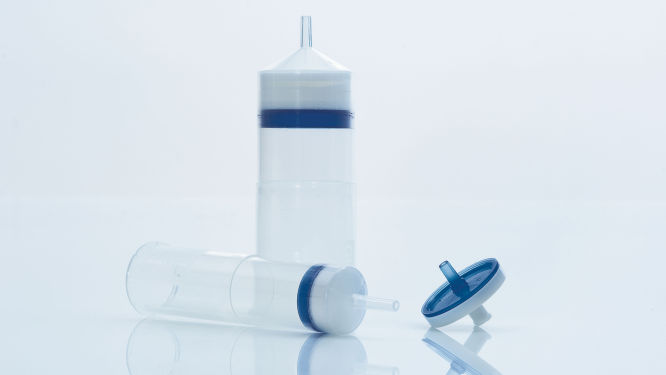
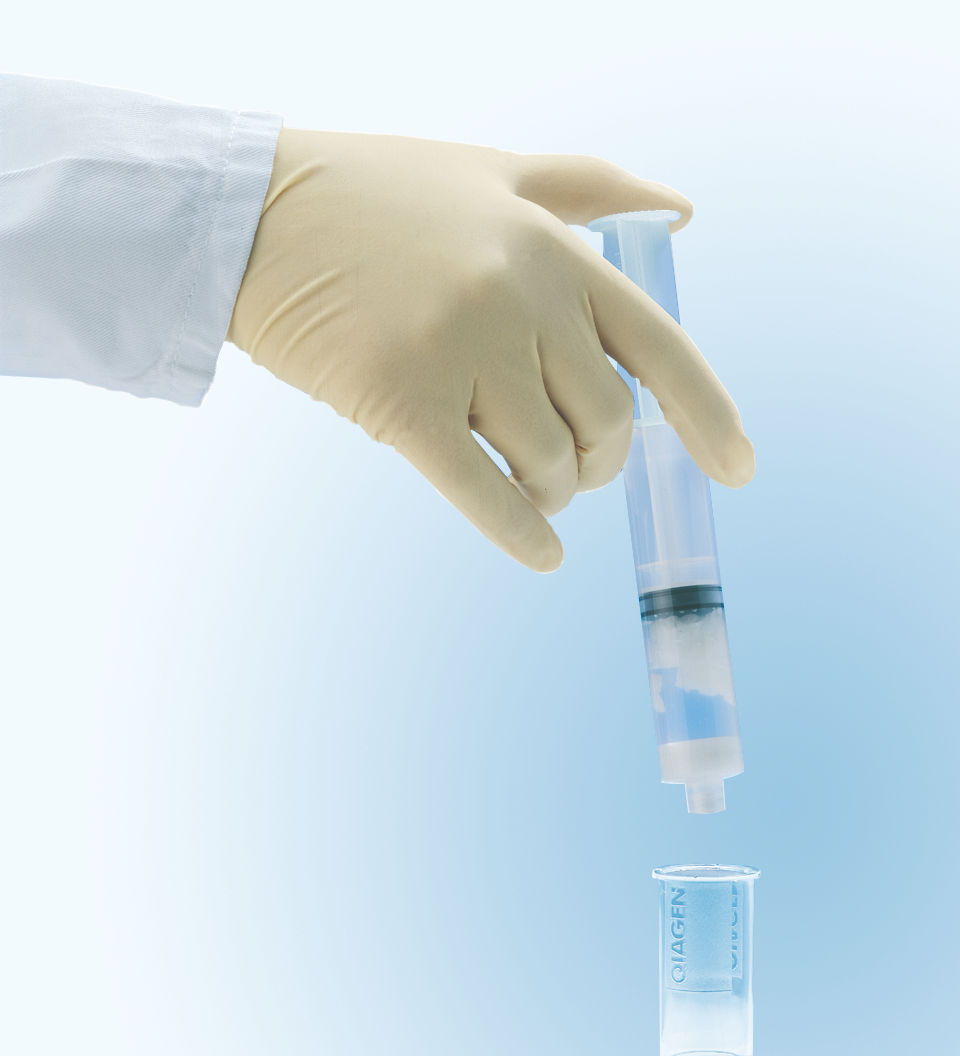
QIAfilter 카트리지는(그림 ‘ QIAfilter 카트리지’ 참고) 박테리아 세포를 알칼리 용해한 후의 원심분리 단계를 대체할 수 있도록 설계된 특별한 필터 장치입니다. QIAfilter 카트리지를 사용하면 원심분리보다 훨씬 빠른 시간 안에 SDS 침전물을 완전히 제거하고 박테리아 용해물을 클리어링할 수 있습니다. 미리 채워진 HiSpeed 팁은 중력의 힘으로 작동하며 건조해지지 않아 플라스미드 준비에 필요한 수작업 시간이 최소화됩니다.
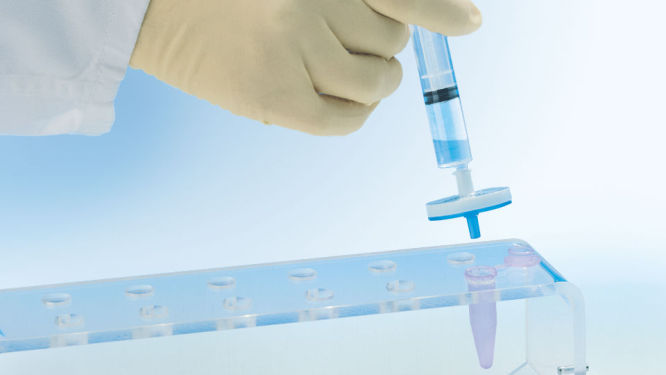
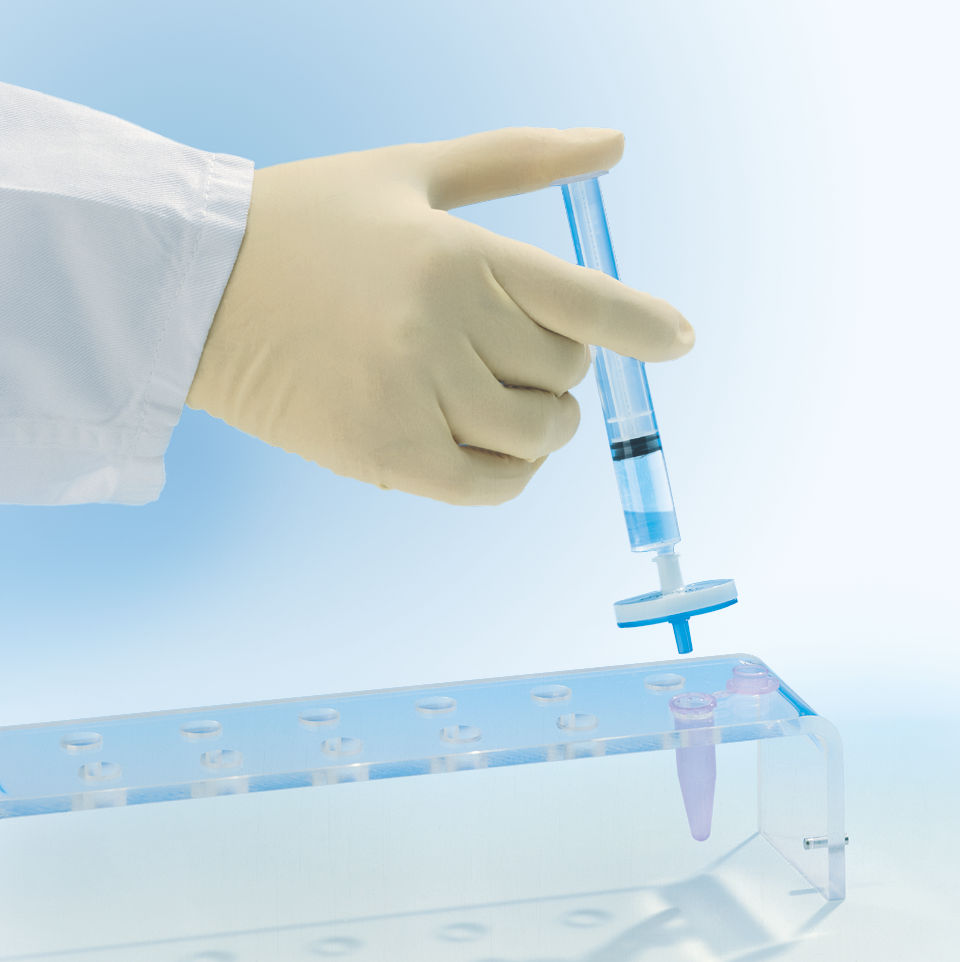
독자적인 QIAprecipitator 모듈(그림 ‘ QIAprecipitator 모듈’ 참고)을 사용하면 정제 후 아이소프로판올로 침전된 DNA를 기존처럼 원심분리하지 않고 회수할 수 있습니다. QIAprecipitator 모듈은 침전된 DNA는 포집하고 아이소프로판올-완충액 혼합물은 통과시킵니다. 그 후 DNA는 QIAprecipitator에서 TE 완충액이나 물로 간단히 용출되어 마이크로 원심분리기 튜브에 모을 수 있습니다. 이 특별한 모듈은 원심분리 후 상층액을 버리는 과정에서 펠릿이 유실되는 문제도 방지할 수 있습니다.

사양
특징 HiSpeed Plasmid Midi Kit HiSpeed Plasmid Maxi Kit
응용 분야 트랜스펙션, 클로닝, 염기서열 분석, 유전자 침묵화 트랜스펙션, 클로닝, 염기서열 분석, 유전자 침묵화
배양액 부피/출발 물질 배양액 부피 50µL~150mL 배양액 부피 150µL~250mL
플라스미드 유형 High-copy, 코스미드 DNA High-copy, 코스미드 DNA
처리 수동(여과) 수동(여과)
실험당 샘플 실험당 샘플 1개 실험당 샘플 1개
기술 음이온 교환 기술 음이온 교환 기술
실험당 소요 시간 45분 60분
수율 <200µg <750µg

절차

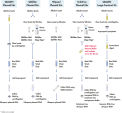
중화된 박테리아 용해물은 QIAfilter 카트리지에서 인큐베이션된 후, 여과를 통해 몇 초 만에 클리어링됩니다. 여과물은 플라스미드 DNA를 정제하기 위해 HiSpeed 팁에 넣어 처리됩니다(순서도 ‘QIAGEN 플라스미드 키트 절차’ 참고). 용출된 DNA는 아이소프로판올과 혼합한 후, 제공된 주사기를 사용하여 QIAprecipitator 모듈에 적용합니다. 농축되고 탈염된 DNA는 이후 TE 완충액이나 물을 사용해 QIAprecipitator에서 바로 마이크로 원심분리기 튜브에 용출됩니다.

응용 분야

HiSpeed Plasmid Kit로 정제한 DNA는 클로닝과 염기서열 분석부터 트랜스펙션 및 플라스미드 매개 유전자 발현 억제에 이르기까지 모든 응용 분야에서 뛰어난 결과를 제공합니다.

지원되는 데이터 및 수치

리소스

빠른 시작 프로토콜 (2)
안전보건자료 (1)
Download Safety Data Sheets for QIAGEN product components.
Safety Data Sheets (1)
Certificates of Analysis (1)

출판물

Characterization of Helicobacter pylori lytic transglycosylases Slt and MltD.
Chaput C; Labigne A; Boneca IG;
J Bacteriol; 2006; 189 (2):422-9 2006 Nov 3 PMID:17085576
Identification of a lipase-linked cell membrane receptor for pigment epithelium-derived factor.
Notari L; Baladron V; Aroca-Aguilar JD; Balko N; Heredia R; Meyer C; Notario PM; Saravanamuthu S; Nueda ML; Sanchez-Sanchez F; Escribano J; Laborda J; Becerra SP;
J Biol Chem; 2006; 281 (49):38022-37 2006 Oct 10 PMID:17032652
Role of parathyroid hormone in the downregulation of liver cytochrome P450 in chronic renal failure.
Michaud J; Naud J; Chouinard J; Désy F; Leblond FA; Desbiens K; Bonnardeaux A; Pichette V;
J Am Soc Nephrol; 2006; 17 (11):3041-8 2006 Oct 4 PMID:17021269
A rapid functional assay for the human trace amine-associated receptor 1 based on the mobilization of internal calcium.
Navarro HA; Gilmour BP; Lewin AH;
J Biomol Screen; 2006; 11 (6):688-93 2006 Jul 10 PMID:16831861
Engineering of a xylose metabolic pathway in Corynebacterium glutamicum.
Kawaguchi H; Vertès AA; Okino S; Inui M; Yukawa H;
Appl Environ Microbiol; 2006; 72 (5):3418-28 2006 May PMID:16672486

FAQ

Where can I find a protocol for cleanup of already purified plasmid DNA?

When using the silica-based QIAprep Spin Miniprep Kit, a protocol is contained in the QIAprep Miniprep Handbook, in Appendix C: Special Applications. The protocol is called: 'Purification of plasmid DNA prepared by other methods'.

For our anion-exchange based Plasmid Purification Kits, a protocol can be accessed online at our Plasmid Resource Center, and is called 'Re-Purification of Plasmid DNA Prepared by Methods other than QIAGEN Tips'.


FAQ-1031
I am seeing a precipitate after adding LyseBlue reagent to Buffer P1. What should I do about that?

A precipitate forming upon adding LyseBlue reagent to Buffer P1 is a normal observation. This precipitate will completely dissolve after addition of Buffer P2. Please be sure to shake Buffer P1 vigorously before use to completely resuspend LyseBlue particles.

FAQ-1045
What are the additional plasmid bands I see on my gel?

Open circular plasmid, resulting from single strand nicks, usually migrates slower in agarose gels and forms (faint) bands above the supercoiled plasmid DNA band. Sometimes an additional band of denatured supercoiled DNA migrates just below the supercoiled form. This form may result from prolonged alkaline lysis with Buffer P2 and is resistant to restriction digestion.

For a detailed description on how to run and interpret an analytical gel, please see Appendix A in the QIAGEN Plasmid Purification Handbook: "Agarose Gel Analysis of the Purification Procedure", or visit this link.

FAQ-1059
How can I prevent clogging of QIAfilter cartridges?
It is important to completely mix and lyse bacterial cells with plasmid Buffers P1 and P2. Incomplete mixing results in sticky or slimy areas of lysate, which will clog the filter matrix. It is recommended to completely resuspend cells in Buffer P1 and vigorously mix after addition of Buffer P2. Also mixing after Buffer P3 addition needs to be complete to allow fluffy precipitation of cell debris, which will float up. If the white debris does not float, dislodge it from the QIAfilter barrel wall (e.g. using a sterile pipette tip). Otherwise it will collect on the filter matrix and can lead to clogging. Use of LyseBlue reagent will help to achieve proper mixing results.
FAQ-1060
How can I increase DNA concentration using QIAprecipitators of the HiSpeed Plasmid Kits?
Use 500 µl instead of 1 ml of Buffer TE for elution of plasmid DNA from the QIAprecipitator of the HiSpeed Plasmid Kits. If low copy plasmids are used, the lysates of two QIAfilter Cartridges can be filtered into one equilibrated HiSpeed Tip. HiSpeed Maxi Kits will result in higher DNA concentration than HiSpeed Midi Kits, because the QIAprecipitators in both kits (Midi- and Maxi Module) use the same elution volume.
FAQ-1061
How can I improve the performance of the HiSpeed QIAprecipitator module?

When using the QIAprecipitator module of the HiSpeed Plasmid Midi- or Maxi Kits, make sure to dry the membrane by pressing air through the QIAprecipitator at least twice. Dry the outlet nozzle of the QIAprecipitator with absorbent paper. This will prevent carry-over of alcohol into the eluate and enable optimal performance of the extracted DNA downstream.

Do not load eluate from from several columns on the QIAprecipitator, and be sure that the correct precipitator size is used for the corresponding HiSpeed Tip. Do not replace the isopropanol with ethanol for precipitation, since the use of ethanol will lead to a finer precipitate that can clog the module.

To prevent breakage and leakage of the module it is important to avoid excessive force, bending, or twisting while attaching the QIAprecipitator to the syringe. Do not stress the inlet by resting one edge of the QIAprecipitator on a hard surface (e.g., the edge of a sink) and depressing the syringe plunger. Always apply gentle, even, pressure perpendicularly to the QIAprecipitator.

FAQ-144
What is the RNase A concentration and composition of Buffer P1?

The composition of Buffer P1 is:

  • 50 mM Tris·Cl, pH 8.0
  • 10 mM EDTA
  • 100 µg/ml RNase A

After RNase A addition, the buffer should be stored at 2–8°C.

Buffer P1 is the resuspension buffer used in a variety of QIAGEN kits for plasmid DNA purification. Details on buffer preparation and storage are presented in Appendix B of the QIAGEN Plasmid Purification Handbook.

FAQ-198
Can I use water for elution from the QIAprecipitator of the HiSpeed Plasmid Kits?

Yes, when eluting DNA from the QIAprecipitator Modules of the HiSpeed Plasmid Kits, water or buffers commonly used to dissolve DNA (e.g., Tris) may be employed.

Note: Store DNA at -20°C when eluted with water as DNA may degrade in the absence of buffering and chelating agents.

FAQ-306
What is the lowest elution volume that can be used with QIAprecipitator Midi and Maxi Modules?

The lowest elution volume that should be used for both the QIAprecipitator Midi and the Maxi Module provided in the HiSpeed Plasmid Kits is 500 ul. The official elution volume for both modules is 1 ml. If a higher DNA concentration is desired and a reduction in yield of up to 10% is acceptable, the elution volume can be reduced. Elution volumes smaller than 500 ul will lead to incomplete wetting of the QIAprecipitator membrane and further reduced DNA yields.

FAQ-307
Are the QIAprecipitator Midi and Maxi Modules of the HiSpeed Plasmid Kits interchangeable?
No, the QIAprecipitator Midi and Maxi modules of the HiSpeed Plasmid Midi- and Maxi Kits are not interchangeable. Each module has been designed for different capacities and recoveries.
FAQ-308
Can Buffers N3 and P3 be used interchangeably?
No. Although both Buffers N3 of the QIAprep Spin Miniprep and P3 of the QIAGEN Plasmid Kits perform the neutralization step in an alkaline lysis procedure, they are completely different. Buffer N3 contains a proprietary formula that sets up binding conditions for the QIAprep Miniprep column's silica-gel-membrane. Buffer P3 sets up binding conditions for QIAGEN anion-exchange columns. Our website explains QIAGEN's nucleic acid purification technologies in more detail.
FAQ-310
Can I use ethanol instead of isopropanol for DNA precipitation when using HiSpeed Plasmid Kits?

No. Ethanol is not recommended when using the QIAprecipitator module of the HiSpeed Plasmid Kits for DNA precipitation. The finer precipitates formed with ethanol are likely to clog the QIAprecipitator.

FAQ-354
Can I eliminate RNase A from buffer P1 for my plasmid preparation to obtain RNase-free DNA for in-vitro transcription?
No, RNase A should not be omitted from buffer P1. It is required to prevent RNA contamination of the purified plasmid DNA. RNase A will not interfere with downstream in-vitro transcription experiments, since it will be efficiently removed during the plasmid purification procedures using QIAGEN Plasmid Kits.
FAQ-366
What is the composition of buffer QBT?

Buffer QBT is the equilibration buffer used in QIAGEN Plasmid Kits for plasmid purification and in QIAGEN Blood & Cell culture kits.

The composition of Buffer QBT is:

  • 750mM NaCl • 50 mM MOPS, pH 7.0
  • 15% isopropanol (v/v)
  • 0.15 % Triton® X-100 (v/v)

To make 1 liter of solution, dissolve 43.83 g NaCl, 10.46 g MOPS (free acid) in 800 ml distilled water. Adjust the pH to 7.0 with NaOH. Add 150 ml pure isopropanol and 15 ml 10% Triton X-100 solution (v/v). Adjust the volume to 1 liter with distilled water. Store at 15–25°C

FAQ-411
What is the composition of buffer QC?

Buffer QC is the wash buffer used in QIAGEN Plasmid Kits for plasmid purification and in QIAGEN Blood & Cell Culture kits.

The composition of Buffer QC is:

  • 1.0 M NaCl
  • 50 mM MOPS, pH 7.0
  • 15% isopropanol (v/v)


To make 1 liter of solution, dissolve 58.44 g NaCl, 10.46 g MOPS (free acid) in 800 ml distilled water. Adjust the pH to 7.0 with NaOH. Add 150 ml pure isopropanol. Adjust the volume to 1 liter with distilled water. Store at 15–25°C.

FAQ-412
What is the composition of buffer QF?

Buffer QF is the elution buffer used in QIAGEN Plasmid Kits for plasmid purification and in QIAGEN Blood & Cell culture kits.

The composition of Buffer QF is:

  • 1.25 M NaCl
  • 50 mM Tris-Cl, pH 8.5
  • 15% isopropanol (v/v)


To make 1 liter of solution, dissolve 73.05 g NaCl and 6.06 g Tris base in 800 ml distilled water. Adjust the pH to 8.5 with HCl. Add 150 ml pure isopropanol. Adjust the volume to 1 liter with distilled water. Store at 15–25°C

FAQ-413
What is the composition of buffer STE?

The composition of Buffer STE is:

  • 100 mM NaCl
  • 10 mM Tris-Cl, pH 8.0
  • 1 mM EDTA

Buffer STE is a DNA resuspension and storage buffer used in QIAGEN Plasmid Kits for plasmid purification and in some plasmid supplementary protocols. Details on buffer preparation and storage are presented in Appendix B of the QIAGEN Plasmid Purification Handbook.

FAQ-415
What is the composition of buffer TE?

The composition of Buffer TE is:

  • 10 mM Tris·Cl, pH 8.0
  • 1 mM EDTA

Buffer TE is a commonly used DNA resuspension and storage buffer. It is supplied in QIAGEN's Endofree Plasmid Kits, and used for plasmid DNA resuspension in combination with other QIAGEN Plasmid Kits. Details on buffer preparation and storage are presented in Appendix B of the QIAGEN Plasmid Purification Handbook.

FAQ-416
What is the composition of buffer P3?

The composition of Buffer P3 is:

  • 3.0 M potassium acetate, pH 5.5

Buffer P3 is the neutralization buffer used in QIAGEN's anion-exchange based Kits for plasmid preparation. Details of buffer preparation and storage are presented in Appendix B of the QIAGEN Plasmid Purification Handbook.

FAQ-418
What can I do when the DNA pellet prepared with QIAGEN Plasmid Kits has been overdried?
Redissolve the DNA by warming the solution slightly, e.g. incubate it at 37°C, and allow more time for redissolving.
FAQ-572