
✓ 24/7 automatic processing of online orders
✓ Knowledgeable and professional Product & Technical Support
✓ Fast and reliable (re)-ordering
QIAsprint PowerExtract IRT PrepSet (384)
Cat no. / ID. 587679
Solution CD1, Solution CD2, Buffer MVL for 384 DNA and/or RNA preparations from inhibitor-rich samples
Log in To see your account pricing.
Kit
PrepSet
Essential Kit
Add on
QIAsprint Consumables
QIAsprint modular system: Automated microbial DNA/RNA extraction from stool are intended for molecular biology applications. These products are not intended for the diagnosis, prevention, or treatment of a disease.
✓ 24/7 automatic processing of online orders
✓ Knowledgeable and professional Product & Technical Support
✓ Fast and reliable (re)-ordering
Features
- Remove PCR inhibitors like bile salts and polyphenols with proprietary Inhibitor Removal Technology
- Use QIAsprint PowerExtract IRT with Essential Kit C to purify microbial DNA/RNA from stool, or with Essential Kit A to extract DNA from inhibitor-rich plant material such as seeds
- Eliminate dry ice logistics; all kit modules ship at ambient temperature
Product Details
The QIAsprint workflow for microbial DNA and RNA isolation from inhibitor samples is a modular magnetic-bead-based system for high troughput DNA, RNA or total nucleic acid isolation. The system combines the flexibility of modular design with the power of magnetic-bead-based purification, enabling fully automated processing on the QIAsprint Connect.
The solution consists of dedicated modules that can be flexibly combined or exchanged depending on sample type and workflow needs. For microbial DNA and RNA isolation from inhibitor-rich samples we recommend the following module combination:
QIAsprint PowerExtract IRT PrepSet (384): This module is tailored for extraction pretreatment, facilitating the new proprietary one-step lysis and Inhibitor Removal Technology (IRT). This PrepSet includes Solution CD1, CD2 and Buffer MVL Concentrate and is recommended in combination with QIAsprint Essential Kit A (for e.g. plant-derived samples such as seeds) or QIAsprint Essential Kit C (for e.g. stool and wastewater)
QIAsprint Essential Kit A (384): In combination with the QIAsprint PowerExtract IRT PrepSet, this module is recommended for purification of DNA from inhibitor-rich plant sample material such as seeds. The kit provides the magnetic beads and wash buffers required for DNA purification.
QIAsprint Essential Kit C (384): In combination with the QIAsprint PowerExtract IRT PrepSet, this module is recommended for microbial genomic DNA, RNA or total nucleic acids (depending on the chosen protocol), from samples, such as stool, that contain high levels of inhibitory substances. The kit provides the magnetic beads and wash buffers required for nucleic acid purification.
All modules are designed and optimized for fully automated processing of up to 384 samples on the QIAsprint Connect. The platform ensures minimal hands-on time and reproducible performance.
Performance
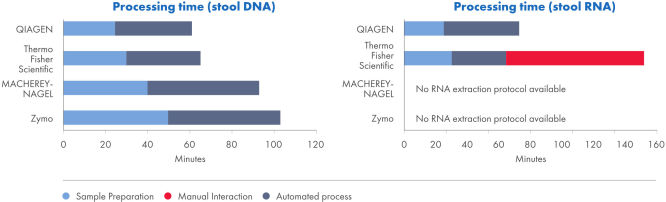
QIAsprint PowerExtract IRT workflow for microbial DNA and RNA isolation from inhibitor-rich samples delivers exceptional speed and superior processing performance, enabling fully automated nucleic acid extraction without the need for manual intervention see Processing time.
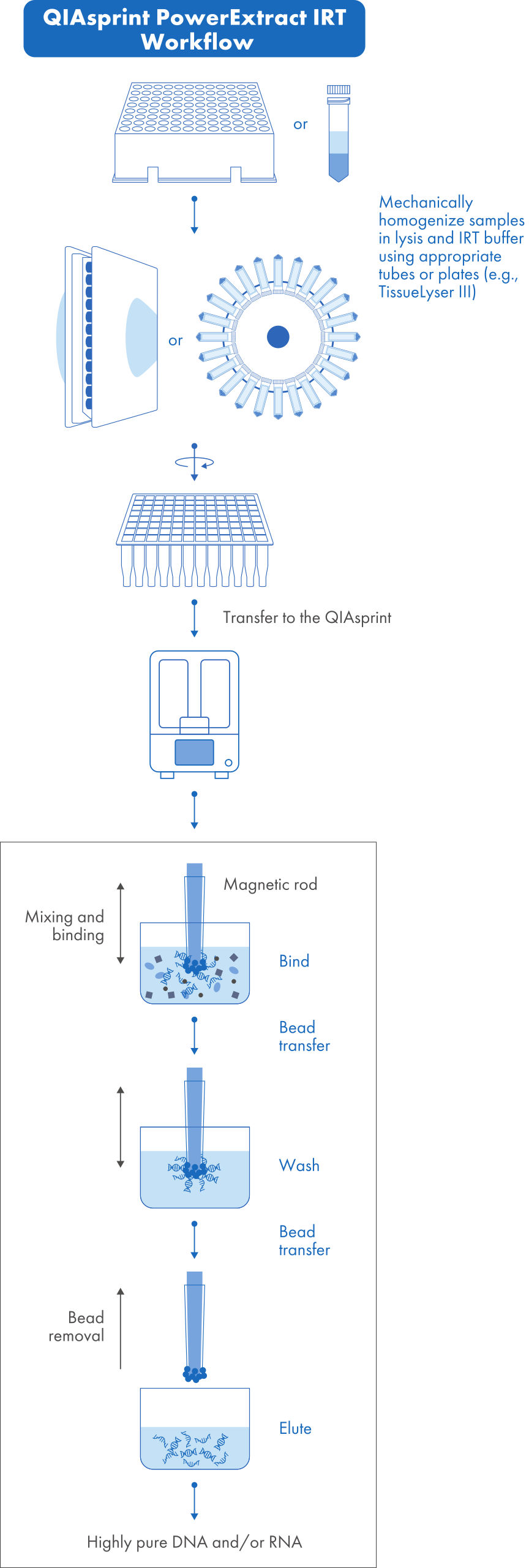
The kit's flexible, modular design allows users to selectively extract RNA or DNA, or to efficiently isolate total nucleic acids – all within a single workflow (see QIAsprint PowerExtract IRT workflow).
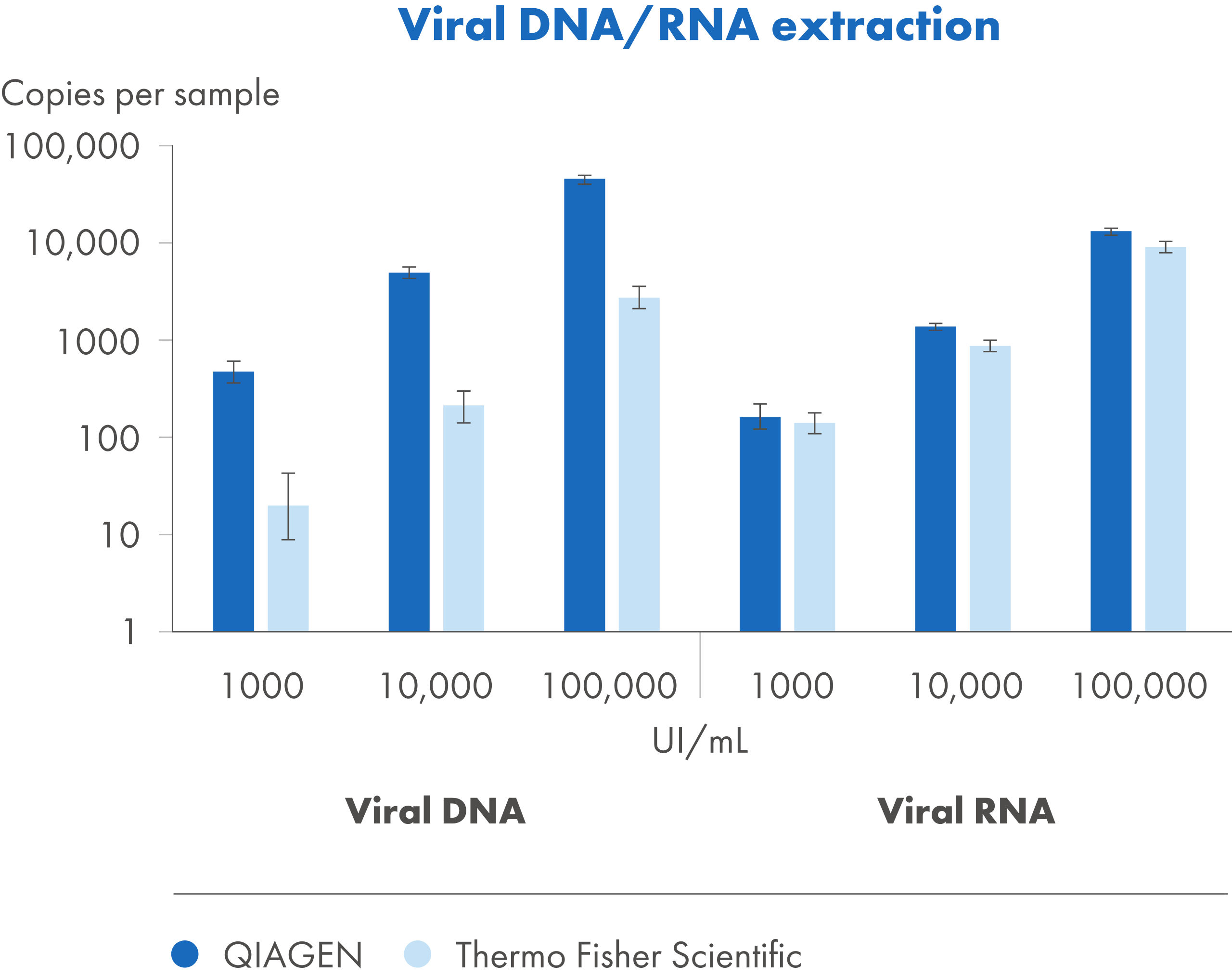
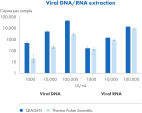
Benchmark comparisons clearly demonstrate the system’s robust performance, particularly for inhibitor-rich samples such as stool. The QIAsprint PowerExtract IRT workflow consistently achieves higher DNA yields (ng per mg stool) and superior extraction efficiency compared with systems from alternative suppliers. In addition, nucleic acid quality delivers purity ratios consistently close to ideal values (~1.8–2.0 for 260/280 and >2.0 for 260/230). In contrast, kits from alternative suppliers show greater variability, with Competitor A and B displaying noticeably lower 260/230 ratios, indicating residual contaminants (see DNA yield and purity – competitor comparison).
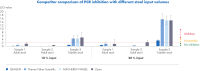
Across all tested samples, the QIAsprint workflow shows minimal PCR inhibition, whereas methods from other suppliers exhibit elevated ΔCt values – especially at higher sample inputs. These results underscore the system’s reliable inhibitor removal and robust performance for challenging stool matrices (see Inhibitor removal efficiency – competitor comparison).
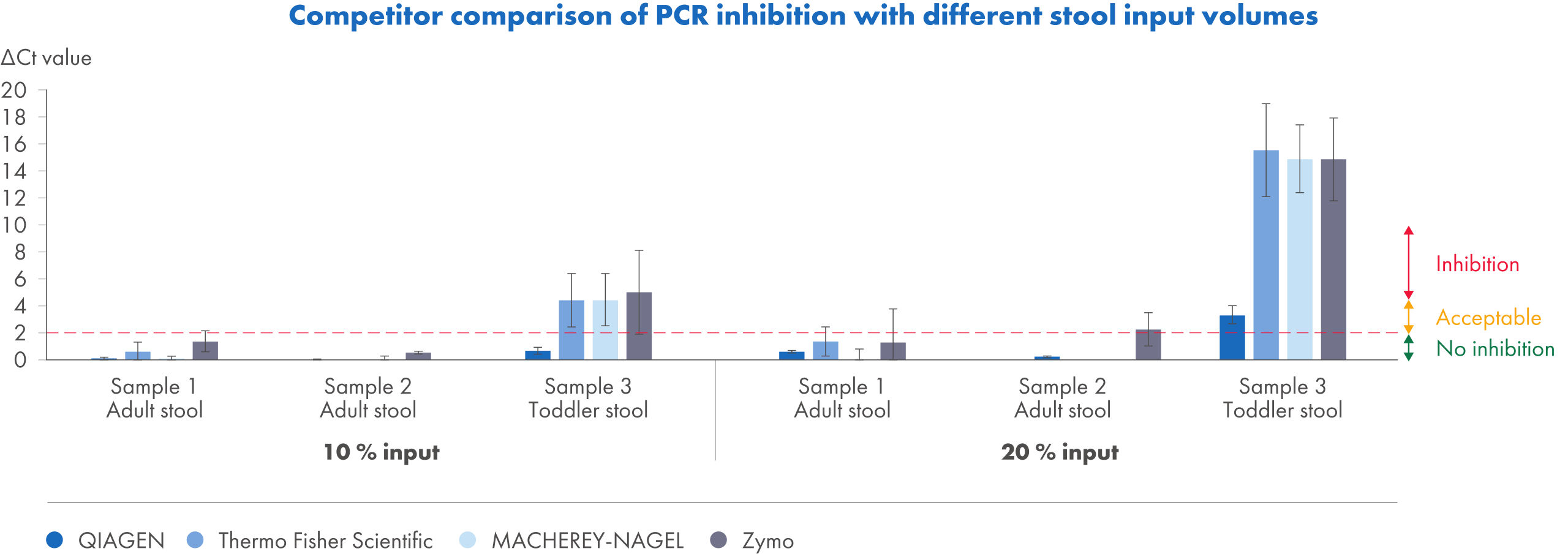
Performance data shown were generated in QIAGEN internal studies comparing the QIAsprint workflow with commonly used microbial nucleic acid extraction kits. Overall, the data demonstrate that QIAsprint PowerExtract IRT workflow delivers high-quality nucleic acid extraction, even from the most demanding sample types with less hands-on time.
Principle
The QIAsprint workflow for microbial DNA and RNA isolation from inhibitor-rich samples uses a modular approach for efficient lysis and inhibitor removal in one step. The procedure allows fully automated processing of samples after lysis to significantly reduce manual steps and hands-on time. The procedure removes all inhibitory substances and efficiently extracts nucleic acids from all microorganisms present in the sample. Ready-to-go protocols facilitate the purification of either total nucleic acids, DNA-only or RNA-only in a fully automated workflow.
For the extraction of DNA-only or RNA-only, the corresponding enzyme: RNaseA or RNase-free DNase I are add-ons that needs to be purchased separately.
The workflow can be adapted for various sample types or input materials. The flexibility of the QIAsprint modular system allows users to combine the QIAsprint PowerExtract IRT PrepSet with other compatible Essential Kits.
- The combination of QIAsprint PowerExtract IRT PrepSet and Essential Kits C is recommended for microbial genomic DNA, RNA or total nucleic acid extraction from samples with high levels of inhibitory substances, such as stool and wastewater.
- The combination of QIAsprint PowerExtract IRT PrepSet and Essential Kits A is recommended for genomic DNA purification of inhibitor-rich plant samples, such as seeds.
In addition to combining different modules, nearly all buffers and reagents used within the system are available as standalone items, offering additional customization options for specialized workflows (see QIAsprint sets and consumables finder).
See QIAsprint Connect Protocol Guide for support on finding or customizing according to your application’s needs.
Procedure
The purification comprises four steps: lysis, binding, washing, and elution. The QIAsprint PowerExtract IRT PrepSet efficiently lyses the starting material (e.g. microbial cells) and removes inhibitory substances found in samples such as stool or even plant-derived samples (e.g., polysaccharides, hemecompounds and bile salt). The lysis buffer, Solution CD1, IRT buffer, Solution CD2 and optional anorganic phase-separation agent (e.g.phenol chloroform isoamyl alcohol, available separately) ensures both effective mechanical and chemical lysis using bead beating (E.g. PowerBead Pro Tubes or PowerBead Pro Plates, available separately) and efficient inhibitor depletion during centrifugation after lysis and disruption. The use of phenol chloroform isoamyl alcohol is recommended for the depletion of downstream inhibitors. At the same time, it also deactivates RNases that can be released during disruption, allowing the extraction of high-quality RNA.
The supernatant is used for automated purification on the QIAsprint Connect instrument (see QIAsprint PowerExtract IRT workflow).
The lysates are then combined with MagG Bead Suspension and binding buffer MVL to enable efficient DNA binding. Wash and the elution plate are prepared according to the protocol and placed into the plate hotels. All plates and hotels are then loaded onto the QIAsprint Connect, and the appropriate protocol is selected. The instrument performs fully automated magnetic-bead-based bind, wash and elute steps (see QIAsprint PowerExtract IRT workflow).
Applications
The QIAsprint PowerExtract IRT workflow on the QIAsprint Connect instrument provides automated purification of microbial DNA, RNA and total NA from inhibitor-rich samples:
- Stool
- Wastewater
- Plant materials with high polyphenolic content
The kit can be used to purify nucleic acids from a broad range of inhibitor-rich samples. Isolated high-quality DNA, RNA or total nucleic acids can be used immediately in downstream applications, including RT-PCR, qPCR, digital PCR (dPCR) and next-generation sequencing (e.g., RNA-seq or metatranscriptome).
Supporting data and figures
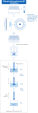
Comparison of stool DNA (left) and RNA purification workflows (right) using QIAGEN, Thermo Fisher Scientific, MACHEREY-NAGEL and Zymo Research magnetic bead–based kits
For DNA, all workflows are fully automated, with QIAsprint showing reduced processing time. For RNA, the MagMAX™ Microbiome Ultra Nucleic Acid Isolation Kit (Thermo Fisher Scientific) workflow requires manual post-run processing, whereas QIAsprint enables true walk-away automation with reduced overall processing time. No RNA protocols were available for MACHEREY-NAGEL and Zymo.
Specifications
| Features | Specifications |
|---|---|
| Applications | qPCR, RT-PCR, dPCR, NGS |
| Elution volume | 100 µL (recommended) |
| Main sample type | Inhibitor-rich samples e.g. stool, wastewater, plants |
| Processing | Automated on the QIAsprint Connect |
| Analyte | Microbial DNA, RNA or total nucleic acids |
| Sample amount | Up to 100 mg |
| Technology | Magnetic-particle technology |
Sets & Consumables
QIAsprint Sets
Add ons
Consumables & Accessories
Resources
Brochures & Guides (4)
Kit Handbooks & Protocols (3)
Scientific documents (1)
Safety Data Sheets (1)
Certificates of Analysis (1)
User Manuals (2)
Operating software (1)
FAQ
What is the pH value of QIAGEN's Nuclease-Free Water?
Is your Nuclease-Free Water fluorescence-free?
What quality level does your Nuclease-Free Water have?
3314-What is the concentration of RNase A sold separately?
Can I use other plastics than the QIAsprint Connect plastics on the instrument?
What sample type can be processed using the QIAsprint PowerExtract IRT PrepSet?
Which sample amounts can be processed with the QIAsprint PowerExtract IRT PrepSet + Essential Kit C?
What are the elution volume and the elution buffer?
Which sample disruption options are available for stool samples?
Do I need additional equipment to work with the QIAsprint PowerExtract IRT PrepSet?
Are there any critical steps in the protocol?
Are there possible stopping points in the protocol?
I see precipitates in Solution CD2. What should I do?