
✓ 24/7 automatic processing of online orders
✓ Knowledgeable and professional Product & Technical Support
✓ Fast and reliable (re)-ordering
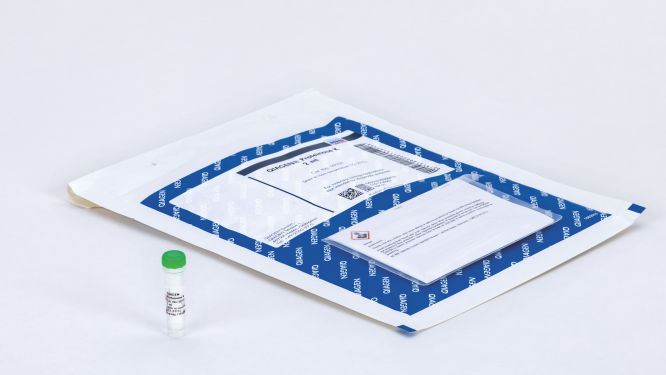
QIAGEN Proteinase K (2 mL)
Cat no. / ID. 19131
Supplied in QIAGEN kits for the digestion of proteins. [2 mL (>600 mAU/mL, solution)]
Log in To see your account pricing.
EnzymeKit
QIAGEN Proteinase K (RUO)
QIAGEN Proteinase K
Proteinase K - Powder
Proteinase K - Solution
Proteinase K - Ultrapure
Quantity
2 mL
10 mL
The QIAGEN Proteinase K (2 mL) is intended for molecular biology applications. This product is not intended for the diagnosis, prevention, or treatment of a disease.
The Proteinase K is intended for molecular biology applications. This product is neither intended for the diagnosis, prevention or treatment of a disease, nor has it been validated for such use either alone or in combination with other products.
✓ 24/7 automatic processing of online orders
✓ Knowledgeable and professional Product & Technical Support
✓ Fast and reliable (re)-ordering
Features
- Breaks down proteins to release DNA/RNA from tissues, cells or bacteria
- Effectively inactivates DNases and RNases
- High activity in elevated temperatures (up to 56°C) and under denaturing conditions
- Stable over a wide pH range of 4.0–12.5 for use in a variety of applications
- Stable liquid format is suitable for room‑temperature storage
- Exceptional purity with a decreased amount of host DNA recombinant enzyme for no cross-reactivity contamination in NGS
Product Details
Proteinase K is a broad-spectrum, subtilisin-related serine protease derived from the fungus Parengyodontium album (Tritirachium album). The enzyme is active across a wide range of temperatures, pH values and denaturing conditions (including SDS and EDTA). Its high specific activity enables efficient digestion of proteins, including DNases and RNases, during nucleic acid preparation without compromising DNA or RNA integrity.
The recombinant 28.9 kDa enzyme is expressed in Komagataella phaffii (Pichia pastoris) and extensively purified for high solubility, specific activity and low residual DNA content. QIAGEN Proteinase K is available in ready-to-use solution or lyophilized powder formats, including an Ultrapure option.
Proteinase K - Solution can be provided in bulk and as a customized product with an extended shelf life of up to 3 years. We also offer Proteinase K - Powder as a lyophilized powder in a range of pack sizes to maximize long-term stability, maintain high enzymatic activity and permit ambient temperature shipping.
Contact us for more information about custom and OEM options.
QIAGEN Protease is an economical endopeptidase alternative to Proteinase K and is suitable for isolation of native DNA and RNA from a variety of biological samples, e.g., blood and cultured cells.
Performance
High-quality sample preparation is an essential step before molecular analysis of target genetic material. Proteinase K plays an important role throughout the multiple stages of this procedure. To assure the highest purity of nucleic acids, the initial focus should be on the certified quality of Proteinase K.
QIAGEN Proteinase K (RUO) in 2 mL and 10 mL pack sizes (cat. nos. 19131 and 19133) is dedicated for use in various QIAGEN kits (see list in the Principle section below). QIAGEN Proteinase K (cat. no. 19134) is available as a ready-to-use 10 mL solution for laboratory use and is included in QIAsymphony DSP Circulating DNA Kits (see list in the Principle section below). These enzymes are supplied at 20 mg/mL and offer high activity (>600 mAU/mL) in buffers commonly used in most DNA and RNA isolation procedures. The products are stable at room temperature for convenient workflow integration and are quality-guaranteed by QIAGEN.
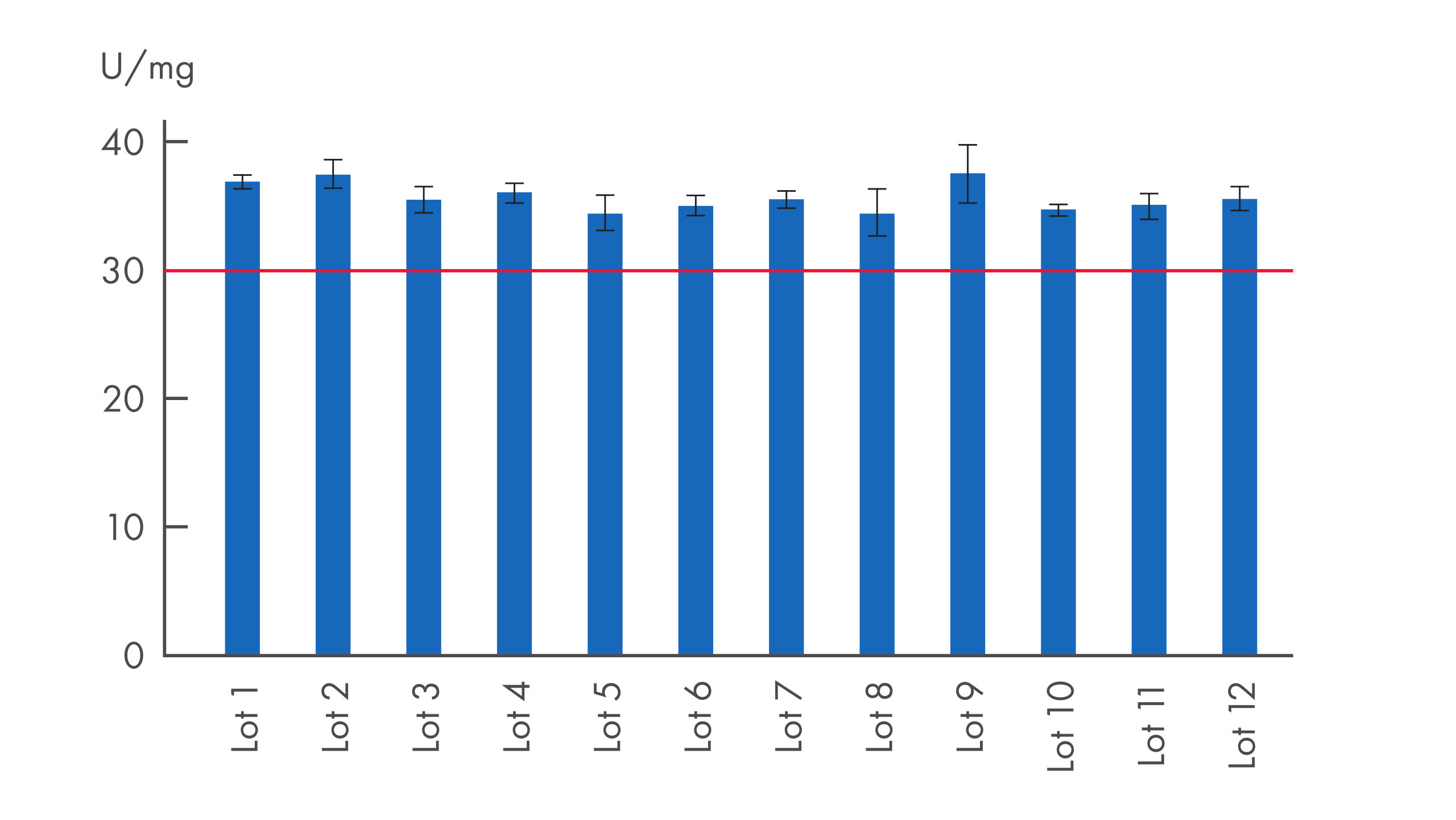
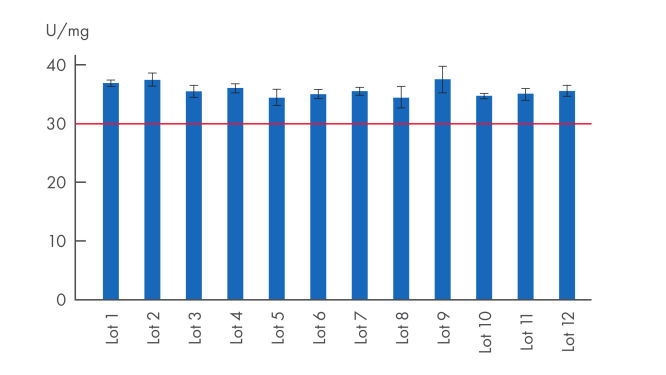
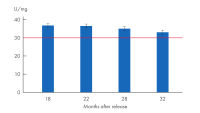
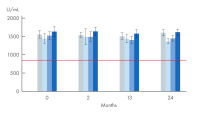
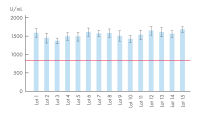
Proteinase K – Powder in lyophilized format offers high activity with exceptional lot-to-lot consistency (see figure “ High lot-to-lot consistency Proteinase K powder”) ensuring reproducibility for stable working conditions (see figure “ Proteinase K powder stability”).
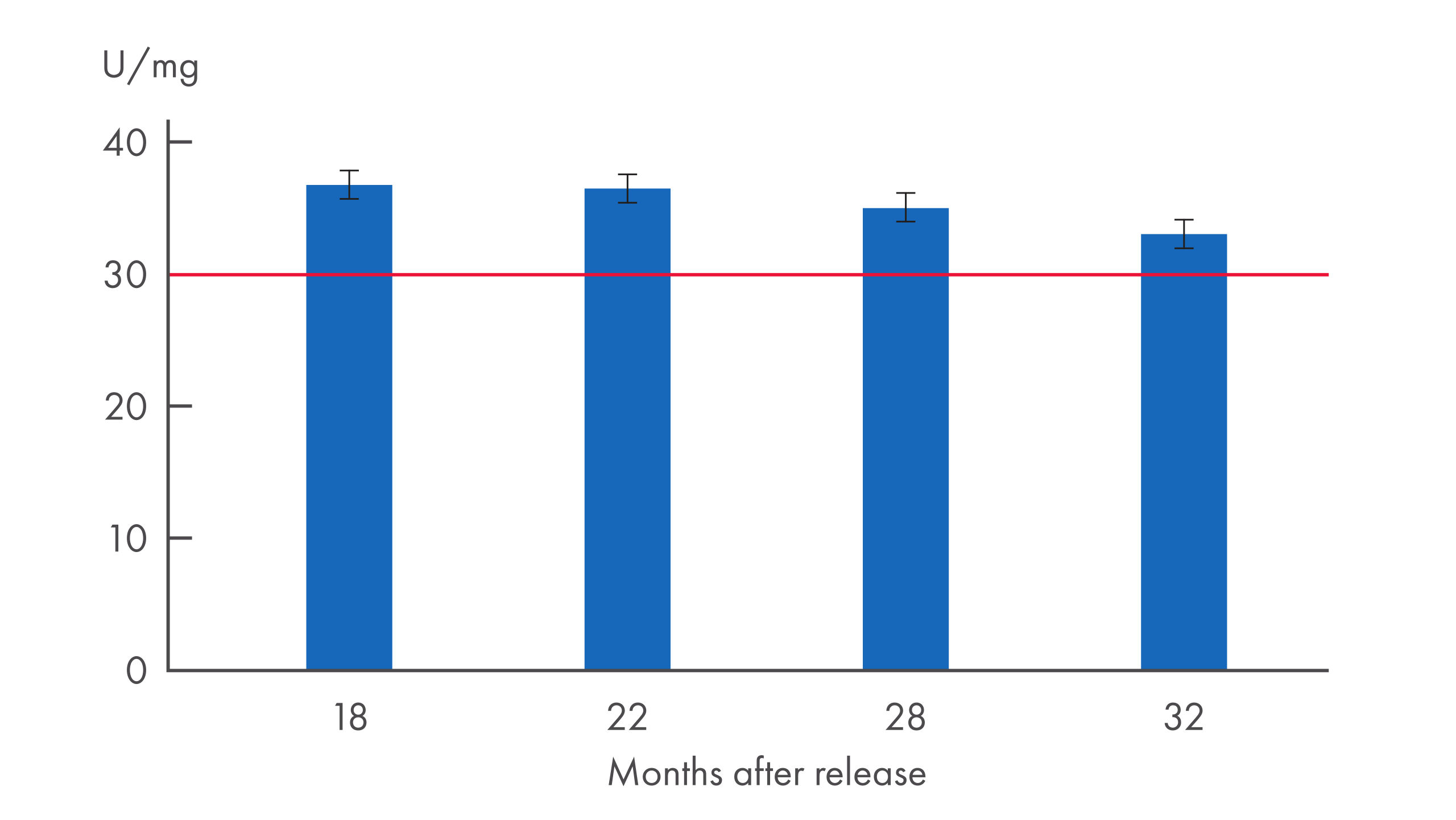
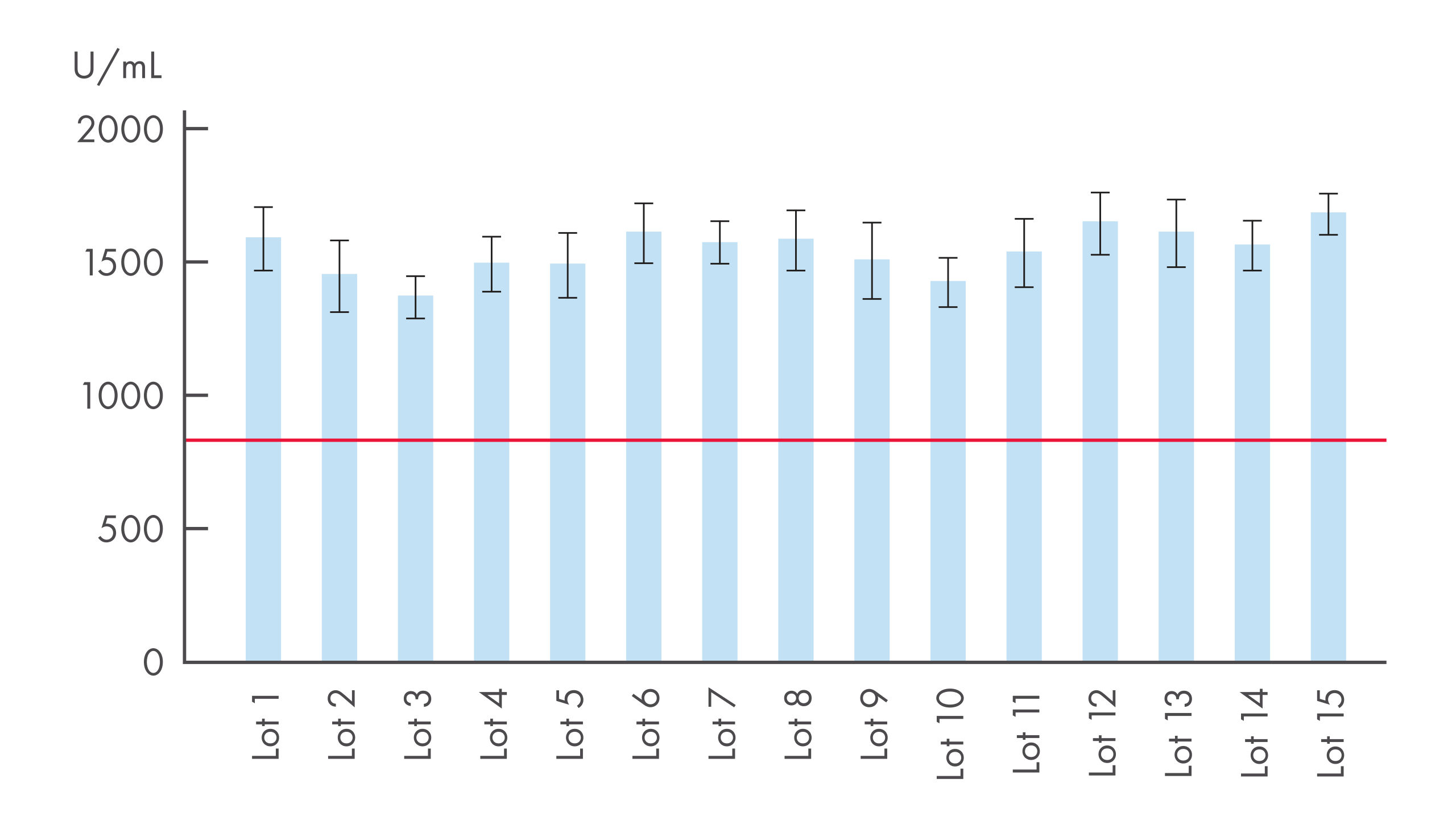
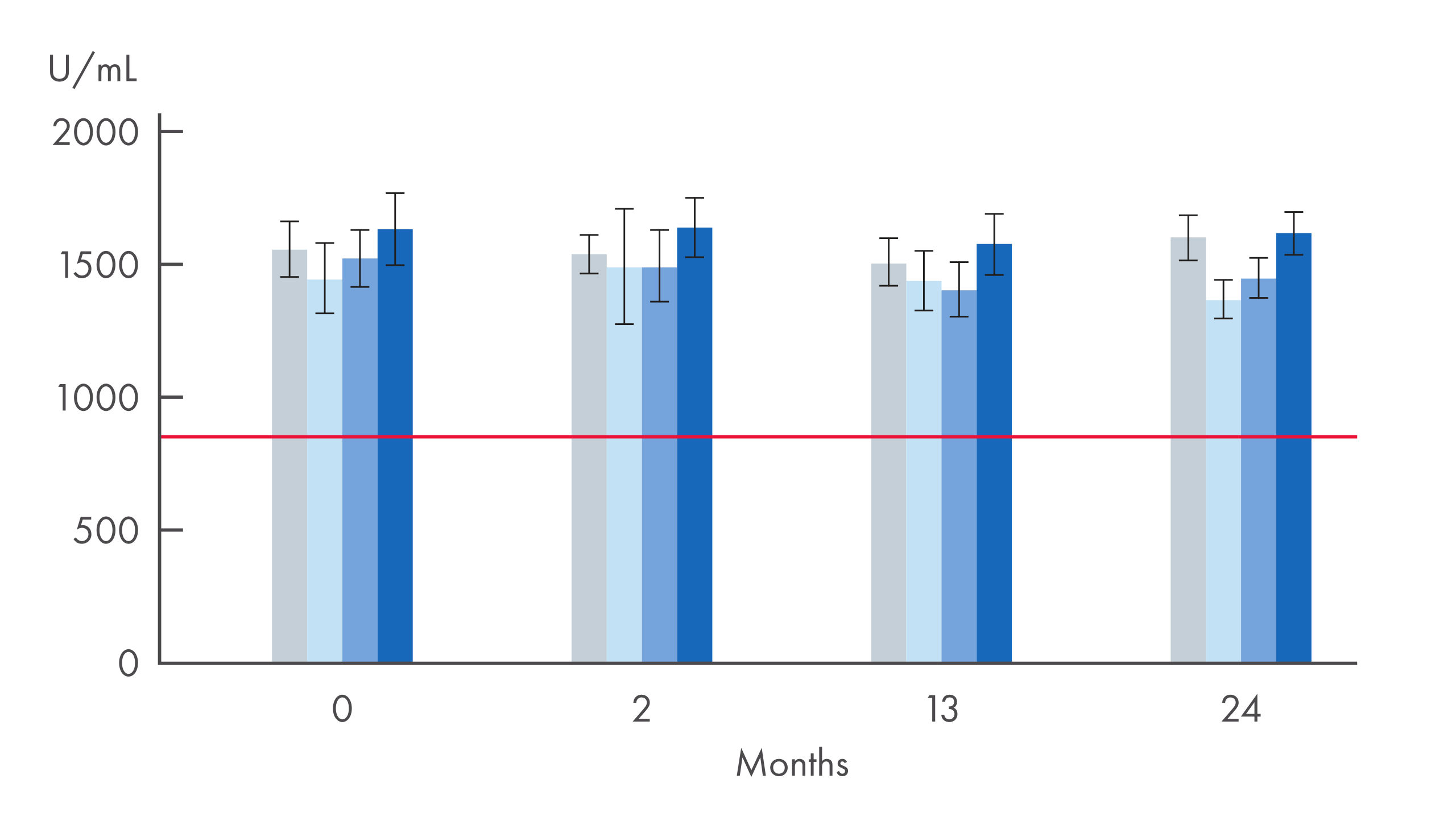
Proteinase K – Solution in a ready-to-use liquid format is stable at room temperature for convenient workflow integration (see figure “ High stability Proteinase K liquid”). An established manufacturing process ensures high lot-to-lot consistency of this product (see figure “ High lot-to-lot consistency Proteinase K liquid”).
Proteinase K – Ultrapure in lyophilized format with enhanced purity and solubility is ideal for highly sensitive applications requiring minimal residual DNA.
| Parameter | QIAGEN Proteinase K |
Proteinase K – Powder | Proteinase K – Solution | Proteinase K – Ultrapure |
|---|---|---|---|---|
| Catalog no. | 19131, 19133, 19134 | RP100B, RP102B, RP103B-10, RP103B-50, RP103B-100 | RP107B-1, RP107B-5, RP107B-100, RP107B-500 | RP100N, RP102N |
| Format | Ready-to-use solution | Lyophilized powder | Ready-to-use solution | Lyophilized powder |
| Available amounts | 2 mL, 10 mL | 100 mg, 1 g, 10 g, 50 g, 100 g (bulk/custom available) | 1 mL, 5 mL, 100 mL, 500 mL (bulk/custom available) | 100 mg, 1 g |
| Concentration | 20 mg/mL | — | ≥20 mg/mL | — |
| Activity*† | >600 mAU/mL | ≥30 U/mg lyophilizate; ≥40 U/mg protein | ≥800 U/mL | ≥35 U/mg lyophilizate; ≥45 U/mg protein |
| DNA content | — | ≤10 pg/mg | ≤200 pg/mL | ≤0.1 pg/mg |
| Nuclease activity | RNase-free, DNase-free | No detected exonuclease, endonuclease or RNase activity | ||
| Bioburden | — | — | ≤1 CFU/mL | — |
| Storage conditions | Room temperature (2–8°C recommended) | –20°C | –20°C, +4°C, or room temperature. Do not store above 25°C. | –20°C |
| Shipping conditions | Ambient | Ambient | Ambient | Ambient |
| Key advantage | Optimized for QIAGEN kits | High stability and reproducibility | Room temperature stability | Highest purity and minimal residual DNA |
* One mAU is the activity that releases folin-positive amino acids and peptides corresponding to 1 µmol tyrosine per minute.
† One unit of Proteinase K hydrolyzes urea-denatured hemoglobin producing the color equivalent of 1 μmol tyrosine per 1 minute at 37°C and pH 7.5 (Folin & Ciocalteu’s method), 1 U = 1 mAnsonU.
Principle
Proteinase K cleaves peptide bonds adjacent to the carboxyl group of aliphatic, aromatic and other hydrophobic amino acids. It is routinely used for the isolation of genomic, plasmid and high molecular weight DNA and RNA, as well as for the digestion of structural proteins and chromatins.
QIAGEN Proteinase K (RUO) (cat. nos. 19131 and 19133) is included in the following QIAGEN kits:
- QIAamp Circulating Nucleic Acid Kit
- QIAamp DNA Mini Kit
- QIAamp Fast DNA Stool Mini Kit
- DNeasy Blood & Tissue Kit
- QIAamp DNA Micro Kit
- QIAamp MinElute Media Kit
- QIAamp Media MDx Kit
QIAGEN Proteinase K (catalog no. 19134) is included in the following QIAGEN kits:
Procedure
Stock solution preparation: Proteinase K – Powder and Proteinase K - Ultrapure
- 20 mg/mL solutions: Use nuclease-free water for immediate use in a sterile nuclease-free tube
- 20–50 mg/mL solutions for immediate use: 50 mM Tris-HCl, pH = 7.5–8.0, 1-5 mM Ca2+ (calcium chloride, calcium acetate)
- 20–50 mg/mL solutions for long-term storage: 10 mM Tris-HCl, pH = 7.5–8.0, 1-5 mM Ca2+ (calcium chloride, calcium acetate), 50% glycerol
Considerations for use
- The enzyme is typically used at 50–200 μg/mL nucleic acid preparations at pH 7.5–8.5 and 37–55°C. Incubation times vary from 30 minutes to 18 hours.
- Proteinase K cleaves proteins preferably behind hydrophobic amino acids. The smallest peptide to be hydrolyzed is a tetrapeptide.
- Working pH range is 4.0–12.0 with optimum activity at pH 7.5–8.5. Full activity is maintained over several hours over a pH range of 6.5–10.0.
- Working temperature range is 20–65°C with optimum activity at 50–56°C.
- The enzyme is stimulated by addition of denaturing agents 0.2–1% SDS or 1–4M urea. It exhibits prolonged stability due to the presence of Ca2+ (1–6 mM), which protects enzyme from autolysis and increases its thermal stability.
- The enzyme is not inactivated by chelating agents (e.g. EDTA), chaotropic salts, detergents (e.g. 1% SDS, 1–4M urea), metal ions, thiol reagents or trypsin-specific inhibitors.
- Proteinase K is usually denatured by subsequent phenol extractions. It can be also inactivated by heating above 65°C or using inhibitors such as PMSF or DIFP.
Applications
Proteinase K is highly effective at removing protein contamination due to its activity between 50–65°C in a wide pH range (7.5–12.0) combined with stability in the presence of denaturing reagents (SDS, urea) and chelating agents (EDTA).
Applications include:
- Removing protein contaminants in PCR, sequencing and NGS workflows.
- Cell lysis and tissue digestion in combination with SDS and detergents to isolate genomic DNA and cytoplasmic RNA from tissues and cultured cells.
- Rapid inactivation of DNases and RNases during RNA/DNA purification.
- Degrading proteins (e.g., histones) that bind to DNA in blood to improve DNA yield and purity for downstream analysis.
- Included in single-use cartridges for other automated molecular diagnostic devices that integrate sample preparation, amplification and detection.
Supporting data and figures
High lot-to-lot consistency Proteinase K powder
Consistent quality from lot-to-lot: Lyophilized Proteinase K. In internal comparison tests, Proteinase K shows consistently high levels of activity with limited deviation. The red line represents the declared minimum activity of lyophilized proteinase K (≥30 U/mg).
Resources
Protocols (3)
Safety Data Sheets (1)
Certificates of Analysis (1)
Kit Handbooks (1)
Brochures and Guides (1)
FAQ
How can QIAGEN Protease and Proteinase K be inactivated?
What is the shelf-life for QIAGEN Proteinase K (cat. no. 19131, 19133)?
How many buccal swab samples can be processed with the QIAsprint DNA Tissue/Cells PrepSet?
Why is it important to add Proteinase K in a DNA extraction?
Does Proteinase K work in EDTA?
What happens when I add too much Proteinase K?
What are other names for Proteinase K?
What is the purpose of the Proteinase K found in the lysis solution?
What is the difference between QIAGEN Protease and QIAGEN Proteinase K provided in various QIAamp Kits?