QIAseq Targeted DNA Sequencing Panels
Digital DNA sequencing to confidently detect low-frequency variants
Digital DNA sequencing to confidently detect low-frequency variants
Cat no. / ID. 333525
QIAseq Targeted DNA Sequencing Panels offer three options built on a shared digital DNA sequencing foundation.
| QIAseq Targeted DNA Panel | QIAseq Targeted DNA Pro Panel | QIAseq Targeted cfDNA Ultra Panel | |
|---|---|---|---|
| Best for | A proven, versatile starting point for targeted DNA sequencing across diverse sample types | Faster, automation-friendly targeted DNA sequencing with expanded variant analysis | Ultra-sensitive targeted sequencing for detecting extremely rare variants in cell-free DNA (cfDNA) from blood for liquid biopsy research |
| Ideal sample | DNA from tissue, blood, FFPE or cfDNA | DNA from tissue, blood, FFPE and cfDNA | Cell-free DNA (cfDNA) |
| Sensitivity | Reliable detection of low-frequency variants (SNVs, small indels, CNVs, select structural variants with characterized breakpoints, LOH), >90% sensitivity on detecting small variants down to 0.5% | Reliable detection of low-frequency variants (SNVs, small indels, CNVs, select structural variants with characterized breakpoints, LOH), >90% sensitivity on detecting small variants down to 0.5% | Ultra-low-frequency somatic variant detection, down to 0.1% VAF, with >99% specificity |
| Input needed | 10–80 ng (up to 250 ng FFPE) | 10–80 ng (up to 250 ng FFPE) | As little as 5–80 ng cfDNA |
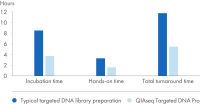
| Time to library | ~ 9 hours | ~ 6 hours | ~8 hours |
| Hands-on time | ~3 hours | ~1.5 hours | ~2 hours |
| Sequencing platforms | Illumina, Ion Torrent, Element Biosciences | Illumina, Ion Torrent, Element Biosciences | Illumina, Element Biosciences |
| Catalog numbers | Fixed (12, 96): 333502, 333505 Custom (96): 333525 | Fixed (12, 96): 333651, 333655 Custom (96): 333675 | Fixed (12, 96): 334051, 334055 Custom (96): 334405, 334455 |
*Sizes indicate the number of reactions per kit.
QIAseq Targeted DNA Sequencing Panels combine molecular barcoding with highly specific target enrichment for sensitive, reliable detection of low-frequency variants.
QIAseq Targeted DNA Panels:
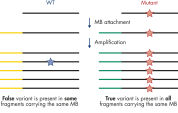
Accuracy and sensitivity. Molecular barcodes help reduce PCR and sequencing errors. In QIAGEN testing, panels achieved >90% sensitivity for NA12878 SNPs and indels at 1% variant frequency, with<15 false positives per megabase under specified tiled-primer conditions.
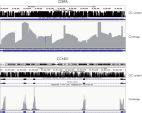
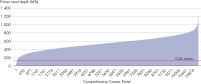
Specificity and uniformity. Optimized enrichment delivers highly specific, uniform coverage, including challenging GC-rich regions.
Flexibility. Supports SNVs, small indels and CNVs, with catalog and custom designs for exons, hotspots, SNPs, intronic regions and promoters.
Workflow. The workflow from extracted DNA to sequencing-ready libraries can be completed in 9 hours.
QIAseq Targeted DNA Pro Panels:
Sensitive variant detection. Integrated UMIs support confident detection of known and novel variants.
Challenging samples. Built-in FFPE repair and optimized chemistry support fragmented DNA and GC-rich targets.
Faster workflow. Sequencing-ready libraries in <6 hours with minimal hands-on time and automation-friendly enzymatic cleanup.
Expanded variant analysis. Supports SNVs, small indels, CNVs, select structural variants and lossof heterozygosity (LOH).
QIAseq Targeted cfDNA Ultra Panels:
Ultra-sensitive detection. Detects variants down to 0.1% VAF using integrated UMIs, high-fidelity chemistry and error correction.
High specificity and uniformity. Delivers >99% specificity with QIAGEN CLC Genomics Workbench, with >99% coverage uniformity and >90% target specificity in supporting data.
Low-input, high-multiplex performance. Uses 5–80 ng human cfDNA and supports up to 20,000 primers per panel, including GC-rich targets.
Efficient workflow. Sequencing-ready libraries within 8 hours with <2 hours of hands-on time.
PCR duplicates and errors introduced during amplification and sequencing can make it difficult to confidently detect variants present at low frequencies in the starting DNA.
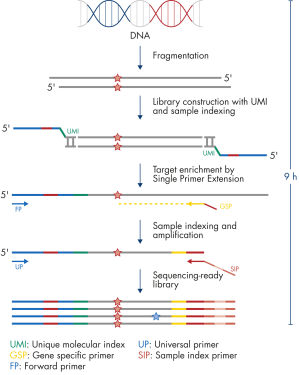
All QIAseq Targeted DNA Sequencing workflows leverage UMI-enabled digital DNA sequencing and Single Primer Extension (SPE) technology to deliver highly specific target enrichment and confident variant detection.
QIAseq Targeted DNA Sequencing Panels follow a streamlined workflow from extracted DNA to variant analysis, with specific steps and sequencing options depending on the panel family.
QIAseq Targeted DNA Sequencing Panels can be used to analyze a variety of DNA variants across a range of sample types and research applications. Supported capabilities vary by panel family.
DNA variants
Sample types
Applications
*QIAseq Targeted cfDNA Ultra Panels are designed specifically for human cfDNA.
Isolated DNA, as low as 20 ng, is enzymatically fragmented to generate small pieces of dsDNA. This is followed by the library construction step, in which IL-N7 adapters, molecular barcodes, and sample indexes are incorporated into DNA fragments generated in the previous step. Library fragments now serve as templates for target enrichment using QIAseq Enrichment Technology. In this step, targets are enriched using a single gene-specific primer and a universal forward primer. The final step is library amplification and sample indexing (for dual indexing) using the IL-S5 sample index primer and a universal primer.