
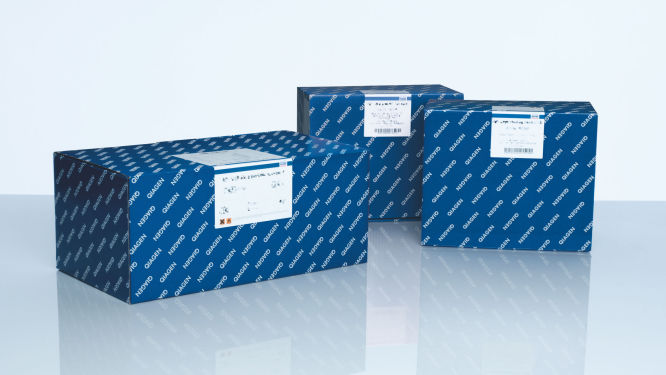
Want to try this solution for the first time?
Get in touch with our team today and request a quote to trial the Phi29 DNA Polymerase (low concentration).
Phi29 DNA Polymerase (low concentration)
Cat no. / ID. P7020-LC-L
2,000 U of Phi29 DNA Polymerase (0.20 mL at 10,000 U/mL) and 10x Phi29 DNA Polymerase Reaction Buffer (1 x 1.5 mL)
Log in To see your account pricing.
Size
Phi29 DNA Polymerase (low concentration)
Phi29 DNA Polymerase (high concentration)
The Phi29 DNA Polymerase (low concentration) is intended for molecular biology applications. This product is not intended for the diagnosis, prevention, or treatment of a disease.
The Phi29 DNA Polymerase is intended for molecular biology applications. This product is not intended for the diagnosis, prevention, or treatment of a disease.
Want to try this solution for the first time?
Get in touch with our team today and request a quote to trial the Phi29 DNA Polymerase (low concentration).
Features
- Highly processive DNA polymerase
- Powerful strand displacement activity
- 3'→5' exonuclease activity (proofreading)
Product Details
Phi29 DNA Polymerase is responsible for the replication of the Bacillus subtilis phage Phi29 (1). The enzyme is a highly processive DNA polymerase (up to 70,000 base insertions per binding event) with a powerful strand displacement activity (2) and a high fidelity 3ʹ→5ʹ proofreading exonuclease function (3), making it ideal for isothermal amplification.
The enzyme is supplied in 10 mM Tris-HCl, 100 mM KCl, 0,1 mM EDTA, 1 mM DTT, 0.5% Tween-20, 0.5% NP-40 and 50% glycerol; pH 7.4 at 25°C,
10X Phi29 DNA Polymerase Reaction Buffer (cat. no. B7020) contains the following: 500 mM Tris-HClm 100 mM (NH4)2SO4, 40 mM DTT and 100 mM MgCl2; pH 7.5 at 25°C.
Ask about REACH compliant formulations.
Performance
Properties
- Storage temperature: –25°C to –15°C
- Exonuclease activity: 3'→5'
- Molecular weight: 66,713 Daltons
| Test | Specification |
| Purity | >99% |
| Specific activity | 83,333 U/mg |
| Single-stranded exonuclease | Functional |
| Double-stranded endonuclease | 100 U: no conversion |
| E. coli DNA contamination | 100 U; 83,333 U/mg |
References
- Blanco, L., and Salas, M. (1984) Proc. Natl. Acad. Sci. 81:5325.
- Blanco, L., et al. (1989) J. Biol. Chem. 264:8935.
- Garmendia, C., et al. (1992) J. Biol. Chem. 267:2594.
Principle
Source of recombinant enzyme protein
The protein is produced by a recombinant E. coli strain carrying the Phi29 DNA Polymerase gene from bacteriophage Phi29.
Unit definition:
One unit is defined as the amount of polymerase required to convert 0.5 pmol of dTTP into acid insoluble material in 10 minutes at 30°C.
Procedure
Quality control analysis
Unit activity was measured using twofold serial dilution method. Dilutions of enzyme were made in 1x Phi29 DNA Polymerase reaction buffer and added to 50 µL reactions containing λ Hind III DNA, 1x Phi29 DNA Polymerase Reaction Buffer, 3H-dTTP, 0.2 µM dTTP and 200 µM dATP, dCTP, dGTP. Reactions were incubated 10 minutes at 30°C, placed on ice, and analyzed using the method of Sambrook and Russell (Molecular Cloning, v3, 2001, pp. A8.25-A8.26).
Protein concentration is determined by OD280 absorbance.
Physical purity is evaluated by SDS-PAGE of concentrated and diluted enzyme solutions followed by silver-stain detection. Purity is assessed by comparing the aggregate mass of contaminant bands in the concentrated sample to the mass of the band corresponding to the protein of interest in the diluted sample.
Single-stranded exonuclease is determined in a 50 µL reaction containing a radiolabeled single-stranded DNA substrate and 10 µL of enzyme solution incubated for 4 hours at 37°C.
Double-stranded endonuclease activity is determined in a 50 µL reaction containing 0.5 µg of plasmid DNA and 10 µL of enzyme solution incubated for 4 hours at 37°C.
E. coli contamination is evaluated using 5 µL replicate samples of enzyme solution that are denatured and screened in a TaqMan qPCR assay for the presence of contaminating E. coli genomic DNA using oligonucleotide primers corresponding to the 16S rRNA locus.
Applications
- Isothermal Amplification
- Whole genome amplification (WGA)
- Rolling circle amplification (RCA)
- Multiple displacement amplification (MDA)
Resources
Important Note (2)
Safety Data Sheets (1)
Certificates of Analysis (1)
Brochures & Guides (1)