
✓ 24/7 automatic processing of online orders
✓ Knowledgeable and professional Product & Technical Support
✓ Fast and reliable (re)-ordering
Saltonase ELISA Kit (5 x 96)
Cat no. / ID. EN32-001
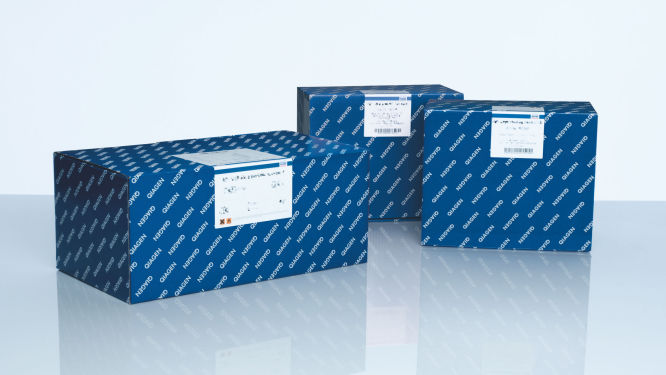
To extend the shelf life of the kit, components are packed in two separate boxes based on their storage requirements: Box 1 is intended for storage at 2–8°C, while Box 2 should be kept at –30 to -15°C. This separation helps maintain the stability and performance of the reagents throughout the kit's intended shelf life.
Log in To see your account pricing.
The Saltonase ELISA Kit (5 x 96) is intended for molecular biology applications. This product is neither intended for the diagnosis, prevention or treatment of a disease, nor has it been validated for such use either alone or in combination with other products.
✓ 24/7 automatic processing of online orders
✓ Knowledgeable and professional Product & Technical Support
✓ Fast and reliable (re)-ordering
Features
- Highly sensitive and specific using monoclonal antibodies
- The assay has a broad operating range of 31.25 to 2000 pg/mL, measured at OD450
- The detection method is colorimetric
- Provided in a practical format of 8-well strips
- Used together with Saltonase® MBG and GMP-grade, they streamline both the enzymatic digestion of nucleic acids and the detection of residual nuclease
Product Details
The Saltonase ELISA Kit (5 x 96) is a high-performance assay designed for the quantitative detection of Saltonase endonuclease, including MBG and GMP-grade formats. Engineered for precision, the assay utilizes highly specific monoclonal antibodies to ensure consistent, reliable results with a detection limit of as low as 31.25 pg/mL.
Optimized for bioprocessing applications, Saltonase is an endonuclease that removes nucleic acids under high-salt and variable pH conditions. In addition, the ELISA kit is ideal for monitoring residual Saltonase levels in in-process samples and verifying its removal in downstream processing and final product.
Each kit includes five pre-coated 96-well microplates in convenient 8-well strip formats and comes with ready-to-use reagents. To extend shelf life and maintain reagent stability, the kit components are packaged in two separate sets. The kit supports a wide quantification range of 31.25–2000 pg/mL and provides sufficient materials for up to 480 measurements.
Performance
| Assay characteristics | Specification |
| Sensitivity | LOQ: 30 pg/mL |
| Broad working range | 31.25–2000 pg/mL |
| Specificity |
Monoclonal Antibodies used Low interference from the sample matrix |
| Accuracy | RE +/- 20% |
| Processing time | 240 min |
| Flexibility | 8-well strip plate format |
Principle
The Saltonase ELISA Kit (5 x 96) utilizes a quantitative sandwich enzyme immunoassay format to ensure high specificity and sensitivity. During the procedure:
- Standards or samples are added to the wells, allowing any residual Saltonase to bind to the immobilized capture antibody.
- After a wash step to remove unbound material, a biotin-labeled anti-Saltonase antibody (Detection A) is introduced, binding to the captured enzyme.
- Following another wash, Streptavidin-Poly-HRP (Detection B) is added. This binds to the biotin-labeled antibody, forming a stable complex.
- After a final wash, a substrate solution is added. A color reaction develops in proportion to the amount of Saltonase present in the sample.
- The reaction is stopped, and the absorbance is measured using a standard microplate reader.
This precise and reliable method enables accurate quantification of Saltonase across a broad dynamic range, making it ideal for both process development and quality control applications.
Procedure
Quality Control
In accordance with the ISO-certified Quality Management System of QIAGEN, each lot of Saltonase ELISA Kit (5 x 96) is tested against predetermined specifications to ensure consistent product quality.
Usage
For optimal performance, users should follow the step-by-step protocol and reagent preparation guidelines outlined in the Saltonase ELISA Kit (5 x 96) Handbook. The assay is designed for ease of use with standard laboratory equipment and includes clear instructions for sample preparation, standard curve generation, and result interpretation.
Before beginning, ensure all reagents are brought to room temperature and that all standards and samples are run in duplicates or triplicates for reliable results.
Please refer to the handbook for complete instructions, reagent handling and troubleshooting recommendations.
Applications
Accurate quantification of Saltonase endonuclease, including MBG and GMP-grade variants, in process intermediates and final drug products to confirm complete enzyme clearance, including:
- Process development support enables monitoring of Saltonase removal during early-stage process optimization, viral vector or vaccine production.
- Downstream purification control confirms effective enzyme removal post-cell lysis, filtration, chromatography and formulation, ensuring product purity and regulatory compliance.
- Routine quality control is designed for reproducible, high-throughput testing across large sample sets with an intra‑ and inter-assay precision.
Resources
Kit Handbooks & Protocols (1)
Safety Data Sheets (1)
Certificates of Analysis (1)
FAQ
Why am I getting poor precision between wells or across plates?
What causes a high background signal in the assay?
Why am I seeing a weak or no signal in my assay?
Can unused wells from the ELISA plate be reused later?
What are the correct storage conditions for the kit and its reagents?