QIAamp DNA Kits for DNA Extraction

用于分离基因组、线粒体、细菌、寄生虫或病毒 DNA

S_1621_RPA_QA_1058

✓ 全天候自动处理在线订单

✓ 博学专业的产品和技术支持

✓ 快速可靠的(再)订购

QIAamp DNA Micro Kit (50)

目录编号 / ID.   56304

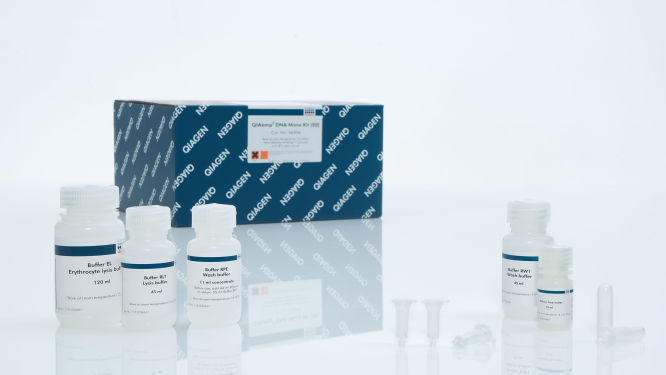
用于 50 次 DNA 制备:50 个 QIAamp MinElute 离心柱、蛋白酶 K、载体 RNA、缓冲液、收集管 (2 mL)
Kit附件
QIAamp DNA Kit
QIAamp DNA Accessory Set
离心柱类型
Micro
Mini
Mini QIAcube
QIAamp DNA Kits 旨在用于分子生物学应用。这些产品不能用于疾病诊断、预防和治疗。

✓ 全天候自动处理在线订单

✓ 博学专业的产品和技术支持

✓ 快速可靠的(再)订购

特点

  • 快速纯化高质量 DNA
  • 无需有机萃取或酒精沉淀
  • 稳定的高产量
  • 完全去除污染物和抑制物
  • 在 QIAcube Connect 上自动纯化 1–12 个样本


产品详情

QIAamp DNA Kits 可从组织、拭子、CSF、血液、体液或尿液洗涤细胞中进行基于硅胶膜技术的核酸纯化。此外,还可从少量新鲜或冷冻血液、组织和干血斑中纯化基因组和线粒体 DNA。不需要机械均质化,因为会对组织进行酶裂解。使用专用的 QIAamp DNA Mini QIAcube Kit,可在 QIAcube Connect 上自动纯化 1–12 个样本的 DNA。使用 QIAamp DNA Micro Kit 和 QIAamp DNA Mini Kit 纯化 DNA 的操作也可在 QIAcube Connect 上自动执行。

QIAamp DNA Mini 标准方案也可使用 TRACKMAN Connected 系统执行。


绩效

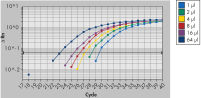
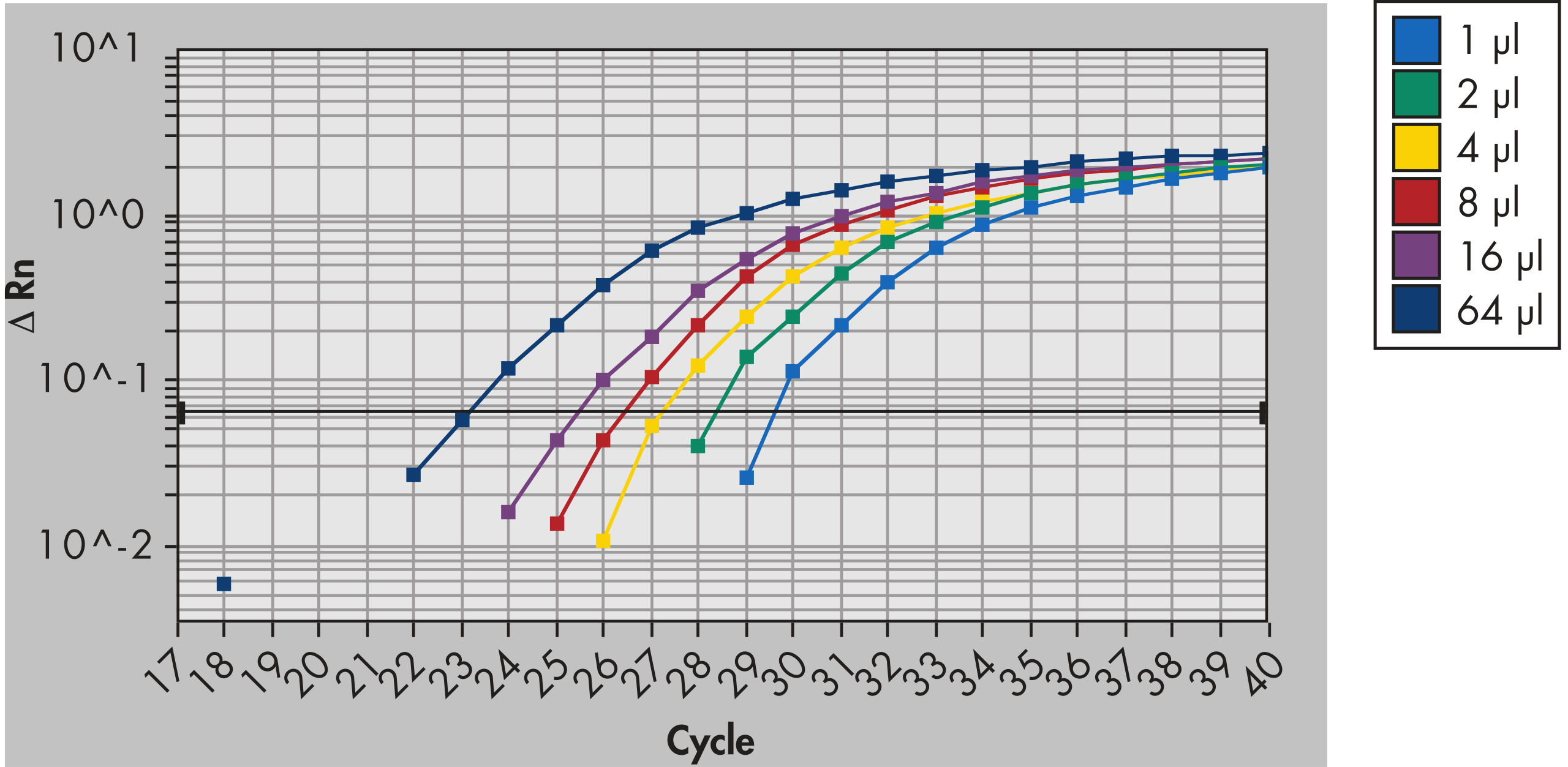
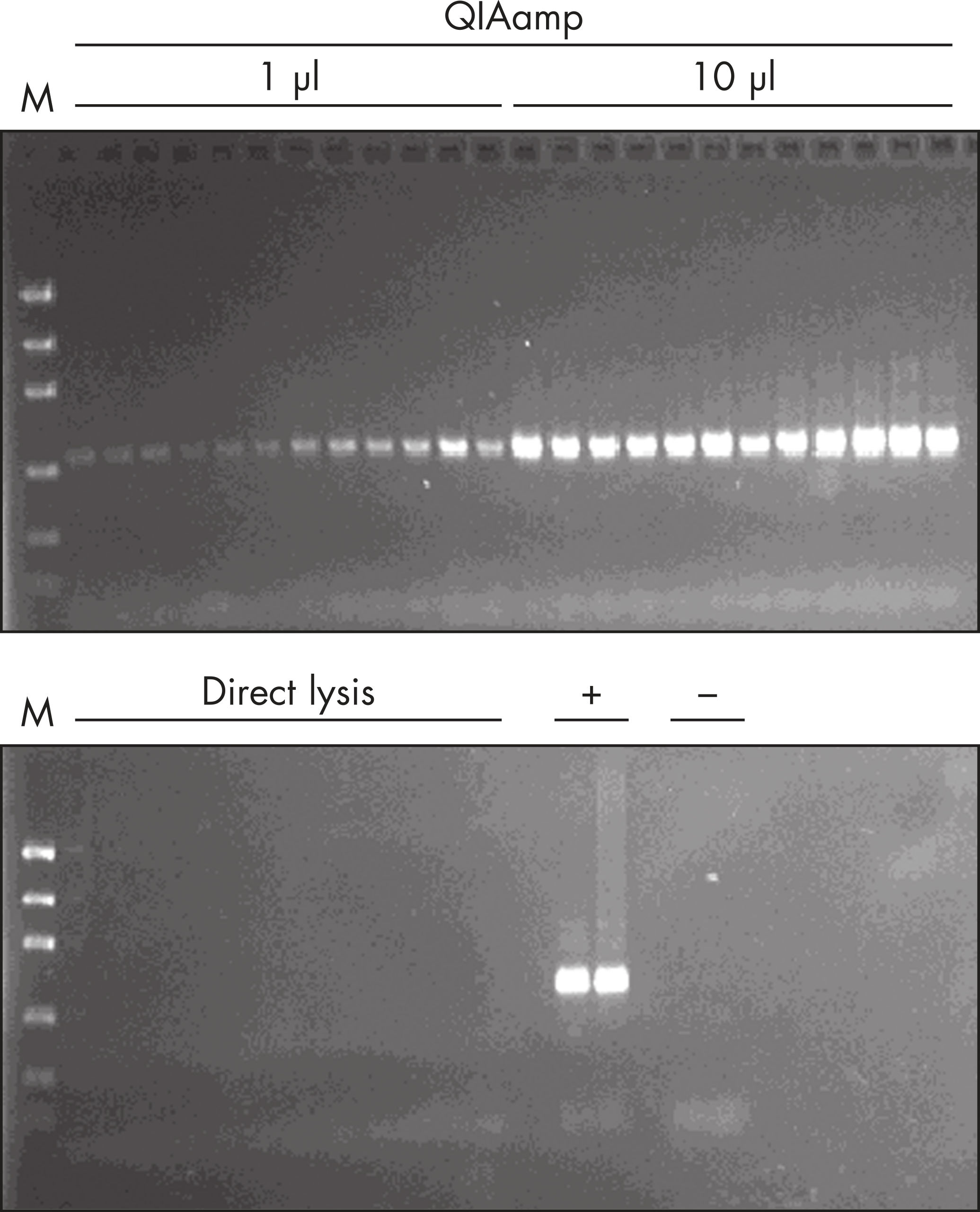
QIAamp DNA Micro Kit 将硅胶膜的选择性附着属性与 20 至 100 µL 的灵活洗脱体积相结合。经 QIAamp DNA Micro Kit 纯化的 DNA 不含蛋白质、核酸酶及其他杂质,适用于荧光定量 PCR(请参阅图“ 从少量样本中高效纯化 DNA”)和激光显微切割 (laser microdissection, LMD) PCR(请参阅图“ 激光显微切割 PCR”)等高灵敏度下游应用。纯化的 DNA 还可用于短串联重复 (short-tandem repeat, STR) 基因分型、单核苷酸多态性 (single-nucleotide polymorphism, SNP) 基因分型或药物基因组学研究。
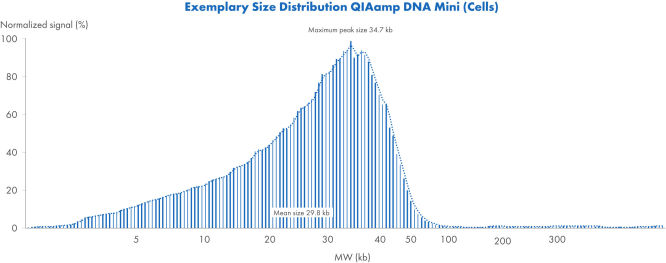
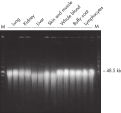
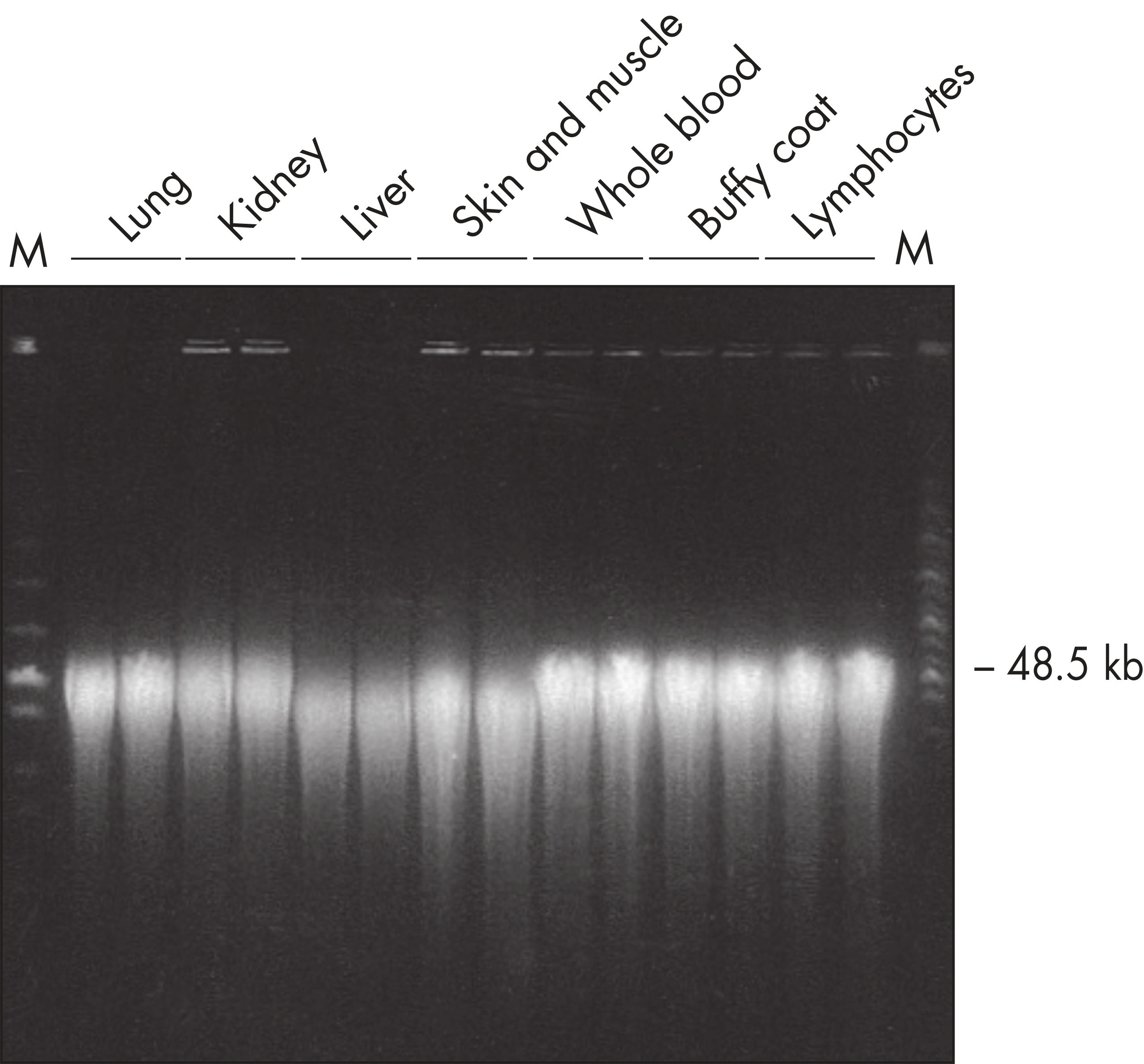
QIAamp DNA Mini Kit 使用快速离心柱或真空程序简化从组织样本中分离 DNA 的过程,所得 DNA 片段高达 50 kb(请参阅图“ 纯化高达 50 kb 的基因组 DNA”)。这种长度的 DNA 可完全变性,并具有最高扩增效率。核酸或 DNA 的产量取决于起始材料(请参阅表“使用 QIAamp DNA Mini Kit 获得的典型产量”)。使用 QIAamp DNA Mini Kit 纯化的 DNA 可用于多种下游应用,包括 PCR 和荧光定量 PCR、Southern blotting、SNP 和 STR 基因分型以及药物基因组学研究。
样本 数量 总核
酸产量 (µg)*
DNA 产量
(µg)†
血液 200 µL 4–12 4–12
血沉棕黄层 200 µL 25–50 25–50
细胞 106 20–30 15–20
肝脏 25 mg 60–115 10–30
大脑 25 mg 35–60 15–30
25 mg 25–45 5–10
心脏 25 mg 15–40 5–10
肾脏 25 mg 40–85 15–30
脾脏 10 mg 25–45 5–30

QIAamp DNA Mini QIAcube Kit 的 DNA 产量大小可高达 50 kb:这种长度的 DNA 可完全变性,并具有最高扩增效率。纯化的 DNA 可用于多种应用,其中包括:

  • 病毒研究
  • 细菌研究
  • 真菌研究
  • 癌症研究
  • 人类基因检测研究
  • 亲子鉴定
  • 法证分析

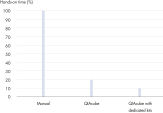
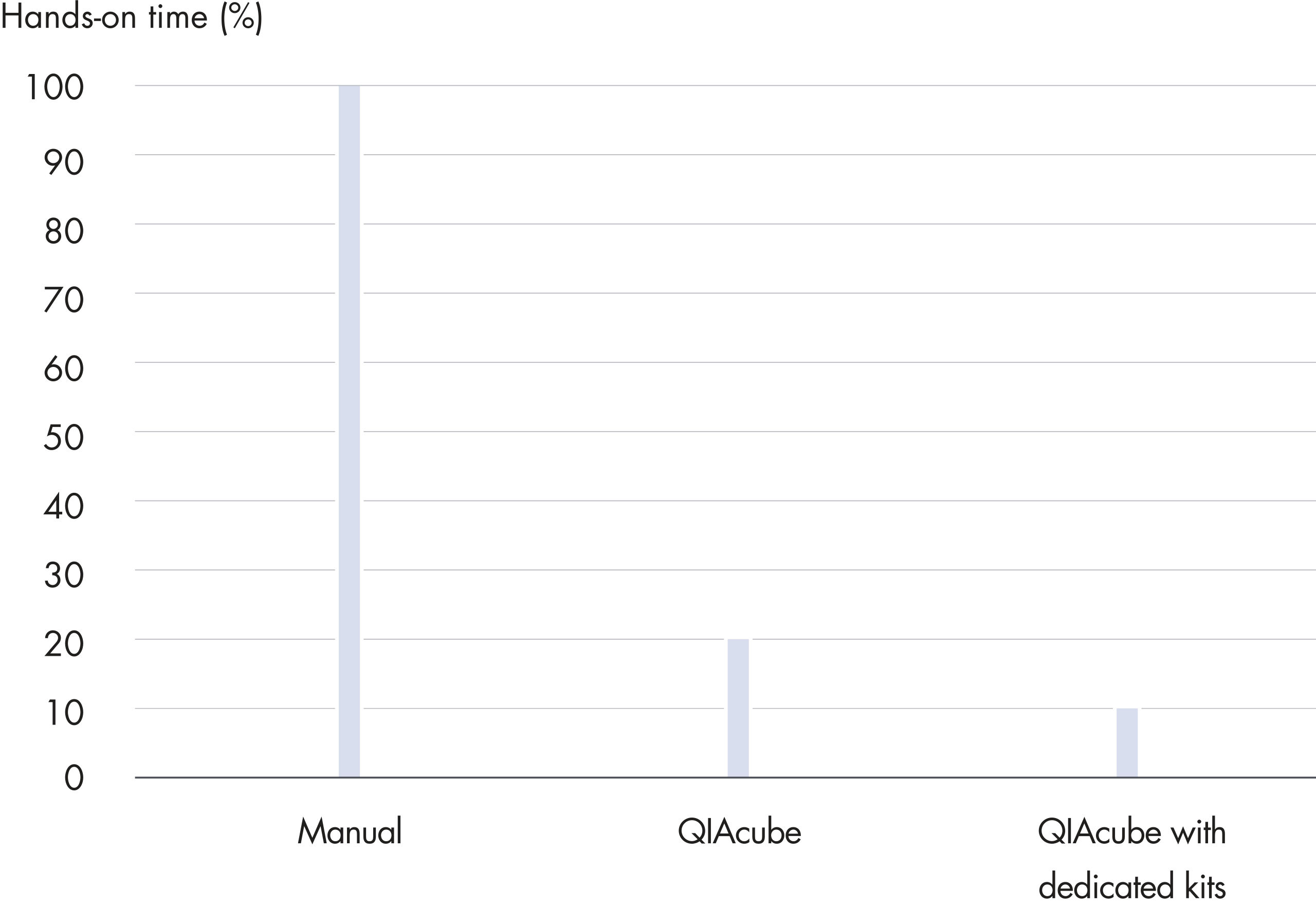
QIAamp DNA Mini QIAcube Kit 通过快速离心柱程序简化从组织样本中分离 DNA 的过程。该试剂盒包括随 QIAamp 离心柱和洗脱管预装的转子适配器,更便利且更省时(请参阅图“ 非常省时”)。
 

原理

在 QIAamp DNA 纯化过程中,DNA 会特异性结合至 QIAamp MinElute 或 QIAamp 硅胶膜上,而污染物则被洗除。无需酚-氯仿提取。PCR 抑制物(如二价阳离子和蛋白质)会通过两个高效的清洗步骤被完全去除,留下纯净的 DNA,然后用水或试剂盒附带的缓冲液中进行洗脱。

QIAamp DNA 技术可从人体组织样本中提取可随时用于 PCR 和印迹操作流程的基因组、线粒体、细菌、寄生虫或病毒 DNA。

QIAamp 样本制备技术已获得完全授权,因此 QIAamp 纯化核酸可用于任何分子检测或其他下游应用而不会有专利侵权风险。


程序

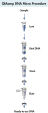
QIAamp DNA Mini Kit 中经过优化的缓冲液和酶可裂解样本、稳定核酸并增强 QIAamp 硅胶膜对 DNA 的选择性吸附。加入酒精,并将裂解物加到 QIAamp 离心柱上。

使用洗涤缓冲液去除杂质,然后在水或低盐缓冲液中洗脱纯净的即用型 DNA。

不需要机械均质化,因为会对组织进行酶裂解。离心柱程序很方便,这意味着实际操作时间仅需 20 分钟(裂解时间因样本来源而异)。

可使用微型离心机处理样本,如果处理的是血液或其他体液,则可使用 QIAvac 24 Plus。此外,QIAamp DNA Mini Kit 采用严格的裂解程序,令其成为从细菌或寄生虫中纯化基因组 DNA 的理想之选。

如需进一步减少手动操作时间,基因组 DNA 的纯化可在 QIAcube 上自动进行。QIAamp DNA Accessory Set A 提供在 QIAcube 上使用 12×QIAamp DNA Mini Kit (50) 分离基因组、线粒体、细菌、寄生虫或病毒 DNA 所需的额外缓冲液和试剂。

真空处理

可以用真空而不是离心来处理血液或其他体液,从而提高 DNA 纯化的速度和便利性。可使用 VacValves 和 VacConnectors 将 QIAamp Mini 离心柱安装在 QIAvac 24 Plus 歧管上。

如果样本流速差异显著,应使用 VacValves 以确保一致的真空度。使用一次性 VacConnectors 以避免任何交叉污染。如果使用 VacConnectors,则还可以通过 QIAvac Luer Adapters 在 QIAvac 6S 上执行 QIAamp 离心程序。

在 QIAcube Connect 上自动分离 DNA

专用的 QIAamp DNA Mini QIAcube Kit 配备预装在 QIAcube 仪器转子适配器中的离心柱和洗脱管,可消除因加载的转子适配器不正确而出错的风险。专用试剂盒系根据 QIAcube 的要求定制,可减少浪费。

QIAcube Connect 上的简单方案(裂解、结合、洗涤和洗脱)和自动方案只需极少的用户交互。

屡获殊荣的 QIAcube Connect 采用先进技术处理 QIAGEN 离心柱,可将自动化、低通量样本制备无缝集成到实验室工作流程中。纯化程序中的所有步骤均全自动执行 — 每次运行最多可处理 12 个样本。QIAcube Connect 和专用的 QIAamp DNA Mini QIAcube Kit 可成为快速、简易、方便地纯化 DNA 的成功组合。


应用

QIAamp DNA Micro Kit 程序适用于多种样本材料,包括少量血液、血卡、尿液、小组织样本(包括激光显微切片)。

QIAamp DNA Mini Kit 非常适合纯化最常用人体组织样本中的 DNA,包括肌肉、肝脏、心脏、大脑、骨髓和其他组织、拭子(口腔、眼、鼻、咽及其他)、CSF、血液、体液及尿液洗涤细胞。可在 20 分钟内从多达 25 mg 组织或多达 200 µl 液体中纯化 DNA,并洗脱于 50–200 µl 中。

QIAamp DNA Mini QIAcube Kit 用于在 QIAcube Connect 上自动分离基因组、线粒体、寄生虫或病毒 DNA。样本来源包括组织、口腔拭子、CSF 和尿液洗涤细胞。


QIAamp DNA Kit 的比较
特点 QIAamp DNA Micro Kit QIAamp DNA Mini Kit
应用 Real-time PCR、STR 分析、LMD-PCR PCR、Southern blotting
洗脱体积 20–100 µL 50–200 µL
格式 离心柱 离心柱
主要样本类型 全血 全血、组织、细胞
处理 手动(离心或真空) 手动(离心或真空)
总 RNA、miRNA、
poly A+ mRNA、DNA 或蛋白质的纯化
基因组 DNA、线粒体 DNA 基因组 DNA、线粒体 DNA、
细菌 DNA、寄生虫 DNA、病毒 DNA
样本量 1–100 µL 200 µL/25 mg/5 x 106
技术 硅胶膜技术 硅胶膜技术
每次运行或每次制备的时间 30 分钟 20 分钟
产量 <3 µg 4–30 µg


辅助数据和图表

资源

试剂盒操作手册 (7)
For purification of genomic DNA from small volumes of blood, dried blood spots, swabs, forensic case work samples, chewing gum, urine, tissues, laser-microdissected tissues; For cleanup of genomic DNA
安全数据表 (1)
Download Safety Data Sheets for QIAGEN product components.
快速启动实验方案 (1)
用户开发的实验方案 (9)
The protocol can be used for fresh or frozen semen samples with equal efficiency. Frozen samples must be thawed thoroughly before use. Please note that lysis time will vary depending on the size and density of the source material.
These procedures have been used successfully for isolation of genomic DNA from Aspergillus and Candida species, from both fungal cultures and blood.
This protocol has only been tested with ‘soft’ tissues (e.g., liver, spleen, thymus, heart, kidney, and brain) and may not work with ‘hard’ tissues (e.g., bone, teeth, and skin).
补充实验方案 (5)
For parallel preparation of genomic, bacterial, or viral DNA or viral RNA from more than 24 samples, we recommend using QIAamp® Spin Columns with 4-6 ml collection tubes. Any tube with an inner diameter of 9-10 mm (outer diameter 11-12 mm) is suitable.
应用与实验方案 (1)
For QIAamp DNA Mini Kit (50) plus QIAamp DNA Accessory Set A, cat. no. 1048145, or QIAamp DNA Mini Kit (250) plus QIAamp DNA Accessory Set B, cat. no. 1048146
用户使用手册 (1)
Safety Data Sheets (1)
Certificates of Analysis (1)

常见问答

When should carrier be used with the QIAamp DNA Mini or the DNeasy Blood & Tissue Kit?

For DNA isolation using the QIAamp DNA Mini, or the DNeasy Blood & Tissue Kit, we recommend using carrier DNA when expected yields are below 10 ng. If possible, carrier DNAs such as poly-dA, poly-dT or poly-dA:dT should be used. Other carrier DNAs such as herring sperm DNA may interfere with subsequent PCR by binding primers nonspecifically.

Please note that poly-dA may interfere with oligo-dT primers, and, in this case, a different carrier DNA should be used. The concentration of carrier DNA should be at least 10 µg/ml. Optimal amounts need to be determined empirically for each application. The size distribution of carrier DNAs is typically in the range of 100 bp to 10 kb.

FAQ-100
Can mitochondria separated with the Qproteome Mitochondria Isolation Kit be used for downstream DNA isolation?

Even though we have not tested this, we assume that both the QIAamp DNA Micro Kit and the AllPrep DNA/RNA Mini Kit will work to isolate DNA from mitochondria separated with the Qproteome Mitochondria Isolation Kit.


FAQ-1188
How do I safely inactivate biohazardous flow-through material?

Always dispose of potentially biohazardous solutions according to your institution’s waste-disposal guidelines. Although the lysis and binding buffers in QIAamp, DNeasy, and RNeasy kits contain chaotropic agents that can inactivate some biohazardous material, local regulations dictate the proper way to dispose of biohazards. DO NOT add bleach or acidic solutions directly to the sample-preparation waste. Guanidine hydrochloride in the sample-preparation waste can form highly reactive compounds when combined with bleach.
Please access our Material Safety Data Sheets (MSDS) online for detailed information on the reagents for each respective kit.

FAQ-12
Does the Epitect Bisulfite Kit also work on DNA extracted from plants?

Bisulfite conversion of unmethylated cytosines into uracils with the EpiTect Bisulfite Kit works on DNA irrespective of the source organism. The DNA template needs to be of high purity for efficient conversion. We recommend to use genomic DNA extracted with our DNA isolation kits for clinical or animal and plant samples as a template for the EpiTect Bisulfite Kit.

FAQ-1209
Are QIAamp DNA isolation kits suitable for apoptosis studies?

Yes. We have used the QIAamp DNA Blood Mini Kit to purify DNA fragments as small as 168 base pairs. Our product profile for this kit shows a picture of the apoptotic banding pattern obtained after storage of blood samples at 4°C for extended periods of time prior to isolating DNA.


FAQ-149
Do you have a protocol for cleanup of REPLI-g amplified DNA?

Yes, please follow the Supplementary Protocol 'Purification of REPLI-g amplified DNA using the QIAamp DNA Mini Kit' (RG14).


FAQ-1545
Do you have a protocol for purification of genomic DNA from cultured cells using the QIAamp DNA Micro Kit?

Yes, please follow the User-Developed Protocol 'Purification of genomic DNA from cultured cells using the QIAamp DNA Micro Kit' (QA43).

Note:  The maximum amount of cells that can be used with this protocol has not been thoroughly tested.  However, we would suggest using no more than 1 x 10⁶ cells.


FAQ-1547
What dedicated QIAcube Kits are available?
How can I precipitate genomic DNA using isopropanol?

Alcohol precipitation is commonly used for concentrating, desalting, and recovering nucleic acids. Since less alcohol is required for isopropanol precipitation, this is the preferred method for precipitation of DNA from large volumes. In addition, isopropanol precipitation can be performed at room temperature, which minimizes co-precipitation of salt that interferes with downstream applications.


Procedure

  1. Adjust the salt concentration, for example, with sodium acetate (0.3 M, pH 5.2, final concentration) or ammonium acetate (2.0–2.5 M, final concentration).
  2. Add 0.6–0.7 volumes of room-temperature isopropanol to the DNA solution and mix well.
  3. Centrifuge the sample immediately at 10,000–15,000 x g for 15–30 min at 4°C
  4. Carefully decant the supernatant without disturbing the pellet.
  5. Wash the DNA pellet by adding 1–10 ml (depending on the size of the preparation) of room-temperature 70% ethanol. This removes co-precipitated salt and replaces the isopropanol with the more volatile ethanol, making the DNA easier to redissolve.
  6. Centrifuge at 10,000–15,000 x g for 5–15 min at 4°C.
  7. Carefully decant the supernatant without disturbing the pellet.
  8. Air-dry the pellet for 5–20 min (depending on the size of the pellet).
  9. Redissolve the DNA in a suitable buffer.

Tip: Use a buffer with a pH of 7.5–8.0, as DNA does not dissolve easily in acidic buffers. Often distilled water can have an acidic pH. The addition of EDTA protects the DNA from DNase digestion.

Tip: High-molecular-weight DNA, such as genomic DNA, should be redissolved very gently to avoid shearing. If the DNA pellet does not dissolve easily, heat at 55°C for 1–2 h with gentle shaking.

FAQ-2953
303 - Can I use my own lysis buffer with the DNeasy Blood & Tissue or QIAamp DNA Mini Kit?

If you have optimized the lysis conditions for a specific sample type, you can lyse the sample in your lysis buffer, and follow the Supplementary Protocol 'Purification of total DNA from crude lysates using the DNeasy Blood & Tissue Kit' (DY15), or the corresponding protocol in the Appendix of the QIAamp DNA Mini Kit and QIAamp DNA Blood Mini Kit Handbook.


FAQ-303
How do I perform a DNA precipitation to concentrate my sample?
  • Add 1/10 volume of 3 M Na-Acetate pH 5.2, and 2 to 2.5 volumes of ice-cold 100% ethanol to the DNA sample
  • Mix, and store at –20°C for at least 1 h to precipitate the DNA
  • Recover the precipitated DNA by centrifugation at full speed in a microcentrifuge for 15–20 min
  • Pour off the ethanol and wash the pellet twice with room-temperature 70% ethanol
  • Allow the DNA pellet to air-dry
  • resuspend the DNA in a suitable volume of sterile TE buffer or distilled water
FAQ-305
How can QIAGEN Protease and Proteinase K be inactivated?

QIAGEN Protease is inactivated by incubation at 70°C for 15 minutes.

To our knowledge, Proteinase K cannot be completely heat-inactivated. Even when incubating at 95°C for 10 minutes, some enzymatic activity remains. This will not negatively affect the QIAamp Procedure, since the enzyme will be efficiently removed by the wash steps in the protocols.

FAQ-315
3212 - What is the minimum size of DNA fragment that can be isolated with QIAamp DNA Mini kit?

Fragments of approximately 200 bp can be isolated with good recovery. Smaller fragments can also be isolated but the recovery will be reduced with decreasing fragment lengths.

FAQ-3212
What is the shelf-life for QIAGEN Proteinase K (cat. no. 19131, 19133)?

QIAGEN Proteinase K is stable for up to 1 year after delivery when stored at room temperature. To prolong the shelf-life of Proteinase K, storage at 2–8°C is recommended.

FAQ-3447
What is the minimum number of cells that can be efficiently processed with the QIAamp DNA Mini and QIAamp Blood Mini kits and what is the expected yield?
In QIAGEN labs, we have isolated DNA from a minimum of 1000 cells or 1 ul of whole blood sample. The expected yield from 1 ul of whole blood with 4000-7000 leukocytes is 30 ng of genomic DNA. The expected yield of genomic DNA from a single eukaryotic cell is 6 pg. However, please bear in mind that for these small quantities, we would recommend the QIAamp DNA Micro kit instead.
FAQ-3516
Is the quality and size of DNA extracted with the QIAamp DNA Mini and QIAamp Blood Mini kit good enough to generate DNA-libraries for next generation sequencing (NGS)?
The size of DNA obtained with QIAamp DNA Mini and QIAamp Blood Mini kit ranges between 100 bp and 50 kb, with 30 kb fragments predominating. The 30 kb fragments are a good starting point for most of the library preparations. Furthermore, the purified DNA is free of protein, nucleases, and other contaminants and inhibitors, and therefore is suitable for NGS.
FAQ-3518
How much protein does one vial of Protease in the QIAamp spin kits contain? What is the concentration of the resuspended Protease?
A vial of Protease with 7.5 Anson units (AU) contains approximately 167 mg protein (45 mAU/mg protein). If the content of the vial is diluted in 7 ml, the concentration would roughly be 24 mg/ml.
FAQ-3520
I received a kit containing the MinElute columns; however, they were left out for a while and not stored at 2–8°C upon receipt. Can I still use them?

The MinElute spin columns included in the following kits should be stored at 2–8°C upon arrival: AllPrep DNA/RNA Micro, EpiTect Fast DNA Bisulfite, EpiTect Fast FFPE Bisulfite, EpiTect Fast LyseAll Bisulfite, EpiTect Plus DNA Bisulfite, EpiTect Plus FFPE Bisulfite, EpiTect Plus LyseAll Bisulfite, exoRNeasy Serum/plasma Maxi, exoRNeasy Serum/Plasma Midi, GeneRead DNA FFPE, GeneRead rRNA Depletion, GeneRead Size Selection, MinElute Gel Extraction, MinElute PCR Purification, MinElute Reaction Cleanup, miRNeasy FFPE, miRNeasy Micro, miRNeasy Serum/Plasma, QIAamp DNA FFPE, QIAamp DNA Investigator, QIAamp DNA Micro, QIAamp MinElute Media, QIAamp MinElute Virus Spin, QIAamp MinElute Virus Vacuum, RNeasy FFPE, RNeasy Micro, RNeasy Plus Micro.

Short-term storage (up to 4 weeks) at room temperature (15–25°C) does not affect the performance. However, for optimal performance and quality, storage temperature should not exceed 25°C.

FAQ-3560
How can I improve DNA yields from very tough tissues using the DNeasy Blood & Tissue Kit or the QIAamp DNA Mini Kit?

Efficient DNA isolation requires thorough sample disruption and digestion.

Although the QIAamp and DNeasy procedures requires no mechanical disruption of the tissue sample, the lysis time will be reduced if the sample is ground in liquid nitrogen or mechanically homogenized in advance. For mechanical homogenization, a rotor–stator homogenizer, such as the QIAGEN TissueRuptor, or a bead mill, such as the QIAGEN TissueLyser, can be used.

To improve digestion of tough tissue samples, Proteinase K incubation at 56°C can be performed overnight. DNA yields may be improved by increasing the amount of Proteinase K or by adding additional proteinase K after several hours of digestion.  

FAQ-374
Which QIAGEN DNA extraction kits are compatible with the PAXgene Saliva Collector?

Protocols for automated DNA extraction from saliva stabilized with the PAXgene Saliva Collector are available for the QIAsymphony DNA Midi Kit with the QIAsymphony SP instrument or the QIAamp DNA Mini Kit with the QIAcube (Classic and Connect). 
For manual extraction, supplementary protocols are available for the QIAamp DNA Mini and Gentra Puregene Cell Kits (see resources section).

FAQ-3821
What are the expected DNA yields from different tissues using the QIAamp DNA Mini Kit?

The expected DNA yields from different tissues using the QIAamp DNA Mini Kit are as follows:

Sample Nucleic acid yield without RNase A treatment (ug) DNA yield with RNase A treatment (ug)
Blood (200 ul) 4–12 4–12
Buffy coat (200 ul) 25–50 25–50

Cultured cells (5 x 10e6)

20–30 15–20
Liver (25 mg) 60–115 10–30
Brain (25 mg) 35–60 15–30
Lung (25 mg) 8–20 5–10
Heart (25 mg) 25–45 5–10
Kidney (25 mg) 40–85 15–30
Spleen (10 mg) 25–45 5–30

DNA was purified with QIAamp Kits following standard protocols.

FAQ-45
Why is carrier RNA used during the isolation of gDNA from microdissected samples with the QIAamp DNA Micro Kit?
When purifying small amounts of DNA using silica technology, the addition of carrier RNA or DNA enhances the recovery of DNA. Carrier prevents the small amount of target nucleic acid present in the sample from being irretrievably bound. Other typical “precipitation” carriers, such as glycogen, cannot be used. The carrier used must be a nucleic acid, and of a large enough size (>200nt) to bind to the silica membrane.
FAQ-473
Why are the centrifugation speeds for the QIAamp DNA Mini kit at 6000 x g? Can I spin at full speed?
The initial centrifugations are performed at 6000 x g simply to reduce centrifuge noise. The final spin with the ethanolic wash buffer and the optional drying spin are both done at full speed to enhance ethanol drying from the spin column. Earlier centrifugation steps can also be performed at full speed, and this will not negatively affect DNA yield or quality.
FAQ-474
What do you recommend for the cleanup of genomic DNA (gDNA)?

Using QIAGEN Genomic-tips

Protocol for DNA cleanup using Genomic-tips can be found in the 'Special Applications' section of the QIAGEN Genomic DNA Handbook.


Using QIAamp DNA Micro kit

Up to 10ug of gDNA can be cleaned using the cleanup protocol in the QIAamp DNA Micro Handbook.


Using Gentra Puregene Reagents

Gentra Puregene Handbook has protocols for removal of proteins and RNA from purified gDNA in Appendix C and Appendix D respectively.

FAQ-618
What is the expected yield of genomic DNA isolated from bacteria with the DNeasy Blood & Tissue or QIAamp DNA Mini Kit?

The expected yield of genomic DNA isolated from bacteria with the DNeasy Blood & Tissue Kit or the QIAamp DNA Mini Kit is approximately 10 ug of DNA per 2x 10⁹ bacterial cells. Note that yields of genomic DNA will vary depending on bacterial strain, quality of the starting material, growing conditions, and the amount of material processed.


FAQ-632
Why does the QIAamp DNA Mini Tissue Protocol require both ATL and AL buffer, while the Blood Protocol only uses AL?

Tissue is more difficult to lyse than cells in a blood sample. Therefore an additional incubation step in buffer ATL containing Proteinase K is included in the Tissue Protocol to achieve complete sample lysis. Blood cells will directly lyse by incubation in Buffer AL containing QIAGEN Protease. Buffer AL is required in both protocols to ensure appropriate conditions for DNA binding to the silica membrane. For further details on the protocols, please refer to the QIAamp DNA Mini and QIAamp DNA Blood Mini Kit Handbook.

FAQ-633
What can be used as an alternative to the A260 measurement for quantification of small amounts of RNA and DNA?

Small amounts of RNA and DNA may be difficult to measure spectrophotometrically. Fluorometric measurements, or quantitative RT-PCR and PCR are more sensitive and accurate methods to quantify low amounts of RNA or DNA.

Fluorometric measurements are carried out using nucleic acid binding dyes, such as RiboGreen® RNA Quantitation Reagent for RNA, and PicoGreen® DNA Quantitation Reagent for DNA (Molecular Probes, Inc.).

FAQ-728
What is the composition of buffer AE?

The composition of Buffer AE is:

  • 10 mM Tris-Cl
  • 0.5 mM EDTA; pH 9.0.
FAQ-730
Do I need to have EDTA in the buffer in which I am going to store my isolated genomic DNA?

EDTA chelates divalent cations which are required for nuclease activity. While the genomic DNA (gDNA) extracted using QIAGEN products, should not have any nuclease activity, it is possible to introduce nucleases during repeated long-term access of the DNA. EDTA helps to prevent any nuclease activity introduced after the genomic DNA extraction procedures.

However, if the gDNA is stored frozen at -20oC or -80oC, nuclease activity is much reduced. It may be possible to leave EDTA out of the storage buffer without negative consequences when samples are kept under these conditions, and when repeated freeze-thaw cycles are avoided.

We do recommend however that gDNA be stored in a neutral to a slightly basic buffered solution (e.g. 10 mM Tris-Cl pH 8.5 to 9.0) to prevent DNA degradation by acid hydrolysis. Note that deionized water mostly has an acidic pH.

FAQ-754
What is the difference between QIAGEN Protease and QIAGEN Proteinase K provided in various QIAamp Kits?

QIAGEN Proteinase K is a subtilisin-type protease, which cleaves at the carboxyl side of hydrophobic, aliphatic and aromatic amino acids. It is particularly suitable for short digestion times. It possesses a high specific activity over a wide range of temperatures and pH values with substantially increased activity at higher temperature. Soluble calcium is not essential for enzymatic activity. This means that EDTA, which is used to inhibit Mg2+-dependent enzymes such as nucleases, will not inhibit Proteinase K activity.

QIAGEN Protease is a broad-specificity Serine protease with high activity, cleaving preferentially at neutral and acidic residues. It is an economical alternative to Proteinase K for isolation of native DNA and RNA from a variety of samples.

FAQ-761
Do you have a protocol for the isolation of genomic DNA from bone?

Yes, we have the following protocols:

  • Isolation of genomic DNA from compact bone using the QIAamp DNA Mini Kit (QA02)
  • Isolation of genomic DNA from compact bone using the DNeasy Blood & Tissue Kit (DY01)
  • Purification of genomic DNA from bones using the QIAamp DNA Micro Kit (QA39)
  • Purification of archive-quality DNA from bone fragments using the Gentra Puregene Tissue Kit (PG38).
FAQ-908
Do you have a protocol for the isolation of genomic DNA from sperm?

Yes, we have the following protocols:

  • Isolation of genomic DNA from sperm using the QIAamp DNA Mini Kit; protocol 1 (QA03), long procedure
  • Isolation of genomic DNA from sperm using the QIAamp DNA Mini Kit; protocol 2 (QA04), short procedure
  • Purification of total DNA from animal sperm using the DNeasy Blood and Tissue kit; protocol 1 (DY02), long procedure
  • Purification of total DNA from animal sperm using the DNeasy Blood and Tissue kit; protocol 2 (DY03), short procedure
  • Purification of DNA from epithelial cells mixed with sperm cells using the QIAamp DNA Micro Kit (QA40).
FAQ-909
Do you have a protocol for the isolation of genomic DNA from fungi?

Yes, we have the following protocols:

  • Isolation of genomic DNA from fungi (culture and blood) using the QIAamp DNA Mini Kit (QA09).
  • Isolation of genomic DNA from plants and filamentous fungi using the QIAGEN Genomic-tip (QG08).
FAQ-911
Do you have a protocol for Acetyl Cysteine (NALC) treatment of viscous samples?

Yes, please follow either of the User-Developed Protocols:

FAQ-913
Do you have a protocol for the detection of Bordetella pertussis DNA by PCR?

Yes, please follow the User-Developed Protocol 'Detection of Bordetella pertussis DNA by PCR' (QA14). The procedure is for use with the QIAamp DNA Mini Kit.  Please contact Technical Service for this protocol.

FAQ-914
Do you have a protocol for isolation of genomic DNA from saliva and mouthwash?

Yes, we have the following protocols:

  • Isolation of genomic DNA from saliva and mouthwash using the QIAamp DNA Mini Kit; vacuum procedure (QA19v)
  • Isolation of genomic DNA from saliva and mouthwash using the QIAamp DNA Mini Kit; spin procedure (QA19s)
  • Isolation of genomic DNA from saliva using the DNeasy Blood & Tissue Kit; spin procedure (DY07)
FAQ-917
Do you have a protocol for the isolation of DNA from soft tissues using the TissueLyser?
Do you have a protocol for the isolation of DNA from epithelial cells mixed with sperm cells?
FAQ-926