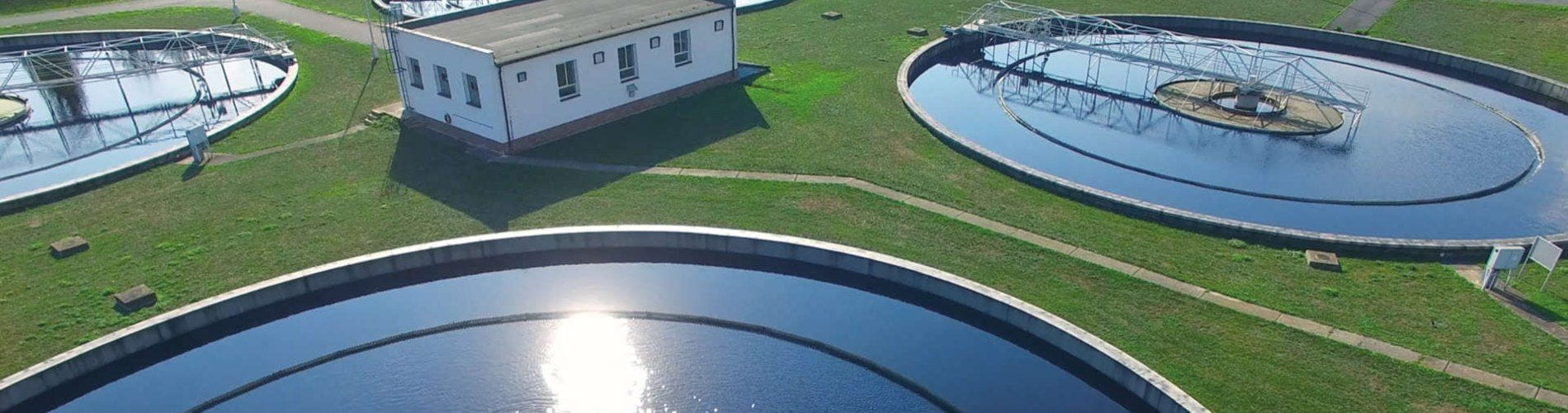
Wastewater testing is making waves
There's growing evidence that successful detection of SARS-CoV-2 RNA in wastewater or natural sewage is a powerful surveillance tool to prevent a surge in COVID-19 infections, and specifically of new variants that are gaining ground in certain communities. Applying wastewater-based epidemiology could afford reduced pressure on the public health system to manageable levels and help make informed decisions for better and timely treatments or vaccines.
Latest – new solutions, webinars and updates
Dr. Jyotisna Saxena at the Ohio Department of Health Laboratory focuses on the detection of SARS-CoV-2 in wastewater samples using QIAGEN methods for RNA extraction and dPCR.
Nothing goes to waste
While wastewater surveillance does not replace individual patient testing, it provides a community-level understanding of the prevalence of the disease and the increasing or declining level of the virus. The tool is intended to be used in municipal wastewater treatment plants or facilities such as nursing homes, student dormitories, quarantine facilities, prisons, and flights and cruise ships, wherever feces are flushed into wastewater systems.
An evolving science
The advantages of monitoring coronaviruses in wastewater have convinced experts to call for comprehensive testing programs, but the testing methods differ widely, and there’s no consensus on best practices. One of the major challenges is the lack of an optimized and standardized sample processing workflow from sample collection to RNA detection. The efficiency of viral concentration methods, sampling variability, viral genome stability and the sensitivity of the detection assay are some of the factors to consider while designing a testing strategy. Due to the highly heterogeneous nature and presence of inhibitors, one must tailor methods selected at each step for use with wastewater and validate performance using appropriate controls.
Recommended workflow solutions for reliable data
QIAGEN supports wastewater testing efforts with research tools spanning nucleic acid extraction, amplification and detection, overcoming some of the common challenges with the analytical protocols along the workflow.
Viral RNA extraction
Wastewater samples are inhibitory. The choice of viral RNA extraction kit is sample-dependent.
- AllPrep PowerViral DNA/RNA or RNeasy PowerMicrobiome kits are recommended for sludge, pelleted samples derived after ultracentrifugation or other concentrated samples
- RNeasy PowerWater Kit is recommended for processing filtered water samples
The following kits can be automated on the QIAcube instruments based on your speed and throughput requirements.
Viral RNA quantification
Accurate testing requires quantification methods specifically designed for wastewater samples. The QIAcuity OneStep Advanced Probe Kit has been developed and can be used in conjunction with the QIAcuity Digital PCR System and QIAcuity Nanoplates. The GT-Digital SARS-CoV-2 Wastewater Surveillance Assay For QIAcuity* comprises a molecular reagent kit containing all primers, probes and controls for wastewater surveillance of SARS-CoV-2 in compliance with the CDC Wastewater Surveillance Testing Method guidance for reporting to the National Wastewater Surveillance System (NWSS). Digital PCR can measure low concentrations of SARS-CoV-2 RNA present in wastewater with good precision and shows a good correlation with qPCR results. Moreover, digital PCR can accurately distinguish and quantify the variants resulting from the mutating virus in a sample and also provide an accurate measure of the copy number of both wild-type and variant genomes.
Testimonials – what our customers say
"In a trial run with the new, high-throughput QIAcuity Eight, we were able to detect new variants of SARS-CoV-2 in wastewater samples successfully. Our tests have proven that this fast and scalable technology from QIAGEN can provide a valuable addition to our environmental, biological testing services, which we will offer to our clients in the near future."
Related content
COVID-19 wastewater testing FAQs
References
- CDC Wastewater Surveillance Testing Methods
- Hart, O.E. and Halden, R.U., 2020 Computational analysis of SARS-CoV-2/COVID-19 surveillance by wastewater-based epidemiology locally and globally: Feasibility, economy, opportunities and challenges
- Silverman, J.D. et al., 2020 Using influenza surveillance networks to estimate state-specific prevalence of SARS-CoV-2 in the United States
- Gao, Z. et al., 2021 A systematic review of asymptomatic infections with COVID-19
- Ahmed, W. et al., 2021 SARS-CoV-2 RNA monitoring in wastewater as a potential early warning system for COVID-19 transmission in the community: A temporal case study
- Kitajima, M. et al., 2020 SARS-CoV-2 in wastewater: State of the knowledge and research needs
- Haramoto, E. et al., 2020 First environmental surveillance for the presence of SARS-CoV-2 RNA in wastewater and river water in Japan
- Ahmed, W. et al., 2020 First confirmed detection of SARS-CoV-2 in untreated wastewater in Australia: A proof of concept for the wastewater surveillance of COVID-19 in the community
- Zhou, N. et al., 2020 Survey of rapid development of environmental surveillance methods for SARS-CoV-2 detection in wastewater
- Philo, S.E. et al., 2021 A comparison of SARS-CoV-2 wastewater concentration methods for environmental surveillance
- Pecson, B.M. et al., 2021 Reproducibility and sensitivity of 36 methods to quantify the SARS-CoV-2 genetic signal in raw wastewater: findings from an interlaboratory methods evaluation in the U.S.
- Boogaerts, T. et al., 2021 An alternative approach for bioanalytical assay optimization for wastewater-based epidemiology of SARS-CoV-2 - ScienceDirect
- [Preprint version only] Viveros ML et al. (2021). Wild Type and Variants of Sars-Cov-2 in Parisian Sewage: Dynamics in Raw Water and Fate in Wastewater Treatment Plants.
- Ahmed, W. et al., 2022 Comparison of RT-qPCR and RT-dPCR Platforms for the Trace Detection of SARS-CoV-2 RNA in Wastewater
-
Amman, F. et al. 2022 Viral variant-resolved wastewater surveillance of SARS-CoV-2 at national scale
In the news
- https://mobile.france.tv/france-3/provence-alpes-cote-d-azur/edition-de-proximite-la-page-var/2267677-emission-du-mercredi-3-fevrier-2021.html
- https://youtu.be/zyb8_XZeqN0
- https://www.udel.edu/udaily/2021/january/wastewater-testing-coronavirus-sewers-new-castle-county/
- QIAcuity dPCR as one of the platforms selected by NWSS: CDC Wastewater Surveillance Shifts to Public Health Labs With Planned Digital PCR Pathogen Panels | Genomeweb
*The GT-Digital SARS-CoV-2 Wastewater Surveillance Assay For QIAcuity is currently available in the United States and Canada and can be ordered at www.gtmolecular.com. Contact your country representative for product availability details outside the United States and Canada. GT Molecular is The Molecular App Company™.