
이 솔루션을 처음으로 사용해 보고 싶으신가요?
지금 바로 QIAGEN 팀에 문의하여 DNeasy Blood & Tissue Kit (50) 평가판 키트 견적을 요청해 보세요.
DNeasy Blood & Tissue Kit (50) icon_0368_ls_gen_eco_friendly-s
카탈로그 번호 / ID. 69504
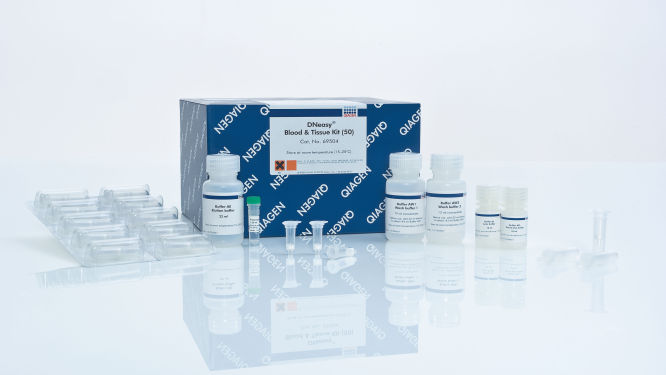
DNeasy Mini 스핀 컬럼 50개, 단백분해효소 K, 완충액, 채집 튜브(2ml)
키트
DNeasy Blood & Tissue Kit
DNeasy Blood & Tissue QIAcube Kit
Eco-friendlier kit
컬럼 유형플레이트 유형
Mini
96-well
준비
50
250
DNeasy Blood & Tissue Kits은/는 분자생물학 분야에 사용하기 위한 것입니다. 이 제품들은 질병의 진단, 예방, 또는 치료 목적으로 사용할 수 없습니다.
이 솔루션을 처음으로 사용해 보고 싶으신가요?
지금 바로 QIAGEN 팀에 문의하여 DNeasy Blood & Tissue Kit (50) 평가판 키트 견적을 요청해 보세요.
특징
- 다양한 샘플 유형을 위한 표준화된 방법
- 특수 샘플에서도 높은 수율
- 고품질 DNA
- 다양한 시재료에 최적화된 프로토콜
- 스핀 컬럼 및 96-well 고처리량 형식
- QIAcube Connect에서의 자동화 워크플로
제품 세부 정보
DNeasy Blood & Tissue Kits는 스핀 컬럼과 96-well 플레이트 형태에서 실리카 기반, 무 페놀 및 클로로포름 공정을 사용하여 신속하게 DNA를 추출합니다. 대부분의 샘플은 단백분해효소 K를 이용해 직접 분해하면 기계적 파쇄과정이 불필요하므로 실제 처리 시간이 줄어듭니다. 특정 샘플에 맞춤화된 프로토콜을 통해 고품질 DNA를 지속적으로 추출할 수 있으므로 생명 과학, 유전형 분석, 수의학 병원균 연구에 적합합니다. QIAcube Connect에서 키트를 자동화할 수 있습니다.
보다 지속 가능한 대안인 QIAwave DNA Blood & Tissue Kit는 플라스틱과 판지 사용량을 각각 최대 62%와 58%까지 줄여줍니다. 이 키트에는 절차 내내 재사용할 수 있는 100% 재활용 플라스틱으로 만든 폐기물 튜브가 포함되어 있습니다. QIAwave 완충액은 농축되어 있어 각 병당 플라스틱 사용량을 최대 90%까지 줄일 수 있습니다. 시각적인 차이에도 불구하고 QIAwave Kit는 표준 키트와 마찬가지로 동일한 화학 성분과 성능을 지니고 있으며 사용이 편리합니다. 참고: 완충액을 재구성하려면 멸균된 유리병이 필요합니다.
My Green Lab과의 파트너십을 통해 DNeasy Blood & Tissue Kit (50/250)와 QIAwave DNA Blood & Tissue Kit (50/250)의 환경 영향을 평가했습니다. My Green Lab ACT 환경 영향 지수 라벨은 다음을 포함해 다양한 지속가능성 기준에 따라 제품을 평가하고 점수를 매기기 위한 라벨입니다.
- 제조
- 책임 있는 화학 물질 관리
- 제품과 포장재 속의 지속 가능한 성분
- 수명이 다했을 때의 포장 폐기
제품은 1점부터 10점까지 점수가 매겨지며, 에너지와 물 소비량은 각각 kWh 또는 갤런당 1점씩 점수가 매겨집니다. 점수가 낮을수록 환경 영향이 낮습니다. 그림 'DNeasy Blood & Tissue Kit 및 QIAwave DNA Blood & Tissue Kit ACT 환경 영향 지수 라벨' 미국( 50/ 250), EU( 50/ 250) 및 영국( 50/ 250) 참조.


성능
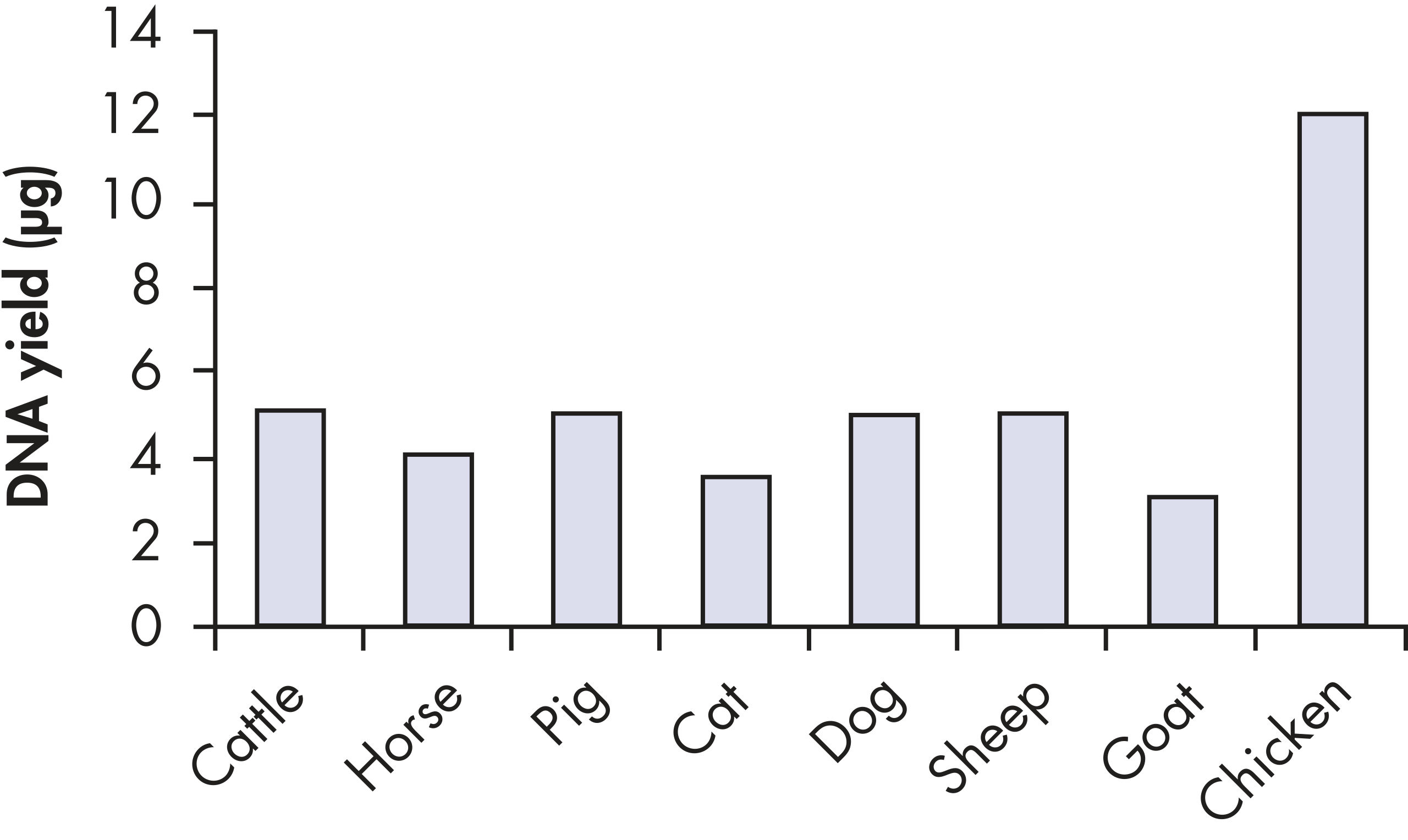
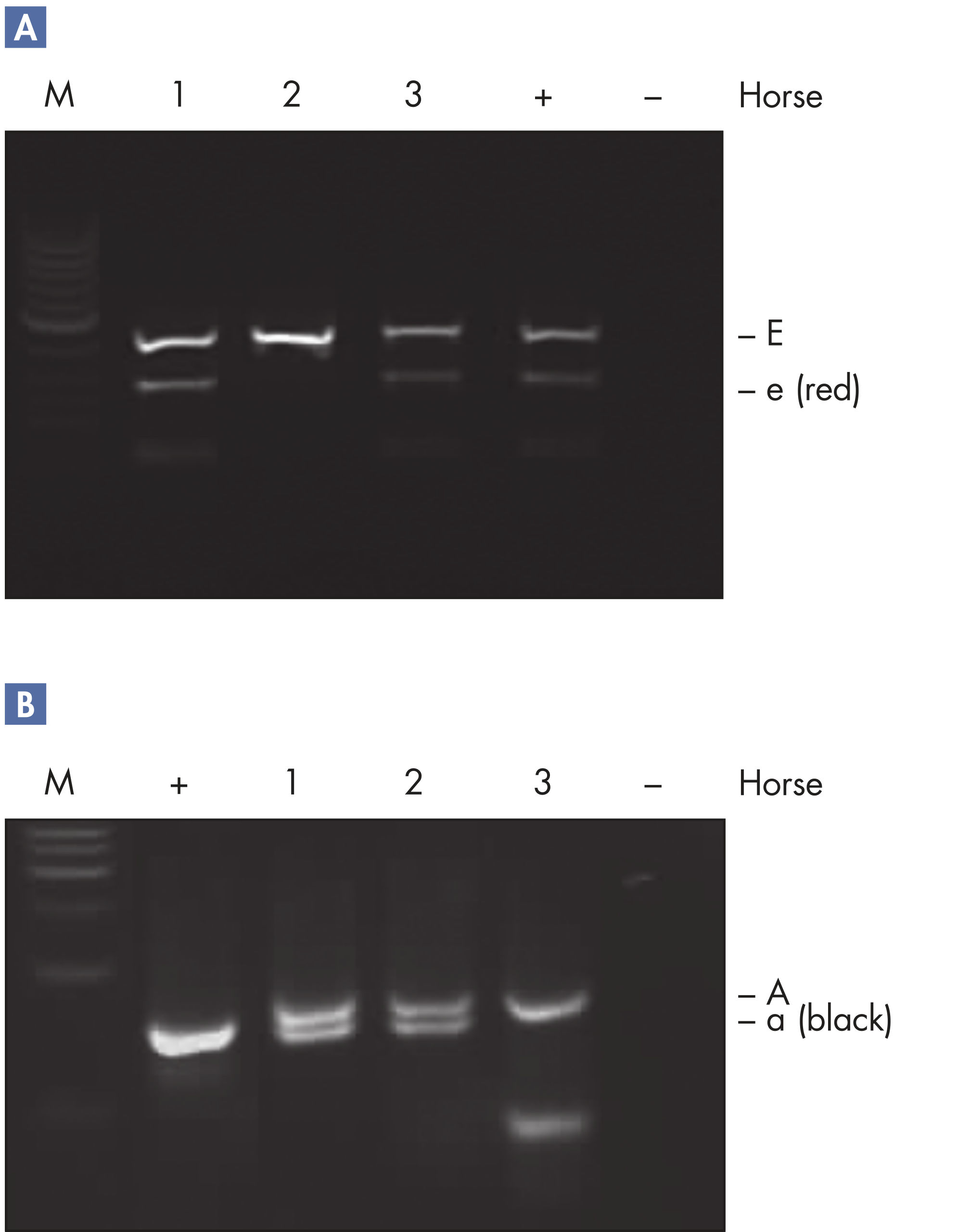
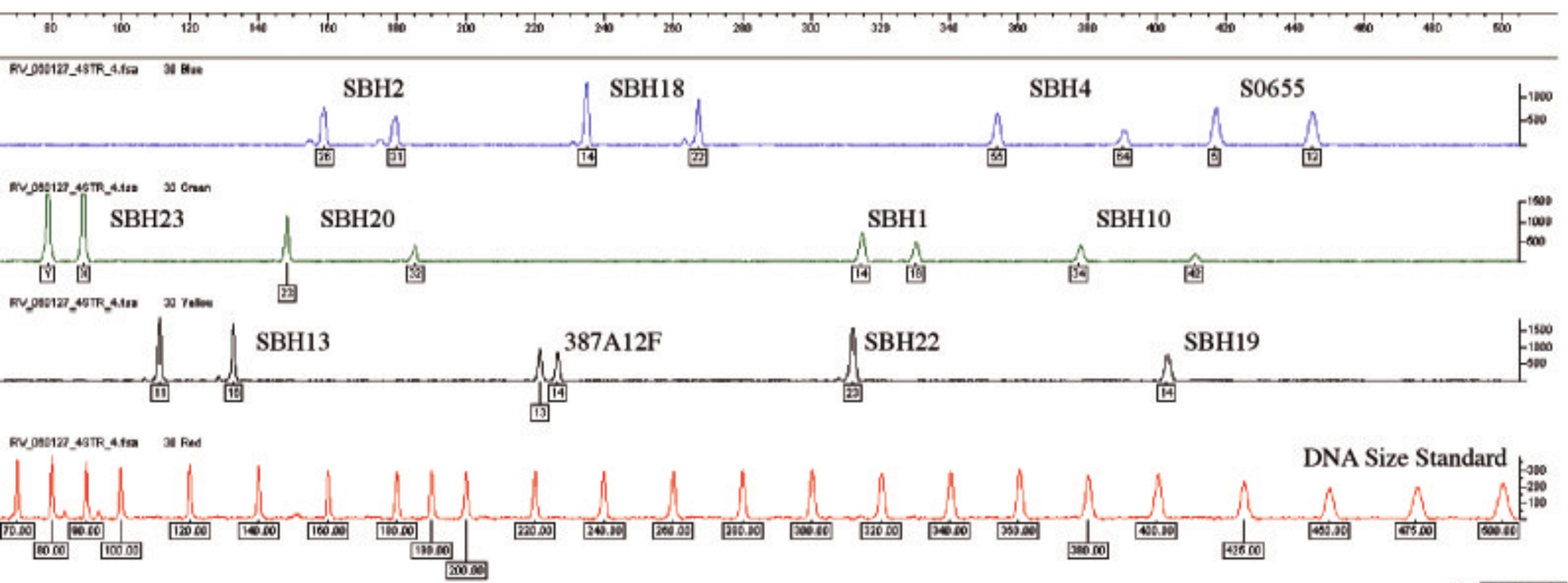
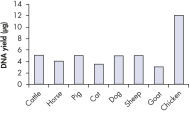
효율적인 DNeasy 및 QIAwave DNA Blood & Tissue Kits 절차를 통해 동물의 혈액 및 조직 샘플에서 높은 수율의 총DNA를 얻을 수 있습니다(표 동물 조직에서 추출한 일반적인 DNA 수율 및 그림 DNA 수율 참조). 최적화된 프로토콜은 동물의 털( 말의 유전형 분석 참조)이나 배양 세포, 고정 조직, 그람양성 및 그람음성 박테리아와 같은 비표준 샘플에서도 높은 수율을 보장합니다. 효모, 곤충, 머리카락 및 기타 유형의 샘플에서 DNA를 정제하기 위한 전문 온라인 프로토콜을 사용할 수 있습니다.
QIAwave DNA Blood & Tissue Kit와DNeasy Blood & Tissue Kits는 화학 성분이 동일하여 동일한 성능을 지니고 있습니다. 또한 두 키트 모두 경쟁사의 키트보다 성능이 뛰어난 것으로 나타났습니다(그림 'QIAwave DNA Blood & Tissue Kit 성능' 참조).
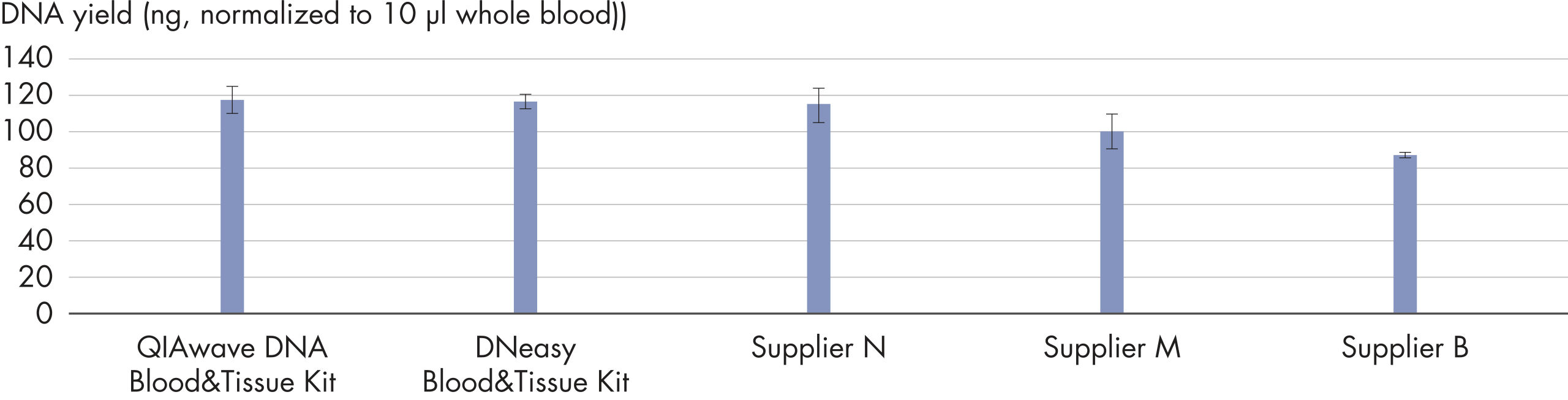
QIAwave DNA Blood & Tissue Kit의 표준 프로토콜을 따라 동물 혈액 및 조직 샘플에서 높은 수율로 총DNA를 얻을 수 있습니다(표 'QIAwave DNA Blood & Tissue를 사용하여 동물 조직에서 얻은 일반적인 DNA 수율' 및 그림 'DNA 수율' 참조). 이뿐 아니라, 다음을 포함해 비표준 샘플에서도 높은 수율을 보장하는 최적화된 프로토콜 제공.
- 동물의 털
- 배양 세포
- 그람양성균 및 그람음성균
- 효모
- 곤충
- 기타 샘플 유형
| 출처 | 양 | DNA(µg) |
| 포유류 혈액 | 100µl | 3~6 |
| 조류 혈액 | 5µl | 9~40 |
| HeLa 세포 | 2 x 10⁶ | 15~25 |
| 간 | 25mg | 10~30 |
| 뇌 | 25mg | 15~30 |
| 신장 | 25mg | 15~30 |
| 비장 | 10mg | 5~30 |
| 마우스 꼬리 | 1.2cm(tip) | 10~25 |
| 래트(rat) 꼬리 | 0.6cm(선단) | 20~40 |
| 돼지 귀 | 25mg | 10~30 |
| 말 털 | 털 10가닥 | 2~4 |
| 물고기 지느러미 | 20mg | 10~20 |
| 물고기 알(고등어) | 10mg | 5~10 |
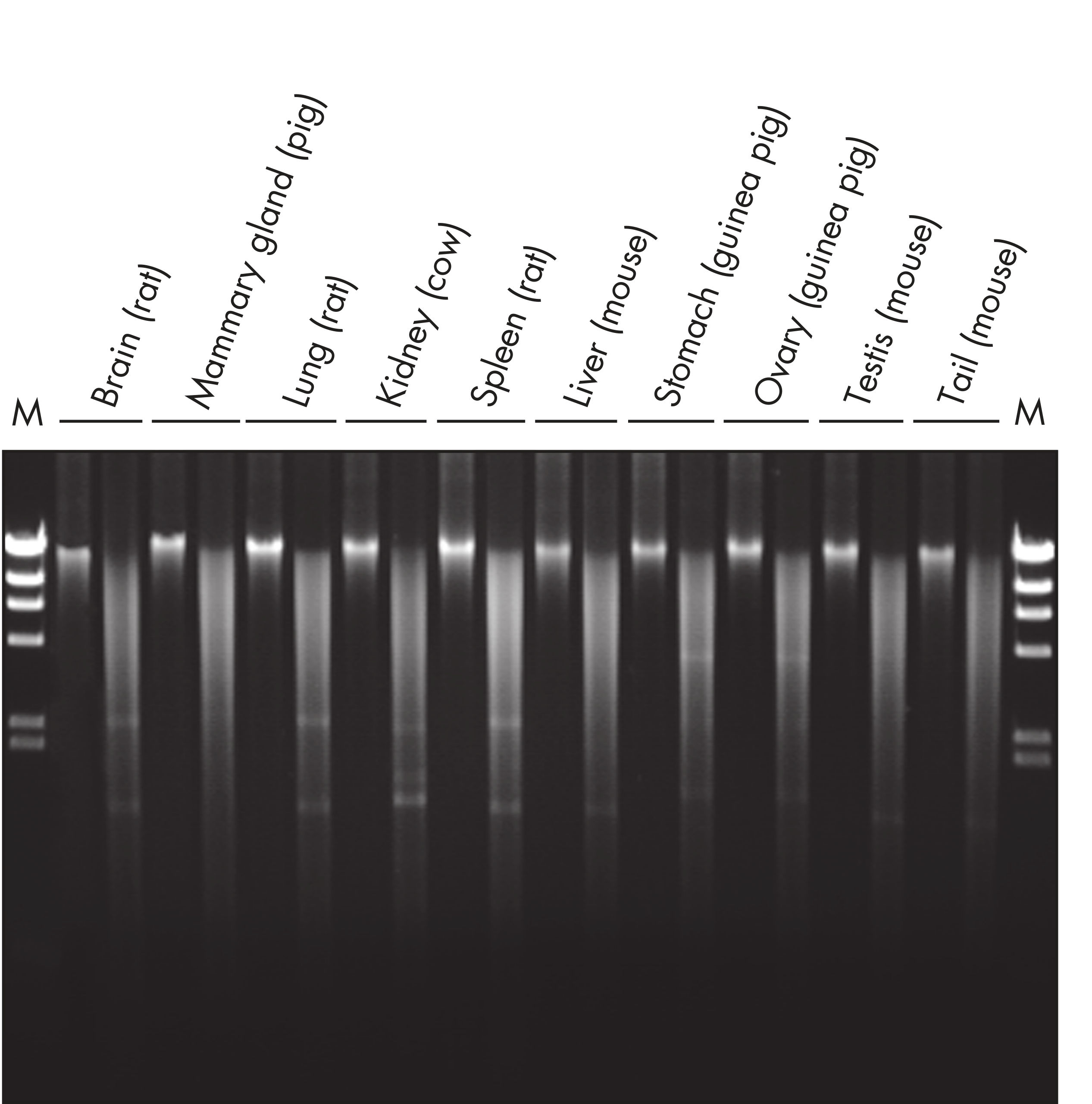
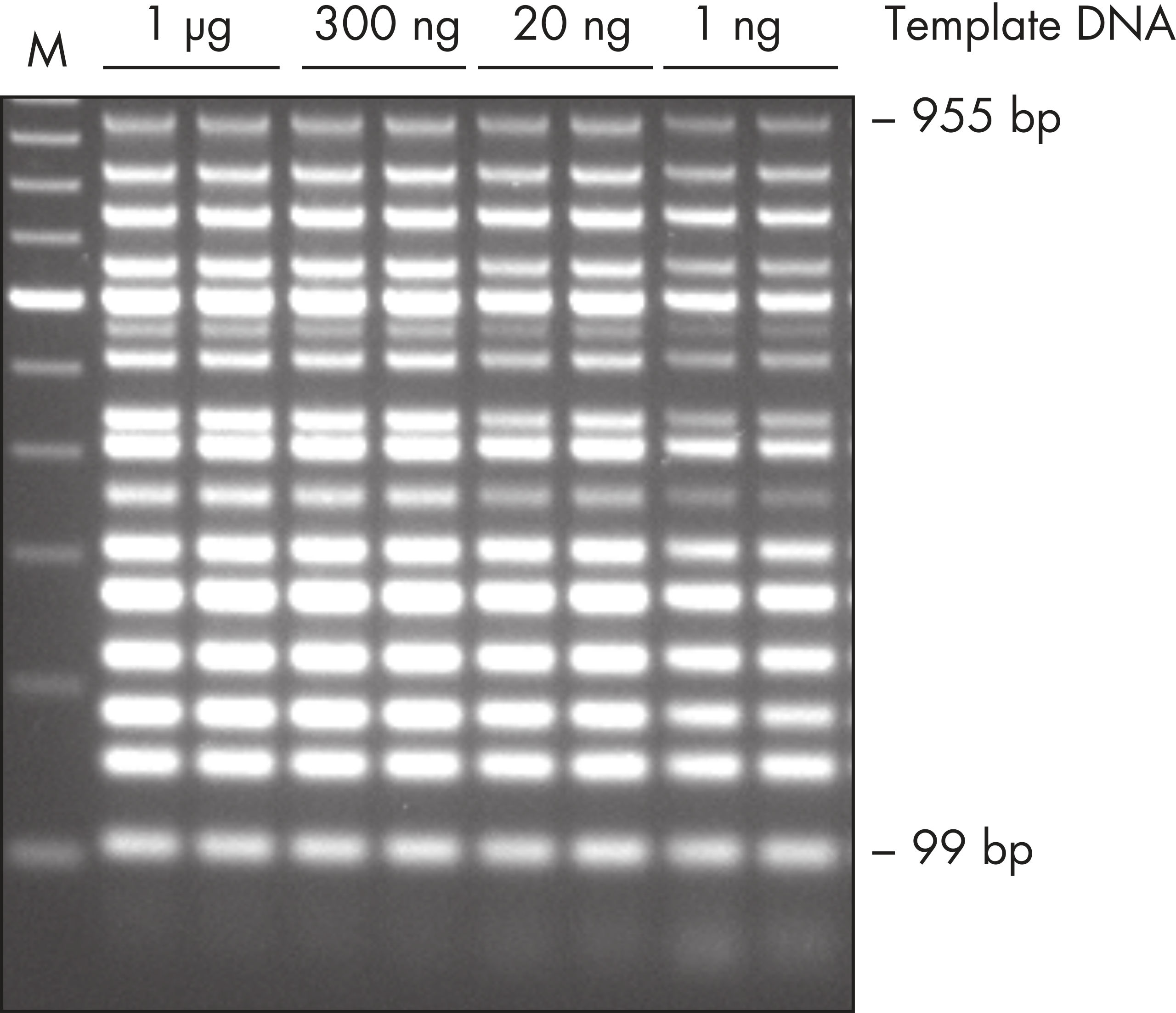
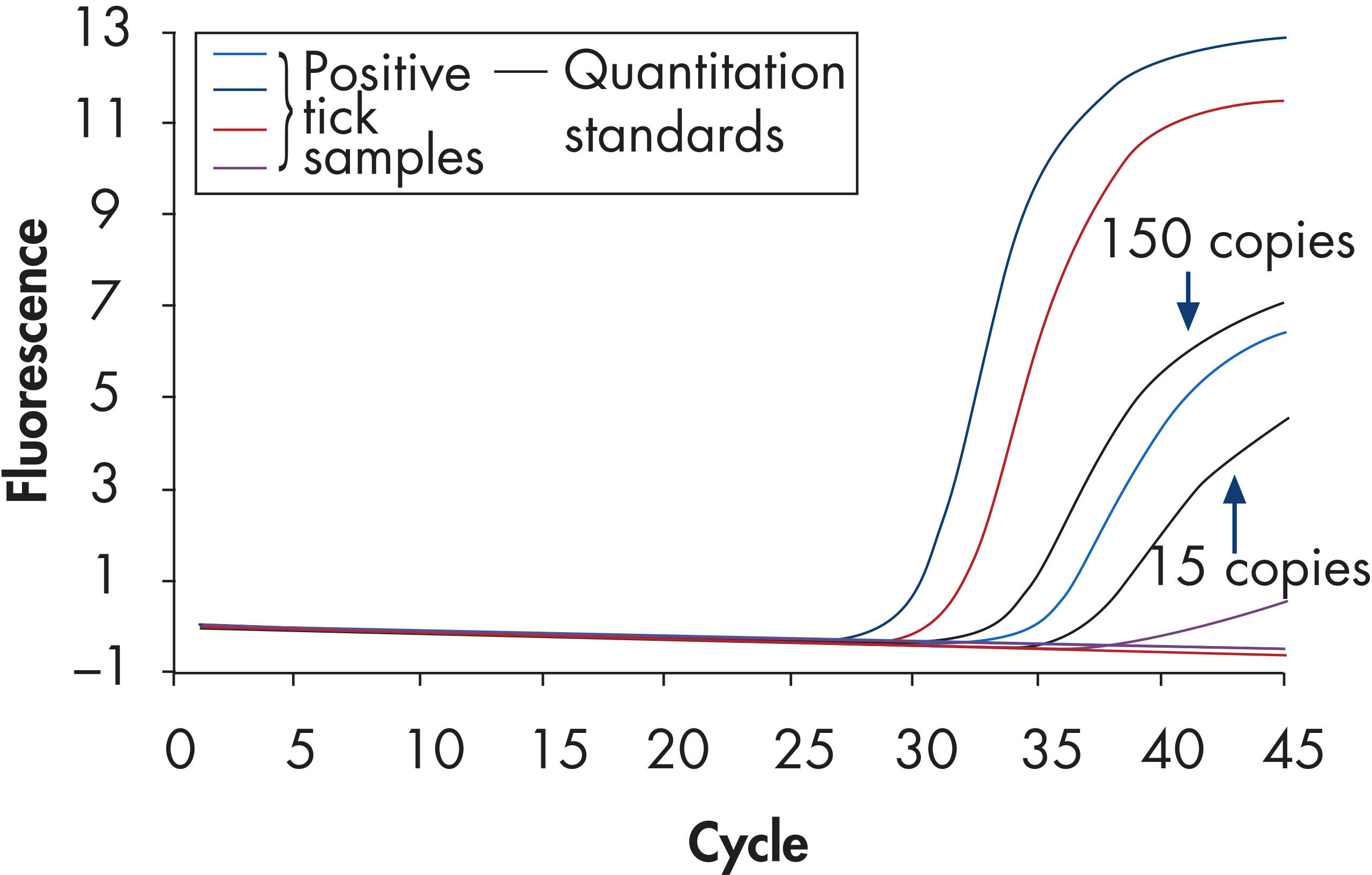
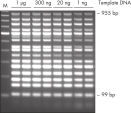
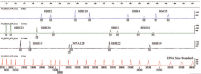
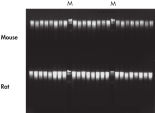
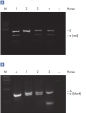
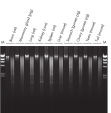
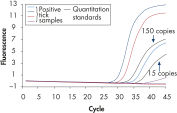
DNeasy Blood & Tissue Kits는 생명 과학, 수의학 및 유전형 응용 분야에서 흔히 접하는 동물 종을 포함한 광범위한 유형의 샘플에서 DNA 정제 과정을 간소화합니다( 고품질 DNA 참조). 정제된 DNA는 PCR 억제제가 없으므로 표준, 멀티플렉스( 효율적인 16플렉스 PCR 참조) 및 real-time PCR( Real-time PCR 참조)에서 고감도 검출이 가능합니다. DNeasy Blood & Tissue Kits는 형질전환 마우스 실험실 분석(고처리량 정제 참조)부터 가축 번식 프로그램( 돼지 유전형 분석 참조) 및 혈통 유전형 분석까지 신뢰할 수 있는 결과를 제공합니다. 일상적인 테스트 응용 분야에서는 DNeasy 96 Blood & Tissue Kit를 사용하여 쉽게 규모를 확장할 수 있습니다(고처리량 정제 참조).
원리
DNeasy와 QIAwave DNA Blood & Tissue Kits는 동물 조직 및 세포, 혈액, 박테리아를 포함한 다양한 출처의 신선 샘플이나 냉동 샘플에서 총DNA(예: 유전체, 미토콘드리아 및 병원체)를 신속하게 정제할 수 있도록 설계되었습니다.
DNeasy 멤브레인은 실리카 기반 멤브레인의 결합 특성과 간단한 마이크로스핀 기술 또는 QIAGEN 96-well 플레이트 원심분리 시스템을 결합한 제품입니다. DNA는 용액 속의 수화된 분자로부터 물을 제거하는 카오트로픽 염(chaotropic salt)이 고농도로 존재하는 조건에서 DNeasy 멤브레인에 흡착됩니다. DNeasy Blood & Tissue 절차의 완충액 조건은 DNA를 실리카 멤브레인에 특이적으로 흡착시키고 오염 물질과 효소 억제제를 최적으로 제거할 수 있도록 설계되었습니다.
정제 과정에 페놀이나 클로로포름 추출이나 알코올 침전이 필요하지 않으며 최소한의 취급만 필요합니다. 이로 인해 DNeasy Blood & Tissue Kits는 여러 샘플을 동시에 처리하는 데 매우 적합합니다. 처리량이 더 높은 응용 분야의 경우 DNeasy 96 Blood & Tissue Kit를 사용하면 96개 또는 192개 샘플을 동시에 처리할 수 있습니다.
절차
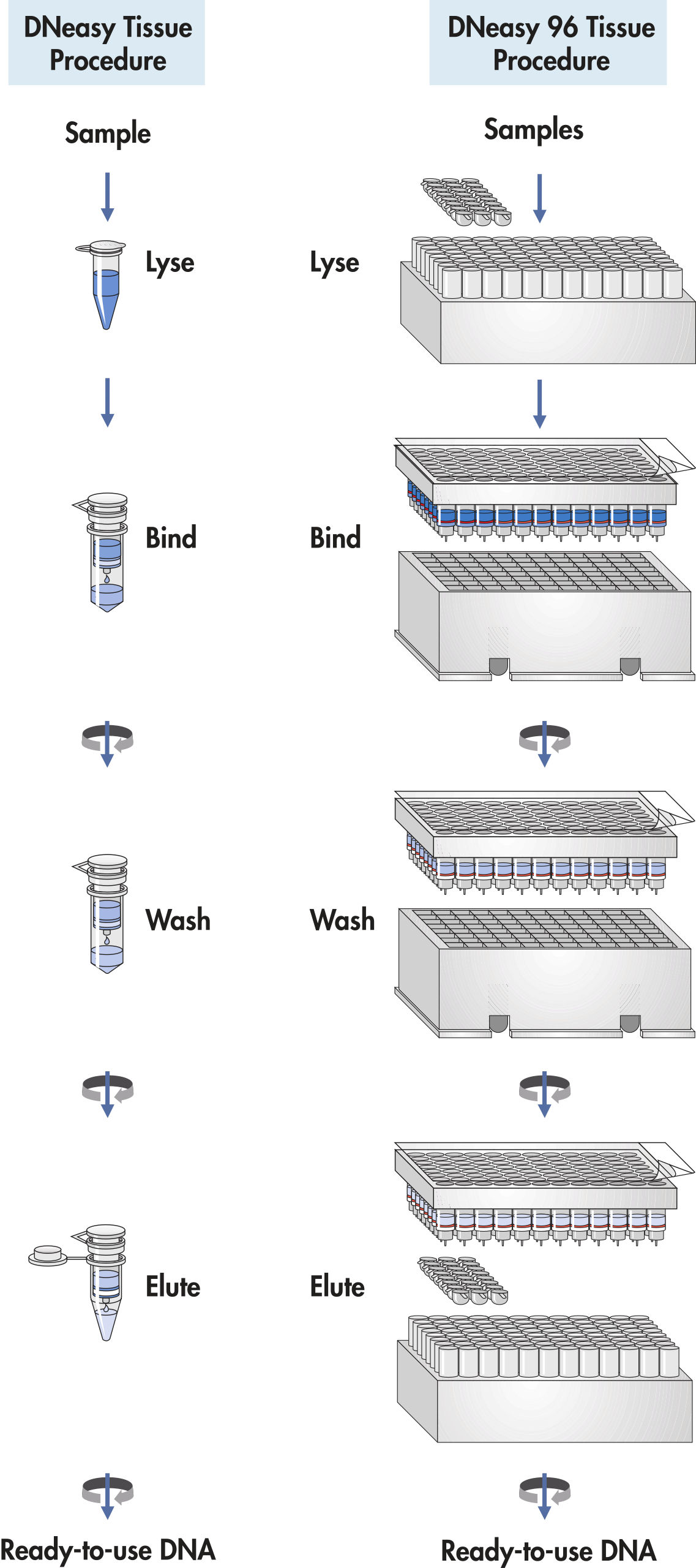
편리한 스핀 컬럼 또는 96-well 형식의 안정적인 실리카 멤브레인 기술은 빠르고 재현성 있는 DNA 정제를 보장하며, 유기적 추출 및 알코올 침전이 불필요합니다( DNeasy Mini 및 96 절차 참조). 먼저 단백분해효소 K를 사용하여 샘플이 용해됩니다. 최적의 DNA 결합 조건을 제공하도록 완충액 조건이 조정되고 용해물은 DNeasy Mini 스핀 컬럼이나 DNeasy 96 플레이트에 로드됩니다. 원심분리 중에 오염 물질이 통과하면서 DNA가 DNeasy 멤브레인에 선택적으로 결합됩니다. 잔류 오염 물질과 효소 억제제는 효율적인 2단계 세척을 통해 제거되고, 그런 다음 DNA가 물이나 완충액에서 용출되며 바로 사용할 수 있습니다.
DNeasy Blood & Tissue Kit의 DNeasy Mini 스핀 컬럼은 채집 튜브에 미리 들어간 상태로 포장 밀봉되어 있어 편의성과 안전성이 있습니다. DNeasy Mini 스핀 컬럼을 사용하는 정제 과정은 QIAcube Connect에서 자동화할 수 있습니다. DNeasy 96 Blood & Tissue Kit는 QIAGEN 96-Well-Plate Centrifugation System을 사용하여 96-well 형식의 고처리량 처리 방식을 제공합니다.
DNeasy Blood & Tissue Kits의 표준 프로토콜은 TRACKMAN Connected 시스템을 통해 끊김없이 원활하게 실행할 수 있습니다.
응용 분야
DNeasy Blood & Tissue Kits와 QIAwave DNA Blood & Tissue Kits는 dPCR 및 NGS 응용 분야를 포함하여 모든 다운스트림 분석에 바로 사용할 수 있는 고품질 DNA를 제공합니다.
- 생명과학 연구
- 가축 사육
- 가계 유전형
- 수의학 병원체 연구
- 적용되는 정규 검사
지원되는 데이터 및 수치
DNA Blood & Tissue Kits(50) ACT 환경 영향 지수 라벨 US.
ACT 환경 영향 지수 라벨은 몇 가지 지속 가능성 기준에 따라 제품을 평가하고 점수를 매길 수 있도록 설계되었습니다. 제품은 1~10점까지 점수가 매겨지며, 에너지와 물 소비량은 각각 kWh 또는 갤런당 1점씩 점수가 매겨집니다. 점수가 낮으면 환경에 미치는 영향이 낮다는 의미입니다. QIAwave DNA Blood & Tissue Kit (50)는 DNeasy Blood & Tissue Kit (50)보다 미국에서 EIF가 21.5% 더 낮습니다.


사양
| 특징 | 사양 |
|---|---|
| Applications | PCR, real-time PCR, 유전형 분석 |
| Elution volume | 100~200µl |
| Time per run or per prep | 20분~1시간 |
| Main sample type | 혈액, 조직 |
| Format | 96-well 플레이트, 스핀 컬럼 |
| Sample amount | 100µl/25mg |
| Processing | 수동 |
| Yield | 6µg/30µg |
| Technology | 실리카 기술 |
| Purification of total RNA, miRNA, poly A+ mRNA, DNA or protein | DNA |
리소스
Kit Handbooks & Protocols (7)
Safety Data Sheets (1)
Certificates of Analysis (1)
Brochures & Guides (8)
Certificates and labels (6)
Scientific documents (1)
Specialized Protocols (13)
Validation & Technical Documentation (3)
출판물
The unique 16S rRNA genes of piezophiles reflect both phylogeny and adaptation.
Appl Environ Microbiol; 2006; 73 (3):838-45 2006 Dec 8 PMID:17158629
Assays to detect beta-tubulin codon 200 polymorphism in Trichuris trichiura and Ascaris lumbricoides.
PLoS Negl Trop Dis; 2009; 3 (3):e397 2009 Mar 24 PMID:19308251
Whole genome amplification for array comparative genomic hybridization using DNA extracted from formalin-fixed, paraffin-embedded histological sections.
J Mol Diagn; 2009; 11 (2):109-16 2009 Feb 5 PMID:19197000
Real-time PCR detection of pathogenic microorganisms in roof-harvested rainwater in Southeast Queensland, Australia.
Appl Environ Microbiol; 2008; 74 (17):5490-6 2008 Jul 11 PMID:18621865
MicroRNA-137 targets microphthalmia-associated transcription factor in melanoma cell lines.
Cancer Res; 2008; 68 (5):1362-8 2008 Mar 1 PMID:18316599
FAQ
When should carrier be used with the QIAamp DNA Mini or the DNeasy Blood & Tissue Kit?
How do I safely inactivate biohazardous flow-through material?
Do you have a protocol for purification of total DNA from yeast?
Do you have a protocol for purification of total DNA from insects?
Do you have a protocol for purification of total DNA from crude lysates?
Do you have data showing effects of sample size on DNA yield and purity using the DNeasy 96 Blood & Tissue kit?
What dedicated QIAcube Kits are available?
How can I precipitate genomic DNA using isopropanol?
303 - Can I use my own lysis buffer with the DNeasy Blood & Tissue or QIAamp DNA Mini Kit?
3192 - Is QIAGEN Protease compatible with Buffer ATL?
Is it possible to stop the DNeasy tissue protocol and store the tissue lysates after digesting in buffer ATL and Proteinase K?
What is the shelf-life for QIAGEN Proteinase K (cat. no. 19131, 19133)?
Is the quality and size of DNA extracted with the DNeasy Blood & Tissue kit good enough to generate DNA-libraries for next generation sequencing?
Are there important considerations for plasma generation and urine handling?
What QIAGEN kit can I use to isolate DNA from food products to test for genetically modified organisms (GMOs)?
How can I improve DNA yields from very tough tissues using the DNeasy Blood & Tissue Kit or the QIAamp DNA Mini Kit?
What water should I use to prepare the buffer concentrates?
What is the new Waste Tube made of?
Does the reuse of the Waste Tubes increase the risk of cross-contamination?
I don’t have any glassware in the lab, is the QIAwave kit still a good option for me?
Are the QIAwave kits based on a different chemistry than the legacy kits?
Is there a way to compare the environmental impacts of the kit?
Can the QIAwave kits be recycled?
What is the expected yield of genomic DNA isolated from bacteria with the DNeasy Blood & Tissue or QIAamp DNA Mini Kit?
What can be used as an alternative to the A260 measurement for quantification of small amounts of RNA and DNA?
What is the composition of buffer AE?
Do you have a protocol for isolation of genomic DNA from insects?
Do you have a protocol for the isolation of genomic DNA from bone?
Do you have a protocol for the isolation of genomic DNA from sperm?
Do you have a protocol for Acetyl Cysteine (NALC) treatment of viscous samples?
Do you have a protocol for isolation of genomic DNA from saliva and mouthwash?
Do you have a protocol for the isolation of DNA from soft tissues using the TissueLyser?
Do you have a protocol for the isolation of viral DNA from stool?
Do you have a protocol for isolation of genomic DNA from saliva using the DNeasy Blood & Tissue Kit?
Do you have a protocol for purification of DNA from cultured animal cells using the DNeasy 96 Blood & Tissue Kit?