Looking for a quick way to design experiments?
Try the Workflow Configurator. A convenient tool to build experimental workflows and find products to match your needs.

QIAcuity Digital PCR System

ナノプレートを使用するデジタルPCRアプリケーション向け

QIAcuityの実践例
dPCRについて学びながらQIAcuityを徹底的に探求。

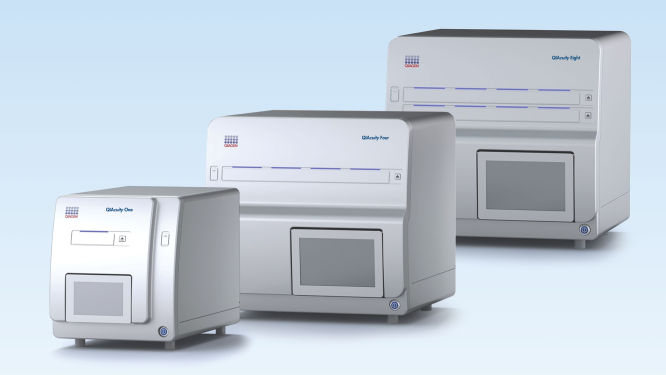
QIAcuity One, 2plex Device

カタログ番号 / ID.   911001

最大2色の蛍光色素を検出する1プレートタイプのデジタルPCR装置、ローラー、USBフラッシュメモリー、およびQIAcuity Software Suite。予防保守点検訪問1回分を含みます。人件費、交通費、部品費について1年間保証。
フォーマット
One
Four
Eight
マルチチャンネル検出
2 channels (up to 4plex)
8 channels (up to 12plex)
サービスオプション
Device
System
System FUL-2
QIAcuityは、分子生物学アプリケーション向けに設計されています。本製品を疾病の診断、予防、治療に使用することはできません。そのため、臨床用途(診断、予後、治療、または血液バンク)における当該製品の性能特性は不明です。 デジタルPCRの診断アプリケーションについては、QIAcuityDx Digital PCR Systemをご利用ください。
QIAcuityの実践例
dPCRについて学びながらQIAcuityを徹底的に探求。

特徴

  • 完全統合型のシステム
  • 解析サンプル総数に合わせた装置フォーマット(装置プレート1枚、4枚、8枚)
  • 一歩進んだマルチプレックス性能(最大12プレックス)
  • 最大6個の標準チャンネルに加え、2個のLSS色素用ハイブリッドチャンネル
  • 柔軟性のあるサンプルスループット
  • わずか2時間ですべての結果を提供

製品詳細

QIAcuityデジタルPCR Systemは、突然変異検出、コピー数多型(Copy Number Variation, CNV)、遺伝子発現研究、遺伝子編集解析など、幅広い用途において高精度かつマルチプレックスな定量結果を提供するように設計されています。ナノプレートベースの本システムは、パーティショニング、サーモサイクル、およびイメージングの標準的なデジタル PCRワークフローを最小限の労力で実施できる、シームレスに統合された完全自動化プラットフォームです。

本システムは、QIAcuityナノプレート、試薬、アッセイとを組み合わせて使用します。

QIAcuity dPCR装置についての詳細については、バーチャルデモをご覧ください。

パフォーマンス

QIAcuity Digital PCR Systemは、すべての研究室に絶対定量をお手頃な価格で提供します。パーティショニング、ヒートサイクル、イメージングの全てのデジタルPCRワークフローを1つの装置に統合し、最小限の労力で実施できる自動化装置です。また、現行のリアルタイムPCRアッセイをQIAcuity Digital PCR Systemに適用することも簡単です。リアルタイムPCRからデジタルPCRの解析に移行する場合、プレート操作を変える必要はなく、簡便なアッセイのセットアップと約2時間での迅速な解析を行うことができます。

QIAcuity dPCR装置の–特徴と仕様

特徴 QIAcuity One 2plex  QIAcuity One 5plex  QIAcuity Four QIAcuity Eight
プレート処理数 1 1 4 8
検出チャンネル数 2 81) 
(6+2ハイブリッド2) 
81) 
(6+2ハイブリッド2) 
81) 
(6+2ハイブリッド2) 
マルチプレックス機能  4 123)1)  123)1)  123)1) 
サーモサイクラー 1 1 1 2
結果までの時間 約2時間 約2時間

最初のプレートは約2時間

∼80分ごとに次のプレート

最初のプレートは約2時間 

∼40分ごとに次のプレート 

スループット(オーバーナイトランを含む、8時間シフトでのサンプル処理数)

最大480(96ウェル)

最大120(24ウェル)

最大480(96ウェル)

最大120(24ウェル)

最大768(96ウェル)

最大192(24ウェル)

最大1536(96ウェル)

最大384(24ウェル)

1)5プレックスを超えるマルチプレックス解析の場合には、QIAcuity High Multiplex Probe PCR Kitを使用する必要があります 
2)ハイブリッドチャンネルは、ロングストークシフト(LSS)色素に使用します 
3)6個の標準チャンネルで振幅マルチプレックスを使用することで、12個のターゲットを並行して検出できます。シングルプレックスLSS色素のハイブリッドチャンネルと振幅マルチプレックスとを組み合わせると、可能なマルチプレックスの合計は14個に増やすことができます。ただし、反応ミックスで使用されるすべてのアッセイの最適化と、それぞれのアッセイに対してクロストーク補正が必要になるため、この組み合わせは推奨いたしません。

QIAcuity One、Four、Eightは、お客様のニーズに合わせて設計されています。さまざまなスループットオプションと優れたマルチプレックス性能により、デジタルPCRの導入コストを抑え、効率的なワークフローを実現します。QIAcuity Digital PCR Systemの価格については、弊社dPCRチームまでお気軽にお問い合わせください。


原理

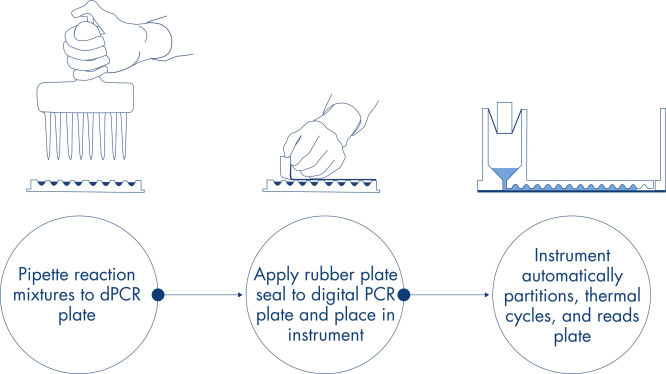
ピペッティングとサンプルロード、解析の実行、結果解析というわずか3つのステップで、約2時間で必要なdPCRの結果が得られます。

ナノプレートでのdPCR反応の原理はこちらで説明しています。

操作手順

リアルタイムPCR実験と同様に、サンプル調製では、マスターミックス、プローブ、プライマーを混合し、サンプルを添加したのち、96ウェルまたは24ウェルナノプレートに分注します。本システムは、パーティショニング、サーマルサイクリング、イメージングの各工程を単一の完全自動化デジタルPCR装置に統合し、サンプル投入から2時間未満で結果を取得可能です。Software Suiteでは、ターゲット配列の濃度を1マイクロリットル当たりのコピー数として算出できるほか、陽性サンプルやNTCなどの品質確認項目も解析できます。この解析は、同一ローカルエリアネットワーク(LAN)内のリモートコンピューターからも実行できます。

アプリケーション

QIAcuity dPCR装置は、QIAcuity NanoplateおよびQIAcuity PCR Kitと組み合わせて、次のデジタルPCRアプリケーションに利用できます。

  • 希少変異の検出
  • コピー数多型解析
  • 遺伝子発現解析
  • 病原体検出
  • 遺伝子型決定
  • miRNA研究
  • 細胞および遺伝子治療


ソフトウェア

装置に付属し、別のコンピューターにインストールされるQIAcuity Software Suiteは、1台または複数台のQIAcuity dPCR装置を制御できます。制御は、1台の装置への直接接続、または既存のローカルエリアネットワーク(LAN)を介した接続のいずれにも対応しています。QIAcuity Software Suiteを使用すると、デジタルPCR実験、サンプル、および反応混合液を定義し、ナノプレートに割り当て、QIAcuity dPCR装置に転送することができます。測定終了後は、データ解析やレポート作成、外部解析用にデータをエクスポートすることもできます。本ソフトウェアには、プレートレイアウトや測定パラメーターの繰り返し利用を容易にする複数のテンプレート機能を備えており、デジタルPCRの操作体験をさらに向上させます。

そのコンピューターは、ローカルエリアネットワークに組み込めば、サーバーとしてQIAcuity Software Suite機能をホストするようになり、クライアントとなる他のコンピューターがLAN経由でアクセスできるようになります。これにより複数のユーザーが他の部屋や他のオフィスからソフトウェアにアクセスでき、複数のコンピューターにソフトウェアをインストールしなくても、標準的なブラウザを介してデータを解析したり、インターネット接続を経由してデータをやり取りしたりできます。

サービス

QIAGENの多様なサービスソリューションならデジタルPCR機器を安心してご利用いただけます。ニーズに合ったサービス契約の詳細をご覧ください。

裏付けデータと数値

キットと消耗品

​dPCRアクセサリー
マスターミックスと試薬
アッセイとキット
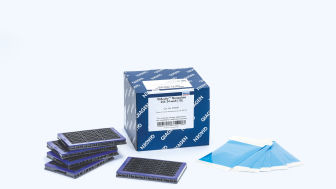
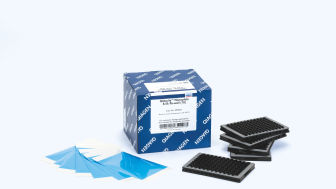
QIAcuity Nanoplate 26k 8-well (10) imageQIAcuity Nanoplate 26k 8-well (10) image
カタログ番号: 250031
QIAcuity Nanoplate 8.5k 24-well (10) imageQIAcuity Nanoplate 8.5k 24-well (10) image
カタログ番号: 250011
QIAcuity Nanoplate 26k 24-well (10) imageQIAcuity Nanoplate 26k 24-well (10) image
カタログ番号: 250001
QIAcuity Nanoplate 8.5k 96-well (10) imageQIAcuity Nanoplate 8.5k 96-well (10) image
カタログ番号: 250021
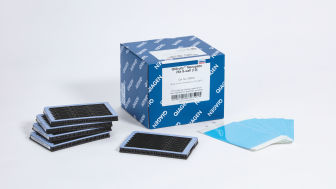
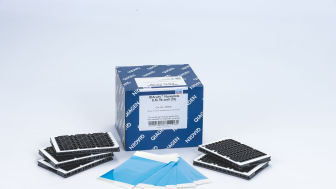
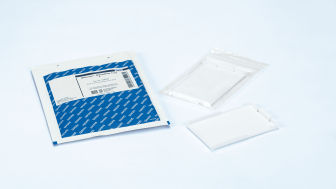
Nanoplate Seals (11) imageNanoplate Seals (11) image
カタログ番号: 250099
Nanoplate Tray (2) imageNanoplate Tray (2) image
カタログ番号: 250098
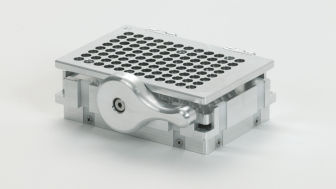
QIAcuity Nanoplate Adapter (1) imageQIAcuity Nanoplate Adapter (1) image
カタログ番号: 9027242

サービスプラン

QIAcuity One 2plex, Full Agreement

カタログ番号 / ID.   9245362

QIAcuity One  2Plex の派遣費、技術料および交換部品代を含む1年間の修理費用をカバー。契約期間内に1回の定期点検が付帯。対応時間2日以内

QIAcuity One, Preventive Subscription

カタログ番号 / ID.   9245355

現地でのメンテナンス(PM)訪問を1回(出張費、人件費、PM部品を含む)及びその作業報告書を提供します。サブスクリプション期間中の修理に10%割引が適用されます。

QIAcuity Four, Preventive Subscription

カタログ番号 / ID.   9245356

現地でのメンテナンス(PM)訪問を1回(出張費、人件費、PM部品を含む)及びその作業報告書を提供します。サブスクリプション期間中の修理に10%割引が適用されます。

QIAcuity Eight, Preventive Subscription

カタログ番号 / ID.   9245357

現地でのメンテナンス(PM)訪問を1回(出張費、人件費、PM部品を含む)及びその作業報告書を提供します。サブスクリプション期間中の修理に10%割引が適用されます。

QIAcuity One 2plex, Core Agreement

カタログ番号 / ID.   9245358

1年の間に、機器出張修理サービス(出張費、人件費、部品費を含む)を1回提供します。受付から5営業日以内に対応します。なおCore Agreement期間中は1回の計画メンテナンスを提供します。

QIAcuity One 5plex, Core Agreement

カタログ番号 / ID.   9245359

1年の間に、機器出張修理サービス(出張費、人件費、部品費を含む)を1回提供します。受付から5営業日以内に対応します。なおCore Agreement期間中は1回の計画メンテナンスを提供します。

QIAcuity Four, Core Agreement

カタログ番号 / ID.   9245360

1年の間に、機器出張修理サービス(出張費、人件費、部品費を含む)を1回提供します。受付から5営業日以内に対応します。なおCore Agreement期間中は1回の計画メンテナンスを提供します。

QIAcuity Eight, Core Agreement

カタログ番号 / ID.   9245361

1年の間に、機器出張修理サービス(出張費、人件費、部品費を含む)を1回提供します。受付から5営業日以内に対応します。なおCore Agreement期間中は1回の計画メンテナンスを提供します。

QIAcuity One 5plex, Full Agreement

カタログ番号 / ID.   9245363

QIAcuity One  5Plex の派遣費、技術料および交換部品代を含む1年間の修理費用をカバー。契約期間内に1回の定期点検が付帯。対応時間2日以内

QIAcuity Four, Full Agreement

カタログ番号 / ID.   9245364

QIAcuity Four の派遣費、技術料および交換部品代を含む1年間の修理費用をカバー。契約期間内に1回の定期点検が付帯。対応時間2日以内

QIAcuity Eight, Full Agreement

カタログ番号 / ID.   9245365

QIAcuity Eight の派遣費、技術料および交換部品代を含む1年間の修理費用をカバー。契約期間内に1回の定期点検が付帯。対応時間2日以内

QIAcuity One, Installation & Training

カタログ番号 / ID.   9245352

現場でのサービスには、装置のハードウェアおよびシステムソフトウェアのセットアップ、さらに最大4名の研究室スタッフを対象とした実践的なアプリケーショントレーニングが含まれており、研究室のワークフローにスムーズに統合できるようサポートします。

QIAcuity Four, Installation & Training

カタログ番号 / ID.   9245353

現場でのサービスには、装置のハードウェアおよびシステムソフトウェアのセットアップ、さらに最大4名の研究室スタッフを対象とした実践的なアプリケーショントレーニングが含まれており、研究室のワークフローにスムーズに統合できるようサポートします。

QIAcuity Eight, Installation & Training

カタログ番号 / ID.   9245354

現場でのサービスには、装置のハードウェアおよびシステムソフトウェアのセットアップ、さらに最大4名の研究室スタッフを対象とした実践的なアプリケーショントレーニングが含まれており、研究室のワークフローにスムーズに統合できるようサポートします。

リソース

Brochures & Guides (2)
Discover which service agreement best fits your needs and budget.
Learn about the QIAcuity OQ mulit-color dye test
Operating software (1)
QIAcuity Software Suite Backup and Restore Scripts version 3.5
Software-related downloads (2)
User Manuals (6)
For QIAcuity Software Suite version 3.5
For QIAcuity Software Suite versions 3.1 and 3.2
For software version 3.5

Extension to the QIAcuity User Manual for QIAcuity Software version 3.5

User manual for QIAcuity instruments and QIAcuity Software 3.5
Safety Data Sheets (1)
Download Safety Data Sheets for QIAGEN product components.
Certificates of Analysis (1)
Scientific documents (3)
This note demonstrates how the automated QIAcuity workflow on the Hamilton STAR reduces hands-on time from hours to minutes, streamlines the overall process and enhances operational efficiency without compromising data quality.
This app note demonstrates how the fundamentally different approach of dPCR, compared to qPCR, reduces susceptibility to amplification-related bias resulting in high-level multiplexing experiments that are simpler, more cost-effective and produce more precise data.
This app note demonstrates that dPCR offers improved accuracy and resolution of small changes in gene expression, compared to qPCR. The system delivers superior reproducibility across different operators, especially when detecting low-abundance targets or subtle expression changes.

よくある質問

Is it possible to change voltage set-up from 110V to 230V on the QIAcuity instruments?

This is not needed. The QIAcuity is equipped with a flexible power supply technology and operates within a range of 100–240V AC, 50/60 Hz, 1500 VA (max). 

FAQ-3761
Can I see error codes on the instrument touchscreen?

The instrument software GUI shows error codes including a description and information how to resolve the error. The instrument touchscreen shows an alarm icon in the upper right corner that turns red in case of an instrument failure. Accessing the System Status in the Tool tab allows users to clear errors. Rebooting of the instrument is required to complete the removal of the error.  Please do not skip this step. You may always contact QIAGEN Technical Services in case of any question. 

FAQ-3763
What is the scope of a regular maintenance of the QIAcuity?

The user manual contains instructions on how to perform a regular cleaning and decontamination, and how to replace air filters on the QIAcuity instruments. A regular maintenance reduces the dust in the instrument and therefore minimizes the presence of dust particles on the nanoplate, which might interfere with the plate analysis.

FAQ-3765
What is the impact of not applying the latest VPF? Can I reanalyze previously obtained results after installing the latest VPF?

If you had run a nanoplate for which the installed VPF misses the specific factor, the software will notify you. If you then analyze without the specific VPF, the impact depends on the variation of the partition volume of the new Nanoplate batch compared to the latest. Typically this variation is ±6–7% (approx. 5% CV over the entire plate). The analysis may be repeated after updating the VPF file. After installing the latest VPF and re-analysis of the run, a copy of the plate is generated in the QIAcuity Software Suite including the new results. 

FAQ-3769
Can I see on the QIAcuity Software Suite report file if the VPF (Volume Precision Factor) has been used or not?

Yes, the report includes a notification if the matching VPF was missing and, therefore, not applied to the analysis. If the matching VPF was applied there is no notification on the report. 

FAQ-3770
Is it necessary to reanalyze a plate with VPF (Volume Precision Factor) that was already processed using a QIAcuity instrument that was purchased in 2020?

If you had analyzed your nanoplates without VFP, the impact depends on the variation of the partition volume of the new nanoplate batch compared to the latest. The VPF reduces the CV from approximately 5% to 2%. We recommend to reanalyze results in case the data originated from different wells (e.g., copy number variations or gene expression data sets for which the reference sample was measured in a different well). Results obtained across different plates should also be r-analyzed. A reanalysis is not required for assay data that were analyzed within the same well (e.g., mutation rate determination using two channels within the same well).

FAQ-3771
Can I prepare a dPCR reaction directly in QIAcuity Nanoplate?

A standard PCR plate is required to set up dPCR reaction before transferring it to the nanoplate to ensure a proper mixing of the reaction mix before partitioning. 

FAQ-3774
Can I use a custom master mix instead of a QIAGEN master mix?

QIAGEN master mixes are optimized for nanoplate microfluidics and are recommended to be used with our dPCR system. They also include an optimized reference dye required for proper analysis.

FAQ-3777
How to prepare DNA prior to dPCR?

All DNA samples used in reaction mixes should show similar quality and quantity, which can easily be assessed using UV spectrophotometry. DNA samples with an average length of ≥20 kb (e.g., genomic DNA purified via spin column with silica membrane) should be fragmented by restriction digestion before partitioning. Enzymatic fragmentation of larger DNA ensures an even distribution of template throughout the QIAcuity Nanoplate, which in turn leads to an accurate and precise quantification.

FAQ-3778
What are the storage conditions and expiry date of QIAcuity consumables?

The QIAcuity Probe PCR Kit should be stored immediately upon receipt at –30 to –15°C in a constant-temperature freezer and protected from light. The QIAcuity Probe PCR master mix can also be stored protected from light at 2–8°C. Components are stable for 12 months, unless otherwise indicated on the label. 
The QIAcuity EG PCR Kit should be stored immediately upon receipt at –30 to –15°C in a constant-temperature freezer and protected from light. The QIAcuity EG PCR master mix can also be stored protected from light at 2–8°C. Components are stable for 6 months, unless otherwise indicated on the label. 
The QIAcuity Nanoplates does not have expiry date and are stable for at least 1 year when stored at RT. 

FAQ-3780
Can I use the QIAcuity Nanoplate in more than one runs?

The plate is designed for a single use run. For example, even if only 30 samples are loaded into the 96-well plate, a whole plate will be sealed by the roller. It can't be unsealed and used for another run. The QIAcuity Software won’t allow to set up a separate experiment for the same nanoplate to avoid that previously processed plates being not partitioned a second time.

FAQ-3781
Can I optimize a dPCR assay on the QIAcuity using gradient temperature?

An essential temperature gradient functionality was introduced with software version 2.5. When updating older software versions to 2.5, each QIAcuity instrument will offer the temperature gradient and may be used to find the best cycling temperature for new dPCR assays. When running a QIAcuity Four or a QIAcuity Eight, all plates may have their own temperature profile, including the option for a temperature gradient.

FAQ-3783
What is the VPF (Volume Precision Factor)?

The VPF provides a set of well-specific and molding form-specific factors used to specify the exact reaction volume of a nanoplate, thus increasing the concentration calculation of each well. 

FAQ-3784
When and how often do I need a new VPF (Volume Precision Factor)?

 In general, nanoplates provide partitions of fixed sizes that enable a very precise way of sample concentration calculation. If a new molding form is used for nanoplate manufacturing, potential variation of partition sizes can be addressed by applying the molding form-specific VPF. Thus, each time a new molding form is used, a new VPF is created and made available. Currently, the VPF is updated once every 3–6 months.

FAQ-3785
Is a standard curve needed in dPCR?

In dPCR we measure the absolute concentration of targets at endpoint reaction. Concentrations of unknowns can be determined based on dPCR results observed (number of negatives, number of positives, and partition volume analyzed).

FAQ-3786