
✓ 24/7 automatic processing of online orders
✓ Knowledgeable and professional Product & Technical Support
✓ Fast and reliable (re)-ordering
QIAmini PowerFecal Pro DNA/RNA Kit (48)
Cat no. / ID. 591205
Prefilled cartridge-based kit for automated purification of total Nucleic Acids, DNA, or RNA from stool or wastewater samples on QIAmini.
Log in To see your account pricing.
The QIAmini PowerFecal Pro DNA/RNA Kit is intended for use with the QIAmini and QIAmini protocols only.
The QIAmini PowerFecal Pro DNA/RNA Kit is intended for research use only. Not for use in diagnostic procedures.
✓ 24/7 automatic processing of online orders
✓ Knowledgeable and professional Product & Technical Support
✓ Fast and reliable (re)-ordering
Features
- Automated purification of total nucleic acids, DNA, or RNA from up to 8 stool or wastewater samples at a time
- Magnetic-bead-based purification with prefilled reagents for easy handling
- Remove PCR inhibitors such as bile salts and polyphenols with proprietary Inhibitor Removal Technology
- Prepare. Load. Press Start. Then QIAmini completely handles purification
- Reproducible nucleic acid purification for downstream (RT-)qPCR, dPCR, NGS and other applications
Product Details
The QIAmini PowerFecal Pro DNA/RNA Kit (48) contains reagents and single-use prefilled cartridges for the purification of total nucleic acids, DNA or RNA from stool or wastewater material using QIAmini. This simple protocol comprises an effective pretreatment by both mechanical and chemical lysis using bead beating tubes as well as efficient inhibitor depletion during a centrifugation step after lysis and disruption. This is followed by hands-free, magnetic-bead-based purification. Following lysis, the user transfers the lysate supernatant into the prefilled cartridge, loads the cartridge into QIAmini and starts the protocol for either total nucleic acids, DNA-only or RNA-only extraction. Prefilled cartridges minimize pipetting and reduce the risk of human error, leading to reproducible microbial nucleic acid extraction. Purified nucleic acids are suitable for a wide range of downstream applications including (RT)-qPCR, dPCR and sequencing.
The QIAmini PowerFecal Pro DNA/RNA Kit is designed for laboratories looking for a compact, one-step lysis and inhibitor removal workflow for a streamlined and standardized automatic handling of stool, gut and wastewater samples.
Performance
The QIAmini PowerFecal Pro DNA/RNA Kit together with QIAmini efficiently purifies high yields of microbial DNA or RNA. The RNA purification yield and quality is comparable whether purified by QIAmini PowerFecal Pro DNA/RNA Kit and or a trusted manual spin-column kit Consistent RNA yield and RNA integrity across different stool samples and DNA yield was higher than purifications performed by an automated kit and platform from an alternative supplier Consistently high DNA yield across extraction methods.


The QIAmini PowerFecal Pro DNA/RNA Kit removes inhibitory substances commonly found in stool associated sample material, such as polysaccharides, heme compounds and bile salt using a novel combined one-step lysis and inhibitor removal procedure Reliable inhibitor removal from different stool samples. The lysis buffer (Solution CD1), IRT buffer (Solution CD2), and an optional organic phase separation reagent such as (PCIA) phenol chloroform isoamyl alcohol ensure both effective mechanical and chemical lysis using bead beating tubes and efficient inhibitor depletion during centrifugation following lysis and disruption. The use of PCIA is particularly advantageous for inhibitor-rich samples, as it plays a critical role in removing downstream PCR inhibitors while simultaneously inactivating RNases released during cell disruption, thereby preserving RNA integrity and enabling the extraction of high-quality RNA. For laboratories where phenol-free workflows are preferred, the protocol also provides the flexibility to use alternative strategies without compromising workflow adaptability. The benchmark comparisons clearly demonstrate QIAmini performance, particularly for inhibitor-rich samples such as stool.

Sequencing data demonstrate a highly concordant bacterial detection between the manual QIAamp Powerfecal Pro DNA Kit and the automated QIAmini PowerFecal Pro DNA/RNA Kit. Across both analysed stool samples, the relative abundance and genus detection were comparable, confirming equivalent microbiome composition profiling. In addition, technical replicates processed with the automated workflow exhibit an even more consistent distribution of genus-level relative abundances, indicating improved technical consistency across replicate extractions Comparable microbiome profiling with enhanced technical consistency using the automated workflow.
Finally, QIAmini PowerFecal Pro DNA/RNA Kit together with QIAmini greatly reduces the time actively spent performing purification Processing time comparison to the QIAmini PowerFecal Pro Kit.


Principle
The QIAmini PowerFecal Pro DNA/RNA Kit uses magnetic-bead technology for automated purification of microbial and either total nucleic acid or DNA-only or RNA-only. The protocol is optimized for microbial nucleic acid extraction but is not selective. All nucleic acid, including the generally smaller proportion deriving from the host, will be purified. Nucleic acids are eluted in 100 µL RNase-free water, which is provided prefilled in the cartridge. For the extraction of DNA-only or RNA-only, the corresponding enzyme: RNaseA or RNase-free DNase I Set needs to be purchased separately. Nucleic acids isolated from stool typically appear to have some level of degradation using standard analysis methods because of the relatively high content of dead and decaying cells. To optimize the quality of nucleic acids from stool, process the sample as quickly as possible after collection. The PowerProtect DNA/RNA Reagent (sold separately) enables stabilization of stool samples at room temperature.
For successful nucleic acid purification, we recommend an efficient disruption and homogenization of the starting material. The QIAmini PowerFecal Pro DNA/RNA Kit contains PowerBead Pro Tubes, suitable for homogenization by a Vortex in conjunction with the Vortex Adapter for 24 (1.5–2 mL) tubes, or by high-powered bead beating using the TissueLyser III in conjunction with a 2 mL Tube Holder Set. After disruption and homogenization, an optional RNAse treatment can be performed (protocol for DNA-only extraction) and afterwards the lysed supernatant is transferred into a prefilled reagent cartridge. The QIAmini performs nucleic acid binding to magnetic beads, wash steps, optional integrated genomic DNA digestion (protocol for RNA-only extraction) and elution hands-free. The cartridge-based workflow simplifies reagent handling and reduces manual pipetting during nucleic acid purification (Figure).
Procedure
This simple and intuitive protocol require only a few preparation and loading steps before fully automated purification begins (see QIAmini PowerFecal Pro DNA/RNA workflow):
- Prepare samples by disruption and lysis supported homogenization followed by optional offboard RNAse treatment (Protocol for DNA-only extraction).
- Transfer the lysate supernatant into the prefilled cartridge (optionally add DNAse for RNA-only extraction).
- Load the cartridge onto the QIAmini workdeck and start the protocol.*
- QIAmini performs binding, washing, genomic DNA digestion and elution.
- Recover purified DNA, RNA or total nucleic acids from the elution well.
Applications
DNA, RNA or total nucleic acids purified using the QIAmini PowerFecal Pro DNA/RNA Kit can be used in downstream applications including:
- (RT)-qPCR
- Digital PCR (dPCR)
- Sequencing
- Gene expression analysis
Supporting data and figures
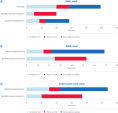
Consistent RNA yield and RNA integrity across different stool samples.
RNA was extracted from three stool samples (50 mg per preparation) using QIAmini PowerFecal Pro DNA/RNA Kit on QIAmini or RNeasy PowerFecal Pro Kit (manual extraction). At the time of the study, no automated Maxwell® RSC workflow for RNA extraction from fecal microbiome samples was available; therefore, no external workflow was included. The QIAmini workflow showed consistent RNA yield and RIN values across all stool samples. n = 4 replicated per sample.



Specifications
| Features | Specifications |
|---|---|
| Applications | Automated purification of total nucleic acids, RNA- or DNA-only on QIAmini |
| Main sample type | Fecal associated samples e.g. stool and wastewater |
| Sample amount | Up to 100 mg for DNA-only and Total NA extraction and 50mg of stool for RNA-only extraction. This relates to the total amount of stool material (not total volume), e.g. 50 mg of stool in 200 µL of transport buffer can still be processed. |
| Technology | Magnetic-particle technology |
| Workflow Format | Prefilled cartridge-based workflow |
| Processing | Automated on QIAmini |
| Elution volume | Prefilled 100 µL RNase- free water |
Resources
Kit Handbooks & Protocols (3)
Safety Data Sheets (1)
Certificates of Analysis (1)
Software-related downloads (2)
User Manuals (1)
FAQ
I see magnetic beads in the elution well. Is this a problem?
What do I need to do after the QIAmini run is completed?
I see reagent splashing, droplets on top of the cartridge wells, or plastic fragments remaining after removing the seal. What should I do?
Is phenol–chloroform–isoamyl alcohol (PCIA) absolutely required in lysis?
Which sample amounts can be processed with the QIAmini PowerFecal Pro DNA/RNA Kit?
How can I prevent reagent loss when removing the cartridge seal?
Can I run chemistry from other vendors on the QIAmini?
Can I change all parameters of my QIAmini protocol?
Does the QIAmini PowerFecal Pro DNA/RNA Kit include RNase or RNase-free DNase?
What is the elution volume and the elution buffer?
The required protocol to run my kit on the QIAmini is not installed on my instrument. How can I obtain it?
What sample types can be processed using the QIAmini PowerFecal Pro DNA/RNA Kit?
Can I run chemistry from other vendors on the QIAmini?
Can I change all parameters of my QIAmini protocol?
The required protocol to run my kit on the QIAmini is not installed on my instrument. How can I obtain it?
I see reagent splashing, droplets on top of the cartridge wells, or plastic fragments remaining after removing the seal. What should I do?
How can I prevent reagent loss when removing the cartridge seal?
I see magnetic beads in the elution well. Is this a problem?
What do I need to do after the QIAmini run is completed?
What sample types can be processed using the QIAmini PowerFecal Pro DNA/RNA Kit?
Which sample amounts can be processed with the QIAmini PowerFecal Pro DNA/RNA Kit?
Does the QIAmini PowerFecal Pro DNA/RNA Kit include RNase or RNase-free DNase?
What is the elution volume and the elution buffer?
Is phenol–chloroform–isoamyl alcohol (PCIA) absolutely required in lysis?