
✓ 24/7 automatic processing of online orders
✓ Knowledgeable and professional Product & Technical Support
✓ Fast and reliable (re)-ordering
QIAmini RNA Tissue/Cells (48) Kit
Cat no. / ID. 591105
Prefilled cartridge-based kit for automated total RNA and miRNA isolation from tissue and cell samples on QIAmini.
Log in To see your account pricing.
The QIAmini RNA Tissue/Cells Kit is intended for use with the QIAmini and QIAmini protocols only.
The QIAmini RNA Tissue/Cells Kit is intended for research use only. Not for use in diagnostic procedures.
✓ 24/7 automatic processing of online orders
✓ Knowledgeable and professional Product & Technical Support
✓ Fast and reliable (re)-ordering
Features
- Automated purification of total RNA and miRNA from up to 8 tissue and cell samples at a time
- Magnetic-bead-based purification with prefilled reagents for easy handling
- Genomic DNA digestion performed completely by QIAmini
- Prepare. Load. Press Start. Then QIAmini completely handles bind, wash and elution
- Reproducible RNA purification for downstream RT-qPCR, dPCR, NGS and other applications
Product Details
The QIAmini RNA Tissue/Cells (48) Kit contains reagents and single-use prefilled cartridges for the purification of total RNA and miRNA from tissue and cell samples using QIAmini. This simple protocol consists of manual lysis followed by hands-free, magnetic-bead-based purification. Following lysis and Proteinase K digestion, then you transfer the lysate into the prefilled cartridge, load the cartridge into the QIAmini and start the protocol. Prefilled cartridges minimize pipetting and reduce the risk of human error, leading to reproducible RNA recovery (including small RNAs such as miRNA). Purified RNA is suitable for a wide range of downstream applications including RT-qPCR, dPCR and RNA sequencing. The QIAmini RNA Tissue/Cells Kit is designed for laboratories looking for easy-to-use, compact and standardized RNA purifications for research.
Performance
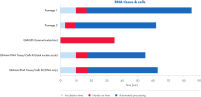
The QIAmini RNA Tissue/Cells Kit together with QIAmini purifies high-yield total RNA from cultured cells and a wide variety of tissue, including fibrous, fatty or RNase-rich tissues. DNA digestion (performed automatically by QIAmini) reliably removes genomic contamination Efficient genomic DNA removal during RNA extraction. Overall, high-purity, high-yield RNA isolation increases sensitivity of downstream applications. This kit purifies total RNA, including miRNA and other small RNAs Efficient recovery of miRNA from diverse tissue and cell samples, while greatly reducing the time you spend performing a purification Processing time comparison to the QIAmini RNA Tissue/Cells Kit.


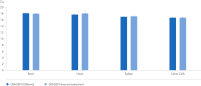
The RNA quality is comparable whether purified by QIAmini RNA Tissue/Cells Kit and or a trusted manual spin-column kit High RNA yield and purity across diverse tissue and cell samples.


Principle
The QIAmini RNA Tissue/Cells (48) Kit uses magnetic-bead technology for automated purification of RNA and miRNA from lysed tissue and cell samples. Following manual lysis in Buffer RLT and Proteinase K digestion, the lysate is transferred into a prefilled reagent cartridge. Before loading the cartridge into QIAmini, the desired elution volume (50–200 µL; default: 100 µL) is added. The QIAmini automatically performs nucleic acid binding to magnetic beads, wash steps, integrated genomic DNA digestion and elution. The cartridge-based workflow simplifies reagent handling and reduces manual pipetting during nucleic acid purification.
Procedure
The simple and intuitive protocol requires only a few preparation and loading steps before fully automated purification begins QIAmini RNA Tissue/Cells Kit workflow:
- Prepare samples by lysing tissue or cells in Buffer RLT followed by Proteinase K digestion.
- Transfer the lysate into the prefilled cartridge, add elution buffer and optionally add the DNase for automated genomic DNA digestion.
- Load the cartridge onto the QIAmini workdeck and start the protocol.*
- QIAmini performs binding, washing, genomic DNA digestion and elution.
- Recover purified RNA from the elution well.
*Protocols must be uploaded to the QIAmini before usage. This is a simple one-time procedure using the barcode scanner, a USB drive or a mobile device with Bluetooth. For a comprehensive list of available protocols see QIAmini Suite.
Applications
RNA purified using the QIAmini RNA Tissue/Cells Kit can be used in downstream applications including:
- RT-qPCR
- Digital PCR (dPCR)
- RNA sequencing (RNA-seq)
- Gene expression analysis
- miRNA analysis
- Biomarker research
Supporting data and figures
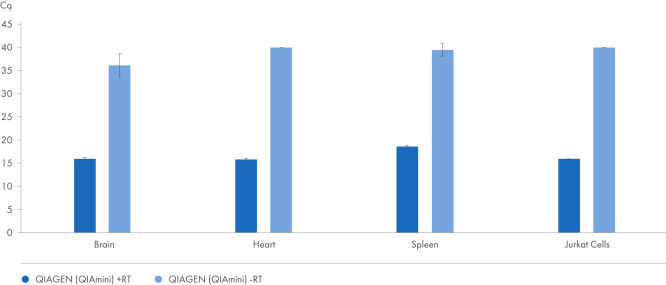
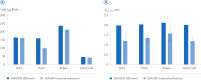
Efficient genomic DNA removal during RNA extraction.
RNA was extracted from 10 mg frozen rat brain or heart tissue, 5 mg frozen rat spleen tissue and 1×10⁶ Jurkat cells using QIAmini RNA Tissue/Cell Kit on QIAmini. The efficiency of genomic DNA removal was assessed by quantitative RT-PCR analysis of pgk1 (tissues) and β-actin (cells) using reactions performed with (+RT) or without (–RT) reverse transcriptase. For both assays, a large ΔCq between +RT and –RT reactions was observed, indicating efficient removal of genomic DNA. n = 4 replicates per sample type.

Specifications
| Features | Specifications |
|---|---|
| Applications | Automated purification of total RNA, including mRNA and miRNA on QIAmini |
| Main sample type | Tissue and cells |
| Sample amount | Up to 50 mg (frozen) or 25 mg (stabilized) tissue or up to 5 x 10⁶ cells |
| Technology | Magnetic-particle technology |
| Processing | Automated on QIAmini |
| Elution volume | 100 µL |
Resources
Kit Handbooks & Protocols (3)
Safety Data Sheets (1)
Certificates of Analysis (1)
Software-related downloads (2)
User Manuals (1)
FAQ
I see magnetic beads in the elution well. Is this a problem?
What do I need to do after the QIAmini run is completed?
I see reagent splashing, droplets on top of the cartridge wells, or plastic fragments remaining after removing the seal. What should I do?
Which protocol should I choose?
Do I have to use beta-mercaptoethanol?
How much tissue can I use?
Can I use the QIAmini RNA Tissue/Cells protocols for fatty tissue?
Can I skip the Proteinase K step?
Can I adjust the elution volume?
How can I prevent reagent loss when removing the cartridge seal?
I see some beads in my eluate. Is this a problem, and what should I do?
Can I run chemistry from other vendors on the QIAmini?
Can I change all parameters of my QIAmini protocol?
The required protocol to run my kit on the QIAmini is not installed on my instrument. How can I obtain it?
When resuspending my cell pellet, the sample becomes very viscous. What can I do?
Can I run chemistry from other vendors on the QIAmini?
Can I change all parameters of my QIAmini protocol?
The required protocol to run my kit on the QIAmini is not installed on my instrument. How can I obtain it?
I see reagent splashing, droplets on top of the cartridge wells, or plastic fragments remaining after removing the seal. What should I do?
How can I prevent reagent loss when removing the cartridge seal?
I see magnetic beads in the elution well. Is this a problem?
What do I need to do after the QIAmini run is completed?
When resuspending my cell pellet, the sample becomes very viscous. What can I do?
Do I have to use beta-mercaptoethanol?
How much tissue can I use?
I see some beads in my eluate. Is this a problem, and what should I do?
Which protocol should I choose?
Can I use the QIAmini RNA Tissue/Cells protocols for fatty tissue?
Can I skip the Proteinase K step?
Can I adjust the elution volume?