QIAamp DNA Kits for DNA Extraction

Para el aislamiento de ADN genómico, mitocondrial, bacteriano, parásito o vírico

S_1621_RPA_QA_1058

✓ Procesamiento automático sin interrupción de pedidos en línea

✓ Servicio técnico y para productos experto y profesional

✓ Realización y repetición de pedidos rápidas y fiables

QIAamp DNA Micro Kit (50)

N.º de cat. / ID.   56304

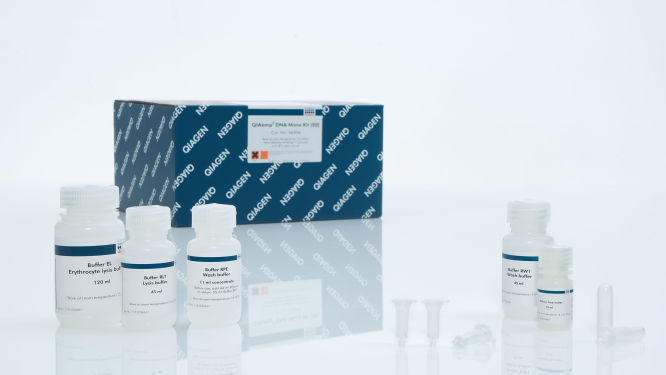
Para 50 preparaciones de ADN: 50 QIAamp MinElute Columns, Proteinase K, Carrier RNA, Buffers y Collection Tubes (2 ml)
KitAccesorios
QIAamp DNA Kit
QIAamp DNA Accessory Set
Tipo de columna
Micro
Mini
Mini QIAcube
QIAamp DNA Kits están concebidos para su uso en aplicaciones de biología molecular. Estos productos no están concebidos para el diagnóstico, la prevención ni el tratamiento de enfermedades.

✓ Procesamiento automático sin interrupción de pedidos en línea

✓ Servicio técnico y para productos experto y profesional

✓ Realización y repetición de pedidos rápidas y fiables

Características

  • Purificación rápida de ADN de gran calidad
  • Sin extracción orgánica ni precipitación con alcohol
  • Rendimiento alto y constante
  • Eliminación completa de contaminantes e inhibidores
  • Purificación automatizada de entre 1 y 12 muestras en QIAcube Connect


Detalles del producto

Los QIAamp DNA Kits permiten la purificación de ácidos nucleicos basada en membranas de gel de sílice a partir de tejido, frotis en hisopos, líquido cefalorraquídeo, sangre, líquidos corporales o células lavadas de la orina. Además, el ADN genómico y mitocondrial puede purificarse a partir de cantidades pequeñas de sangre fresca o congelada, tejido y gotas de sangre seca. No es necesario aplicar homogeneización mecánica, ya que los tejidos se lisan de forma enzimática. La purificación de ADN de entre 1 y 12 muestras puede automatizarse en QIAcube Connect gracias al QIAamp DNA Mini QIAcube Kit. La purificación de ADN con el QIAamp DNA Micro Kit y el QIAamp DNA Mini Kit también puede automatizarse en el instrumento QIAcube Connect.

Los protocolos estándar de QIAamp DNA Mini también pueden llevarse a cabo mediante el uso del sistema TRACKMAN Connected.


Rendimiento

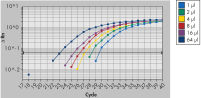
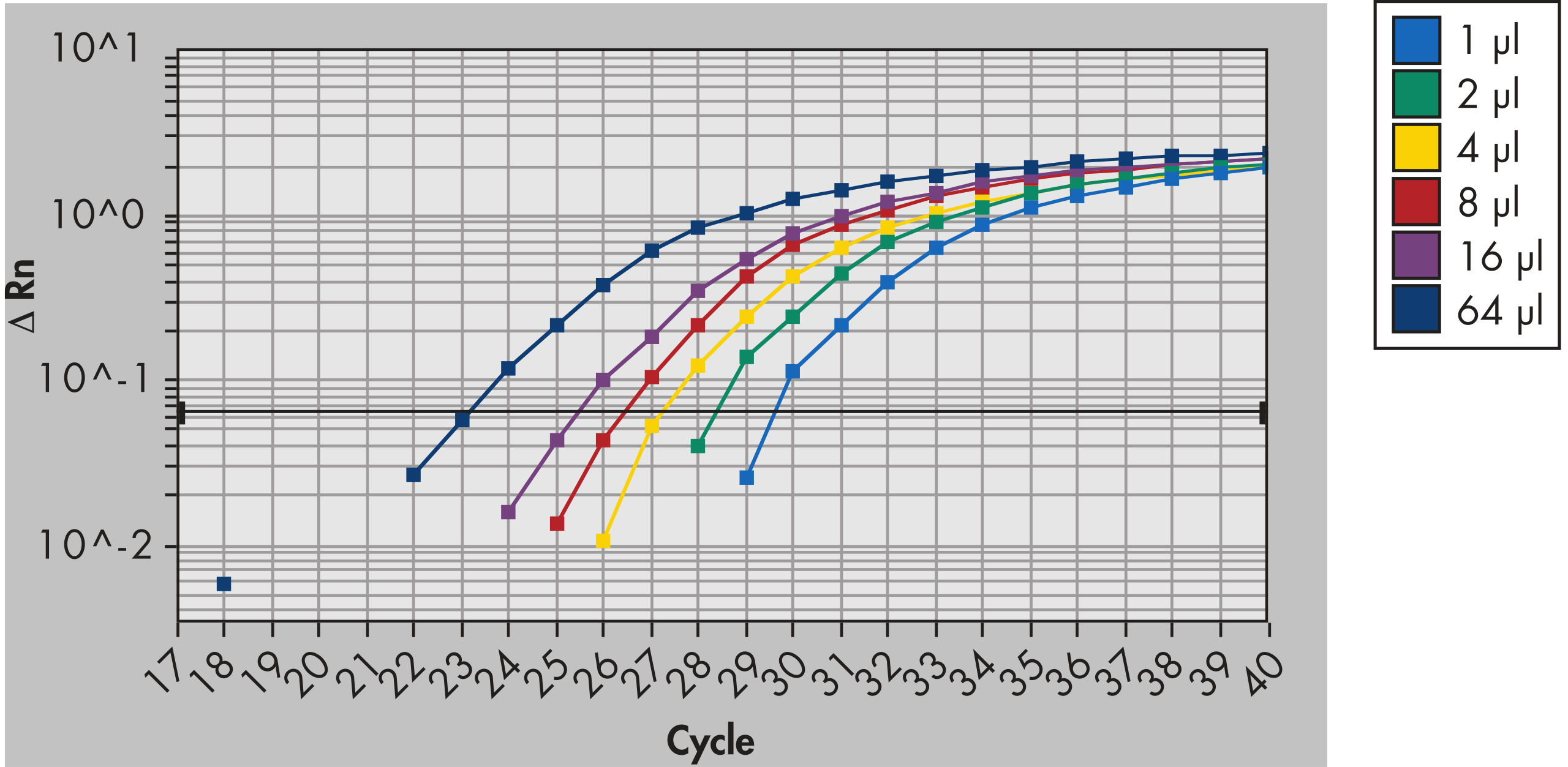
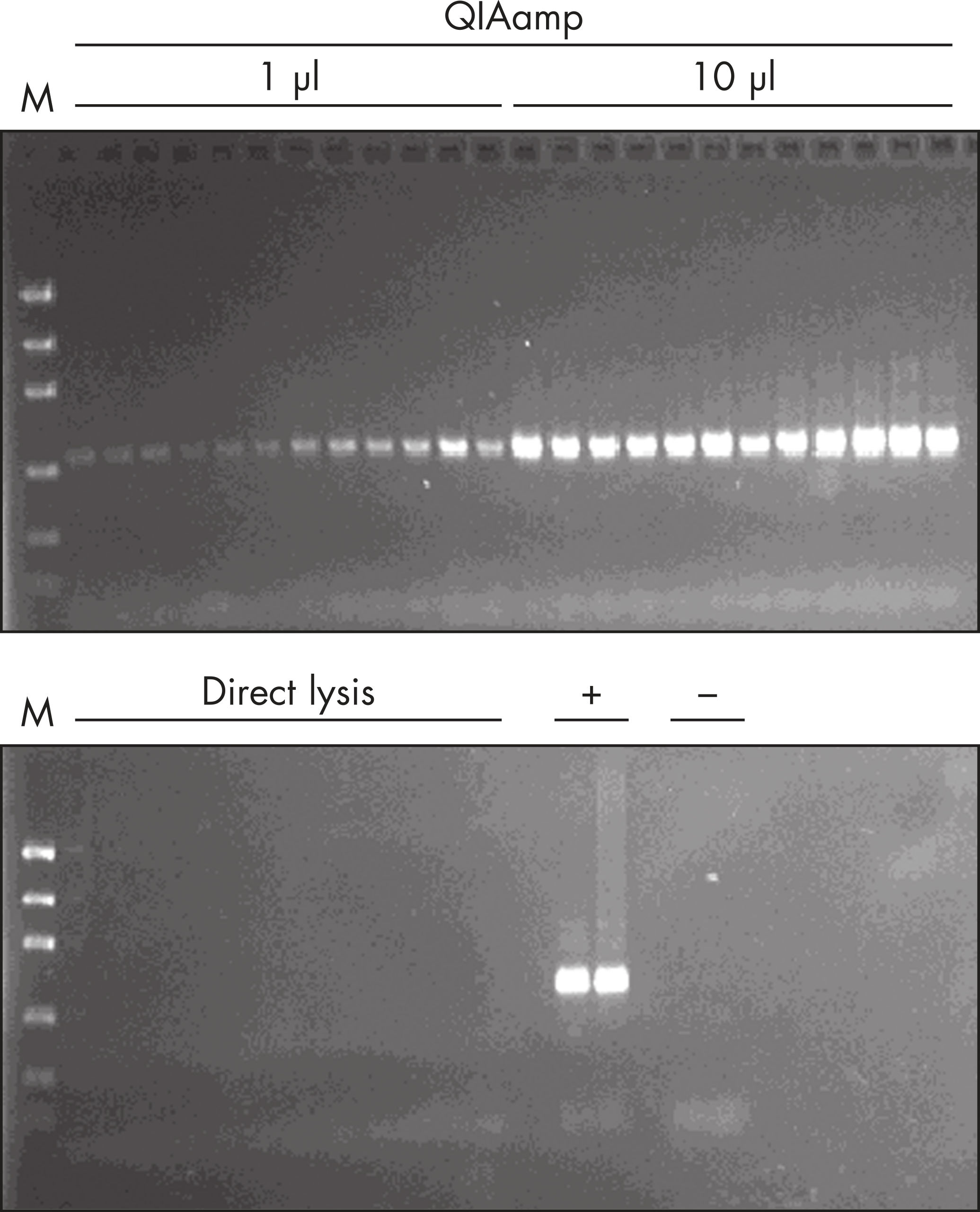
El QIAamp DNA Micro Kit combina las propiedades de unión selectiva de una membrana de gel de sílice con volúmenes de elución flexibles de entre 20 y 100 µl. El ADN que se purifica con el QIAamp DNA Micro Kit no contiene proteínas, nucleasas ni otras impurezas, y es apto para su uso en aplicaciones anterógradas, como real-time PCR (consulte la figura “ Purificación eficaz de ADN a partir de muestras de tamaño pequeño”) y PCR de microdisección láser (LMD-PCR) (consulte la figura “ PCR de microdisección láser”). El ADN purificado también puede utilizarse en procesos de genotipado de repeticiones cortas en tándem (STR), genotipado de polimorfismos de un solo nucleótido (SNP) o investigación farmacogenómica.
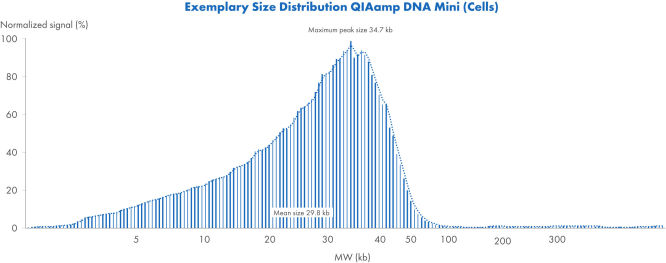
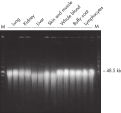
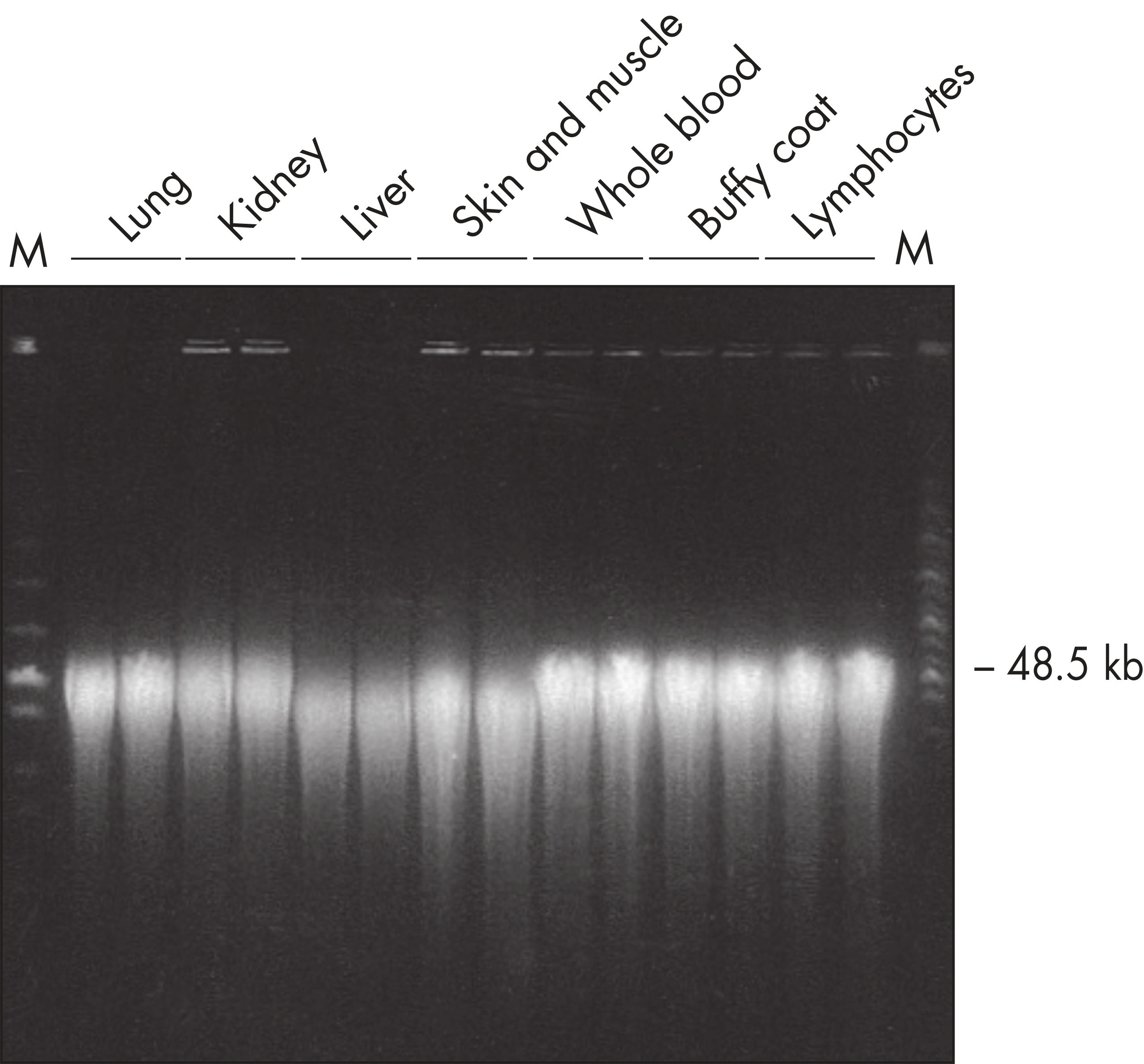
El QIAamp DNA Mini Kit simplifica el aislamiento de ADN a partir de muestras de tejido gracias al uso de procedimientos de columnas de centrifugación rápidas o métodos de vacío, lo que permite obtener ADN de hasta 50 kb (consulte la figura “ Purificación de ADN genómico de hasta 50 kb”). El ADN de esta longitud se desnaturaliza por completo y ofrece la mayor eficacia de amplificación. Los rendimientos de ácido nucleico o ADN dependen del material inicial (consulte la tabla “Rendimientos habituales con QIAamp DNA Mini Kit”). El ADN purificado a partir del QIAamp DNA Mini Kit puede utilizarse en una amplia gama de aplicaciones anterógradas, como PCR, real-time PCR cuantitativo, Southern blotting, genotipado SRT y SNP e investigación farmacogenómica.
Muestra Cantidad Rendimientos de
ácido nucleico total (µg)*
Rendimientos de ADN
(µg)†
Sangre 200 µl 4-12 4-12
Capa leucoplaquetaria 200 µl 25-50 25-50
Células 106 20-30 15-20
Hígado 25 mg 60-115 10-30
Cerebro 25 mg 35-60 15-30
Pulmón 25 mg 25-45 5-10
Corazón 25 mg 15-40 5-10
Riñón 25 mg 40-85 15-30
Bazo 10 mg 25-45 5-30

El QIAamp DNA Mini QIAcube Kit obtiene ADN de hasta 50 kb: El ADN de esta longitud se desnaturaliza por completo y ofrece la mayor eficacia de amplificación. El ADN purificado puede usarse en diversas aplicaciones, como las siguientes:

  • Investigación sobre virus
  • Investigación sobre bacterias
  • Investigación sobre hongos
  • Investigación sobre el cáncer
  • Investigación en pruebas de genética humana
  • Pruebas de paternidad
  • Análisis forenses

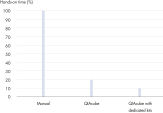
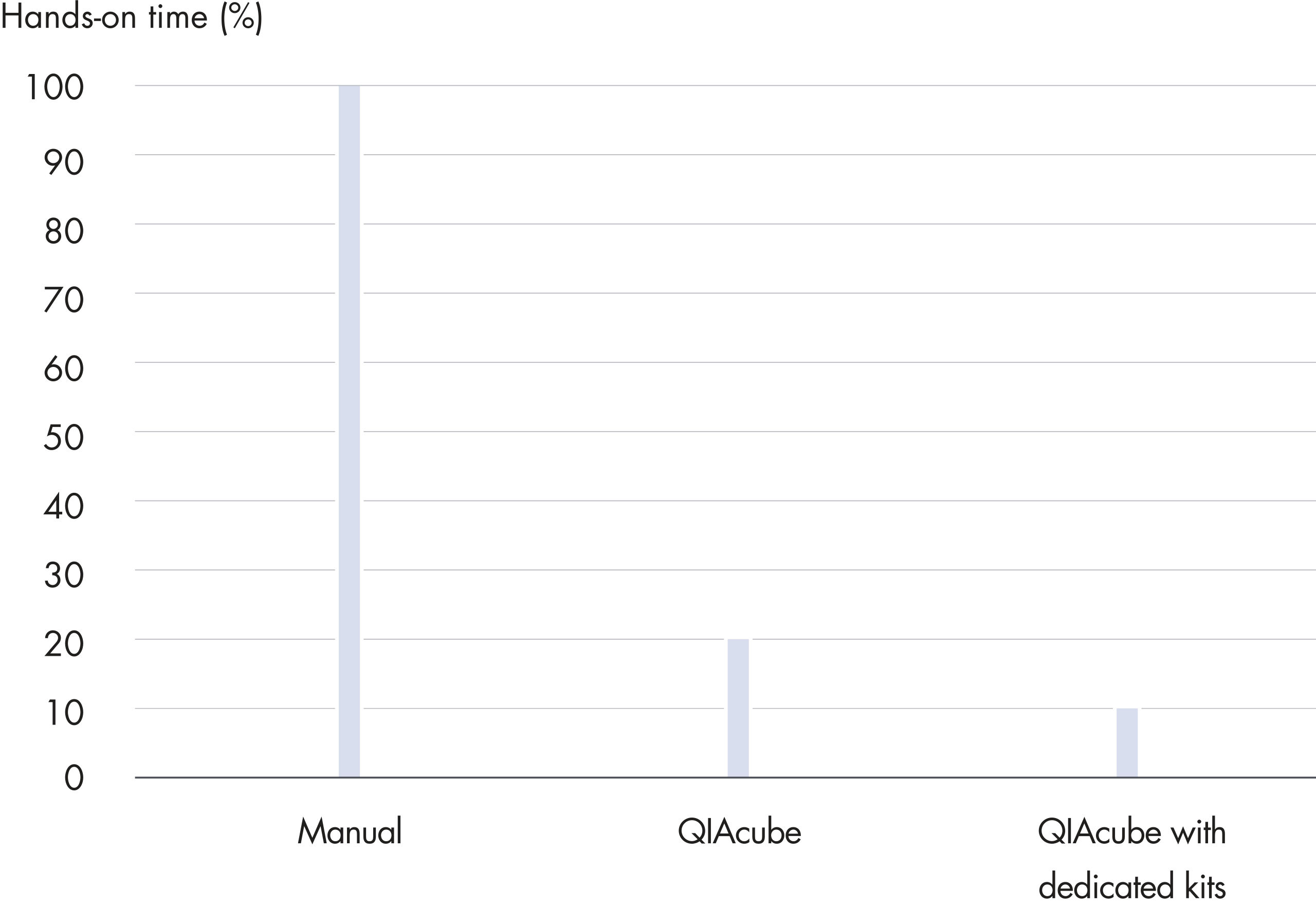
El QIAamp DNA Mini QIAcube Kit simplifica el aislamiento de ADN a partir de muestras de tejido gracias al uso de procedimientos de columnas de centrifugación rápidas. El kit incluye adaptadores de rotor precargados con tubos de elución y columnas de centrifugación de QIAamp, lo que proporciona un procedimiento más práctico y que permite ahorrar tiempo (consulte la figura “ Ahorro de tiempo significativo”).
 

Principio

Durante el procedimiento de purificación de ADN con QIAamp, el ADN se une de forma específica a la membrana de gel de sílice de QIAamp MinElute o QIAamp, mientras los contaminantes la atraviesan. No se requiere extracción con fenol-cloroformo. Los inhibidores de la PCR, como los cationes divalentes y las proteínas, se eliminan por completo en dos eficientes pasos de lavado, dejando el ADN puro para su elución en agua o en un tampón incluido en el kit.

La tecnología de procesamiento de ADN de QIAamp permite obtener ADN genómico, mitocondrial, bacteriano, parásito o vírico a partir de muestras de tejido humano listas para su uso en procedimientos de PCR y blotting.

La tecnología de preparación de las muestras de QIAamp cuenta con licencia completa, lo que permite utilizar los ácidos nucleicos purificados con QIAamp en cualquier ensayo molecular o cualquier aplicación anterógrada sin que exista el riesgo de incumplir la patente.


Procedimiento

Los tampones optimizados y las enzimas del QIAamp DNA Mini Kit lisan las muestras, estabilizan los ácidos nucleicos y mejoran la adsorción selectiva de ADN en la membrana QIAamp. Se añade alcohol y se cargan los lisados en la QIAamp Spin Column.

Los tampones de lavado se usan para eliminar impurezas y, a continuación, se eluye ADN puro listo para su uso en agua o en tampón bajo en sal.

No se requiere la homogeneización mecánica, ya que los tejidos se lisan de forma enzimática. Gracias al práctico procedimiento con columnas de centrifugación, el tiempo de preparación es de solo 20 minutos (los tiempos de lisis pueden variar en función del origen de la muestra).

Las muestras se pueden procesar con una microcentrifugadora o, si se va a procesar sangre u otros fluidos corporales, con QIAvac 24 Plus. Además, el riguroso proceso de lisis empleado hace que el QIAamp DNA Mini Kit sea ideal para la purificación de ADN genómico de bacterias o parásitos.

Para reducir aún más el tiempo de manipulación, la purificación del ADN genómico puede automatizarse en QIAcube. El QIAamp DNA Accessory Set A proporciona los tampones y reactivos adicionales necesarios para el aislamiento de ADN genómico, mitocondrial, bacteriano, parásito o vírico para el uso de QIAcube con 12 × QIAamp DNA Mini Kits (50).

Procesamiento de sistemas de vacío

La sangre y otros líquidos corporales pueden procesarse mediante sistemas de vacío en lugar de centrifugación, lo que permite una mayor velocidad y practicidad en la purificación de ADN. Las QIAamp Mini Spin Columns se colocan en el colector QIAvac 24 Plus con la ayuda de VacValves y VacConnectors.

Las VacValves deben utilizarse si el flujo de las muestras difiere significativamente para conseguir un vacío uniforme. Se utilizan VacConnectors desechables para evitar cualquier posible contaminación cruzada. El uso de VacConnectors también permite que los procedimientos de centrifugación de QIAamp puedan llevarse a cabo en QIAvac 6S con QIAvac Luer Adapters.

Aislamiento de ADN automatizado en QIAcube Connect

El QIAamp DNA Mini QIAcube Kit está diseñado de manera que viene precargado con columnas de centrifugación y tubos de elución en los adaptadores de rotor para los instrumentos de QIAcube, lo que elimina el riesgo de errores debido a la carga incorrecta de adaptadores de rotor. El kit especializado está diseñado para adaptarse a los requisitos de QIAcube y genera menos residuos.

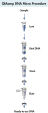
Un protocolo sencillo (lisis, unión, lavado y elución) y un protocolo automatizado en QIAcube Connect que exige una interacción mínima por parte del usuario.

El galardonado instrumento QIAcube Connect utiliza la tecnología avanzada para procesar las columnas de centrifugación de QIAGEN, lo que permite una integración perfecta de la preparación automatizada de muestras de bajo volumen en el flujo de trabajo del laboratorio. Todos los pasos del procedimiento de purificación están totalmente automatizados (se pueden procesar hasta 12 muestras por serie). Cuando se utiliza QIAcube Connect y el QIAamp DNA Mini QIAcube Kit, se crea una combinación óptima que proporciona una purificación de ADN rápida, práctica y sencilla.


Aplicaciones

El procedimiento del QIAamp DNA Micro Kit es apto para una amplia gama de materiales de muestra, como pequeñas cantidades de muestras de sangre, tarjetas de sangre, orina y muestras de tejido de tamaño pequeño, como microdisecciones láser.

El QIAamp DNA Mini Kit es idóneo para la purificación de ADN de las muestras de tejido humano que suelen utilizarse habitualmente, como músculo, hígado, corazón, cerebro, médula ósea y otros tejidos, frotis de hisopos (bucal, conjuntival, nasal, faríngeo, etc.), líquido cefalorraquídeo, sangre, líquidos corporales y células lavadas de la orina. El ADN puede purificarse a partir de hasta 25 mg de tejido o 200 µl de líquido en 20 minutos, y eluirse en 50-200 µl.

El QIAamp DNA Mini QIAcube Kit es adecuado para el aislamiento automatizado de ADN genómico, mitocondrial, parásito o vírico en QIAcube Connect. Los orígenes de las muestras incluyen tejidos, hisopos de frotis bucales, líquido cefalorraquídeo y células lavadas de la orina.


Comparación de los QIAamp DNA Kits
Características QIAamp DNA Micro Kit QIAamp DNA Mini Kit
Aplicaciones Real-time PCR, análisis de STR, LMD-PCR PCR, Southern blotting
Volumen de elución 20-100 µl 50-200 µl
Formato Columna de centrifugación Columna de centrifugación
Tipo de muestra principal Sangre total Sangre total, tejido, células
Procesamiento Manual (centrifugación o vacío) Manual (centrifugación o vacío)
Purificación de ARN total, miARN,
ARNm poli A+, ADN o proteína
ADN genómico, ADN mitocondrial ADN genómico, ADN mitocondrial,
ADN bacteriano, ADN parásito, ADN vírico
Cantidad de muestra 1-100 µl 200 µl/25 mg/5 × 106
Tecnología Tecnología de sílice Tecnología de sílice
Tiempo por serie o por preparación 30 minutos 20 minutos
Rendimiento <3 µg 4-30 µg


Datos y cifras de respaldo

Recursos

Manuales de uso de kits (8)
For purification of genomic DNA from small volumes of blood, dried blood spots, swabs, forensic case work samples, chewing gum, urine, tissues, laser-microdissected tissues; For cleanup of genomic DNA
Hojas de datos sobre seguridad (1)
Download Safety Data Sheets for QIAGEN product components.
Protocolos de inicio rápido (1)
Protocolos desarrollados por el usuario (9)
The protocol can be used for fresh or frozen semen samples with equal efficiency. Frozen samples must be thawed thoroughly before use. Please note that lysis time will vary depending on the size and density of the source material.
These procedures have been used successfully for isolation of genomic DNA from Aspergillus and Candida species, from both fungal cultures and blood.
This protocol has only been tested with ‘soft’ tissues (e.g., liver, spleen, thymus, heart, kidney, and brain) and may not work with ‘hard’ tissues (e.g., bone, teeth, and skin).
Protocolos complementarios (5)
For parallel preparation of genomic, bacterial, or viral DNA or viral RNA from more than 24 samples, we recommend using QIAamp® Spin Columns with 4-6 ml collection tubes. Any tube with an inner diameter of 9-10 mm (outer diameter 11-12 mm) is suitable.
Documentos de la aplicación/protocolo (1)
For QIAamp DNA Mini Kit (50) plus QIAamp DNA Accessory Set A, cat. no. 1048145, or QIAamp DNA Mini Kit (250) plus QIAamp DNA Accessory Set B, cat. no. 1048146
Manuales del usuario de instrumentos (1)
Safety Data Sheets (1)
Certificates of Analysis (1)

Preguntas frecuentes

When should carrier be used with the QIAamp DNA Mini or the DNeasy Blood & Tissue Kit?

For DNA isolation using the QIAamp DNA Mini, or the DNeasy Blood & Tissue Kit, we recommend using carrier DNA when expected yields are below 10 ng. If possible, carrier DNAs such as poly-dA, poly-dT or poly-dA:dT should be used. Other carrier DNAs such as herring sperm DNA may interfere with subsequent PCR by binding primers nonspecifically.

Please note that poly-dA may interfere with oligo-dT primers, and, in this case, a different carrier DNA should be used. The concentration of carrier DNA should be at least 10 µg/ml. Optimal amounts need to be determined empirically for each application. The size distribution of carrier DNAs is typically in the range of 100 bp to 10 kb.

FAQ-100
Can mitochondria separated with the Qproteome Mitochondria Isolation Kit be used for downstream DNA isolation?

Even though we have not tested this, we assume that both the QIAamp DNA Micro Kit and the AllPrep DNA/RNA Mini Kit will work to isolate DNA from mitochondria separated with the Qproteome Mitochondria Isolation Kit.


FAQ-1188
How do I safely inactivate biohazardous flow-through material?

Always dispose of potentially biohazardous solutions according to your institution’s waste-disposal guidelines. Although the lysis and binding buffers in QIAamp, DNeasy, and RNeasy kits contain chaotropic agents that can inactivate some biohazardous material, local regulations dictate the proper way to dispose of biohazards. DO NOT add bleach or acidic solutions directly to the sample-preparation waste. Guanidine hydrochloride in the sample-preparation waste can form highly reactive compounds when combined with bleach.
Please access our Material Safety Data Sheets (MSDS) online for detailed information on the reagents for each respective kit.

FAQ-12
Does the Epitect Bisulfite Kit also work on DNA extracted from plants?

Bisulfite conversion of unmethylated cytosines into uracils with the EpiTect Bisulfite Kit works on DNA irrespective of the source organism. The DNA template needs to be of high purity for efficient conversion. We recommend to use genomic DNA extracted with our DNA isolation kits for clinical or animal and plant samples as a template for the EpiTect Bisulfite Kit.

FAQ-1209
Are QIAamp DNA isolation kits suitable for apoptosis studies?

Yes. We have used the QIAamp DNA Blood Mini Kit to purify DNA fragments as small as 168 base pairs. Our product profile for this kit shows a picture of the apoptotic banding pattern obtained after storage of blood samples at 4°C for extended periods of time prior to isolating DNA.


FAQ-149
Do you have a protocol for cleanup of REPLI-g amplified DNA?

Yes, please follow the Supplementary Protocol 'Purification of REPLI-g amplified DNA using the QIAamp DNA Mini Kit' (RG14).


FAQ-1545
Do you have a protocol for purification of genomic DNA from cultured cells using the QIAamp DNA Micro Kit?

Yes, please follow the User-Developed Protocol 'Purification of genomic DNA from cultured cells using the QIAamp DNA Micro Kit' (QA43).

Note:  The maximum amount of cells that can be used with this protocol has not been thoroughly tested.  However, we would suggest using no more than 1 x 10⁶ cells.


FAQ-1547
What dedicated QIAcube Kits are available?
How can I precipitate genomic DNA using isopropanol?

Alcohol precipitation is commonly used for concentrating, desalting, and recovering nucleic acids. Since less alcohol is required for isopropanol precipitation, this is the preferred method for precipitation of DNA from large volumes. In addition, isopropanol precipitation can be performed at room temperature, which minimizes co-precipitation of salt that interferes with downstream applications.


Procedure

  1. Adjust the salt concentration, for example, with sodium acetate (0.3 M, pH 5.2, final concentration) or ammonium acetate (2.0–2.5 M, final concentration).
  2. Add 0.6–0.7 volumes of room-temperature isopropanol to the DNA solution and mix well.
  3. Centrifuge the sample immediately at 10,000–15,000 x g for 15–30 min at 4°C
  4. Carefully decant the supernatant without disturbing the pellet.
  5. Wash the DNA pellet by adding 1–10 ml (depending on the size of the preparation) of room-temperature 70% ethanol. This removes co-precipitated salt and replaces the isopropanol with the more volatile ethanol, making the DNA easier to redissolve.
  6. Centrifuge at 10,000–15,000 x g for 5–15 min at 4°C.
  7. Carefully decant the supernatant without disturbing the pellet.
  8. Air-dry the pellet for 5–20 min (depending on the size of the pellet).
  9. Redissolve the DNA in a suitable buffer.

Tip: Use a buffer with a pH of 7.5–8.0, as DNA does not dissolve easily in acidic buffers. Often distilled water can have an acidic pH. The addition of EDTA protects the DNA from DNase digestion.

Tip: High-molecular-weight DNA, such as genomic DNA, should be redissolved very gently to avoid shearing. If the DNA pellet does not dissolve easily, heat at 55°C for 1–2 h with gentle shaking.

FAQ-2953
303 - Can I use my own lysis buffer with the DNeasy Blood & Tissue or QIAamp DNA Mini Kit?

If you have optimized the lysis conditions for a specific sample type, you can lyse the sample in your lysis buffer, and follow the Supplementary Protocol 'Purification of total DNA from crude lysates using the DNeasy Blood & Tissue Kit' (DY15), or the corresponding protocol in the Appendix of the QIAamp DNA Mini Kit and QIAamp DNA Blood Mini Kit Handbook.


FAQ-303
How do I perform a DNA precipitation to concentrate my sample?
  • Add 1/10 volume of 3 M Na-Acetate pH 5.2, and 2 to 2.5 volumes of ice-cold 100% ethanol to the DNA sample
  • Mix, and store at –20°C for at least 1 h to precipitate the DNA
  • Recover the precipitated DNA by centrifugation at full speed in a microcentrifuge for 15–20 min
  • Pour off the ethanol and wash the pellet twice with room-temperature 70% ethanol
  • Allow the DNA pellet to air-dry
  • resuspend the DNA in a suitable volume of sterile TE buffer or distilled water
FAQ-305
How can QIAGEN Protease and Proteinase K be inactivated?

QIAGEN Protease is inactivated by incubation at 70°C for 15 minutes.

To our knowledge, Proteinase K cannot be completely heat-inactivated. Even when incubating at 95°C for 10 minutes, some enzymatic activity remains. This will not negatively affect the QIAamp Procedure, since the enzyme will be efficiently removed by the wash steps in the protocols.

FAQ-315
3212 - What is the minimum size of DNA fragment that can be isolated with QIAamp DNA Mini kit?

Fragments of approximately 200 bp can be isolated with good recovery. Smaller fragments can also be isolated but the recovery will be reduced with decreasing fragment lengths.

FAQ-3212
What is the shelf-life for QIAGEN Proteinase K (cat. no. 19131, 19133)?

QIAGEN Proteinase K is stable for up to 1 year after delivery when stored at room temperature. To prolong the shelf-life of Proteinase K, storage at 2–8°C is recommended.

FAQ-3447
What is the minimum number of cells that can be efficiently processed with the QIAamp DNA Mini and QIAamp Blood Mini kits and what is the expected yield?
In QIAGEN labs, we have isolated DNA from a minimum of 1000 cells or 1 ul of whole blood sample. The expected yield from 1 ul of whole blood with 4000-7000 leukocytes is 30 ng of genomic DNA. The expected yield of genomic DNA from a single eukaryotic cell is 6 pg. However, please bear in mind that for these small quantities, we would recommend the QIAamp DNA Micro kit instead.
FAQ-3516
Is the quality and size of DNA extracted with the QIAamp DNA Mini and QIAamp Blood Mini kit good enough to generate DNA-libraries for next generation sequencing (NGS)?
The size of DNA obtained with QIAamp DNA Mini and QIAamp Blood Mini kit ranges between 100 bp and 50 kb, with 30 kb fragments predominating. The 30 kb fragments are a good starting point for most of the library preparations. Furthermore, the purified DNA is free of protein, nucleases, and other contaminants and inhibitors, and therefore is suitable for NGS.
FAQ-3518
How much protein does one vial of Protease in the QIAamp spin kits contain? What is the concentration of the resuspended Protease?
A vial of Protease with 7.5 Anson units (AU) contains approximately 167 mg protein (45 mAU/mg protein). If the content of the vial is diluted in 7 ml, the concentration would roughly be 24 mg/ml.
FAQ-3520
I received a kit containing the MinElute columns; however, they were left out for a while and not stored at 2–8°C upon receipt. Can I still use them?

The MinElute spin columns included in the following kits should be stored at 2–8°C upon arrival: AllPrep DNA/RNA Micro, EpiTect Fast DNA Bisulfite, EpiTect Fast FFPE Bisulfite, EpiTect Fast LyseAll Bisulfite, EpiTect Plus DNA Bisulfite, EpiTect Plus FFPE Bisulfite, EpiTect Plus LyseAll Bisulfite, exoRNeasy Serum/plasma Maxi, exoRNeasy Serum/Plasma Midi, GeneRead DNA FFPE, GeneRead rRNA Depletion, GeneRead Size Selection, MinElute Gel Extraction, MinElute PCR Purification, MinElute Reaction Cleanup, miRNeasy FFPE, miRNeasy Micro, miRNeasy Serum/Plasma, QIAamp DNA FFPE, QIAamp DNA Investigator, QIAamp DNA Micro, QIAamp MinElute Media, QIAamp MinElute Virus Spin, QIAamp MinElute Virus Vacuum, RNeasy FFPE, RNeasy Micro, RNeasy Plus Micro.

Short-term storage (up to 4 weeks) at room temperature (15–25°C) does not affect the performance. However, for optimal performance and quality, storage temperature should not exceed 25°C.

FAQ-3560
How can I improve DNA yields from very tough tissues using the DNeasy Blood & Tissue Kit or the QIAamp DNA Mini Kit?

Efficient DNA isolation requires thorough sample disruption and digestion.

Although the QIAamp and DNeasy procedures requires no mechanical disruption of the tissue sample, the lysis time will be reduced if the sample is ground in liquid nitrogen or mechanically homogenized in advance. For mechanical homogenization, a rotor–stator homogenizer, such as the QIAGEN TissueRuptor, or a bead mill, such as the QIAGEN TissueLyser, can be used.

To improve digestion of tough tissue samples, Proteinase K incubation at 56°C can be performed overnight. DNA yields may be improved by increasing the amount of Proteinase K or by adding additional proteinase K after several hours of digestion.  

FAQ-374
Which QIAGEN DNA extraction kits are compatible with the PAXgene Saliva Collector?

Protocols for automated DNA extraction from saliva stabilized with the PAXgene Saliva Collector are available for the QIAsymphony DNA Midi Kit with the QIAsymphony SP instrument or the QIAamp DNA Mini Kit with the QIAcube (Classic and Connect). 
For manual extraction, supplementary protocols are available for the QIAamp DNA Mini and Gentra Puregene Cell Kits (see resources section).

FAQ-3821
What are the expected DNA yields from different tissues using the QIAamp DNA Mini Kit?

The expected DNA yields from different tissues using the QIAamp DNA Mini Kit are as follows:

Sample Nucleic acid yield without RNase A treatment (ug) DNA yield with RNase A treatment (ug)
Blood (200 ul) 4–12 4–12
Buffy coat (200 ul) 25–50 25–50

Cultured cells (5 x 10e6)

20–30 15–20
Liver (25 mg) 60–115 10–30
Brain (25 mg) 35–60 15–30
Lung (25 mg) 8–20 5–10
Heart (25 mg) 25–45 5–10
Kidney (25 mg) 40–85 15–30
Spleen (10 mg) 25–45 5–30

DNA was purified with QIAamp Kits following standard protocols.

FAQ-45
Why is carrier RNA used during the isolation of gDNA from microdissected samples with the QIAamp DNA Micro Kit?
When purifying small amounts of DNA using silica technology, the addition of carrier RNA or DNA enhances the recovery of DNA. Carrier prevents the small amount of target nucleic acid present in the sample from being irretrievably bound. Other typical “precipitation” carriers, such as glycogen, cannot be used. The carrier used must be a nucleic acid, and of a large enough size (>200nt) to bind to the silica membrane.
FAQ-473
Why are the centrifugation speeds for the QIAamp DNA Mini kit at 6000 x g? Can I spin at full speed?
The initial centrifugations are performed at 6000 x g simply to reduce centrifuge noise. The final spin with the ethanolic wash buffer and the optional drying spin are both done at full speed to enhance ethanol drying from the spin column. Earlier centrifugation steps can also be performed at full speed, and this will not negatively affect DNA yield or quality.
FAQ-474
What do you recommend for the cleanup of genomic DNA (gDNA)?

Using QIAGEN Genomic-tips

Protocol for DNA cleanup using Genomic-tips can be found in the 'Special Applications' section of the QIAGEN Genomic DNA Handbook.


Using QIAamp DNA Micro kit

Up to 10ug of gDNA can be cleaned using the cleanup protocol in the QIAamp DNA Micro Handbook.


Using Gentra Puregene Reagents

Gentra Puregene Handbook has protocols for removal of proteins and RNA from purified gDNA in Appendix C and Appendix D respectively.

FAQ-618
What is the expected yield of genomic DNA isolated from bacteria with the DNeasy Blood & Tissue or QIAamp DNA Mini Kit?

The expected yield of genomic DNA isolated from bacteria with the DNeasy Blood & Tissue Kit or the QIAamp DNA Mini Kit is approximately 10 ug of DNA per 2x 10⁹ bacterial cells. Note that yields of genomic DNA will vary depending on bacterial strain, quality of the starting material, growing conditions, and the amount of material processed.


FAQ-632
Why does the QIAamp DNA Mini Tissue Protocol require both ATL and AL buffer, while the Blood Protocol only uses AL?

Tissue is more difficult to lyse than cells in a blood sample. Therefore an additional incubation step in buffer ATL containing Proteinase K is included in the Tissue Protocol to achieve complete sample lysis. Blood cells will directly lyse by incubation in Buffer AL containing QIAGEN Protease. Buffer AL is required in both protocols to ensure appropriate conditions for DNA binding to the silica membrane. For further details on the protocols, please refer to the QIAamp DNA Mini and QIAamp DNA Blood Mini Kit Handbook.

FAQ-633
What can be used as an alternative to the A260 measurement for quantification of small amounts of RNA and DNA?

Small amounts of RNA and DNA may be difficult to measure spectrophotometrically. Fluorometric measurements, or quantitative RT-PCR and PCR are more sensitive and accurate methods to quantify low amounts of RNA or DNA.

Fluorometric measurements are carried out using nucleic acid binding dyes, such as RiboGreen® RNA Quantitation Reagent for RNA, and PicoGreen® DNA Quantitation Reagent for DNA (Molecular Probes, Inc.).

FAQ-728
What is the composition of buffer AE?

The composition of Buffer AE is:

  • 10 mM Tris-Cl
  • 0.5 mM EDTA; pH 9.0.
FAQ-730
Do I need to have EDTA in the buffer in which I am going to store my isolated genomic DNA?

EDTA chelates divalent cations which are required for nuclease activity. While the genomic DNA (gDNA) extracted using QIAGEN products, should not have any nuclease activity, it is possible to introduce nucleases during repeated long-term access of the DNA. EDTA helps to prevent any nuclease activity introduced after the genomic DNA extraction procedures.

However, if the gDNA is stored frozen at -20oC or -80oC, nuclease activity is much reduced. It may be possible to leave EDTA out of the storage buffer without negative consequences when samples are kept under these conditions, and when repeated freeze-thaw cycles are avoided.

We do recommend however that gDNA be stored in a neutral to a slightly basic buffered solution (e.g. 10 mM Tris-Cl pH 8.5 to 9.0) to prevent DNA degradation by acid hydrolysis. Note that deionized water mostly has an acidic pH.

FAQ-754
What is the difference between QIAGEN Protease and QIAGEN Proteinase K provided in various QIAamp Kits?

QIAGEN Proteinase K is a subtilisin-type protease, which cleaves at the carboxyl side of hydrophobic, aliphatic and aromatic amino acids. It is particularly suitable for short digestion times. It possesses a high specific activity over a wide range of temperatures and pH values with substantially increased activity at higher temperature. Soluble calcium is not essential for enzymatic activity. This means that EDTA, which is used to inhibit Mg2+-dependent enzymes such as nucleases, will not inhibit Proteinase K activity.

QIAGEN Protease is a broad-specificity Serine protease with high activity, cleaving preferentially at neutral and acidic residues. It is an economical alternative to Proteinase K for isolation of native DNA and RNA from a variety of samples.

FAQ-761
Do you have a protocol for the isolation of genomic DNA from bone?

Yes, we have the following protocols:

  • Isolation of genomic DNA from compact bone using the QIAamp DNA Mini Kit (QA02)
  • Isolation of genomic DNA from compact bone using the DNeasy Blood & Tissue Kit (DY01)
  • Purification of genomic DNA from bones using the QIAamp DNA Micro Kit (QA39)
  • Purification of archive-quality DNA from bone fragments using the Gentra Puregene Tissue Kit (PG38).
FAQ-908
Do you have a protocol for the isolation of genomic DNA from sperm?

Yes, we have the following protocols:

  • Isolation of genomic DNA from sperm using the QIAamp DNA Mini Kit; protocol 1 (QA03), long procedure
  • Isolation of genomic DNA from sperm using the QIAamp DNA Mini Kit; protocol 2 (QA04), short procedure
  • Purification of total DNA from animal sperm using the DNeasy Blood and Tissue kit; protocol 1 (DY02), long procedure
  • Purification of total DNA from animal sperm using the DNeasy Blood and Tissue kit; protocol 2 (DY03), short procedure
  • Purification of DNA from epithelial cells mixed with sperm cells using the QIAamp DNA Micro Kit (QA40).
FAQ-909
Do you have a protocol for the isolation of genomic DNA from fungi?

Yes, we have the following protocols:

  • Isolation of genomic DNA from fungi (culture and blood) using the QIAamp DNA Mini Kit (QA09).
  • Isolation of genomic DNA from plants and filamentous fungi using the QIAGEN Genomic-tip (QG08).
FAQ-911
Do you have a protocol for Acetyl Cysteine (NALC) treatment of viscous samples?

Yes, please follow either of the User-Developed Protocols:

FAQ-913
Do you have a protocol for the detection of Bordetella pertussis DNA by PCR?

Yes, please follow the User-Developed Protocol 'Detection of Bordetella pertussis DNA by PCR' (QA14). The procedure is for use with the QIAamp DNA Mini Kit.  Please contact Technical Service for this protocol.

FAQ-914
Do you have a protocol for isolation of genomic DNA from saliva and mouthwash?

Yes, we have the following protocols:

  • Isolation of genomic DNA from saliva and mouthwash using the QIAamp DNA Mini Kit; vacuum procedure (QA19v)
  • Isolation of genomic DNA from saliva and mouthwash using the QIAamp DNA Mini Kit; spin procedure (QA19s)
  • Isolation of genomic DNA from saliva using the DNeasy Blood & Tissue Kit; spin procedure (DY07)
FAQ-917
Do you have a protocol for the isolation of DNA from soft tissues using the TissueLyser?
Do you have a protocol for the isolation of DNA from epithelial cells mixed with sperm cells?
FAQ-926