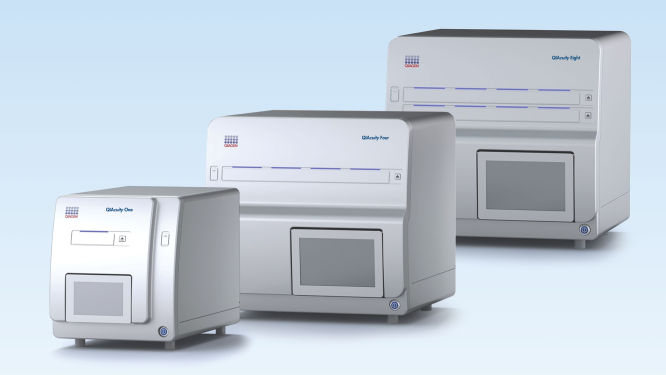
QIAcuity Digital PCR System

Für digitale PCR-Anwendungen auf Nanoplattenbasis

QIAcuity in Aktion
Entdecken Sie QIAcuity und erfahren Sie mehr über dPCR.

QIAcuity One, 2plex Device

Kat.-Nr. / ID.   911001

1-Platten digitales PCR-Gerät, für den Nachweis von bis zu 2 Fluoreszenzfarbstoffen, Plattenversiegler, USB-Speicher und QIAcuity Software Suite: einschließlich 1 vorbeugender Wartungseinsatz. Ein Jahr Garantie auf Arbeit, Reisekosten und Teile ist ebenfalls enthalten.
Format
One
Four
Eight
Mehrkanalnachweis
2 channels (up to 4plex)
8 channels (up to 12plex)
Serviceoptionen
Device
System
System FUL-2
QIAcuity ist für molekularbiologische Anwendungen vorgesehen. Dieses Produkt ist nicht für die Diagnose, Prävention oder Behandlung einer Krankheit bestimmt. Daher sind die Leistungsmerkmale des Produkts für den klinischen Einsatz (z. B. für Diagnostik, Prognose, Therapie oder Blutbanken) nicht bekannt. Verwenden Sie für diagnostische Anwendungen der digitalen PCR bitte das QIAcuityDx Digital PCR System.
QIAcuity in Aktion
Entdecken Sie QIAcuity und erfahren Sie mehr über dPCR.

Eigenschaften

  • Vollintegriertes System
  • Skalierbares Format (Geräte mit 1, 4 und 8 Platten)
  • Erweiterte Multiplexing-Funktionen (bis zu 12-plex)
  • Bis zu sechs Standardkanäle plus zwei Hybridkanäle für LSS-Farbstoffe
  • Flexibler Probendurchsatz
  • Umfassende Ergebnisse in ca. 2 Stunden

Angaben zum Produkt

Das QIAcuity Digital PCR System liefert präzise und multiplexierte Quantifizierungsergebnisse für den Nachweis von Mutationen und Kopienzahlvariationen (Copy Number Variation, CNV), Genexpressionsstudien, Gen-Editing-Analysen und vieles mehr. Dieses auf Nanoplatten basierende System integriert einen dPCR-Standardworkflow mit Partitionierung, Thermocycling und Bildgebung nahtlos in eine vollautomatische Plattform mit minimalem manuellem Zeitaufwand.

Das System wird zusammen mit QIAcuity Nanoplates, Reagenzien und Assays verwendet.

In der virtuellen Demo können Sie mehr über QIAcuity erfahren.

Leistung

Das QIAcuity Digital PCR System macht die absolute Quantifizierung für alle Labore zugänglich und erschwinglich. Die Walk-Away-Automatisierung integriert und optimiert den gesamten digitalen PCR-Workflow der Partitionierung, Thermocycling und Bildgebung in einem einzigen Gerät und das bei minimalem manuellem Zeitaufwand. Darüber hinaus lassen sich Ihre aktuellen qPCR-Assays leicht an das QIAcuity Digital PCR System anpassen. Beim Umstieg von der qPCR ist keine Änderung der Plattenhandhabung erforderlich, was eine schnelle Assay-Konfiguration und rasche Ergebnisse in ca. 2 Stunden gewährleistet.

QIAcuity Geräte – Merkmale und Spezifikationen

Merkmal QIAcuity One 2plex  QIAcuity One 5plex  QIAcuity Four QIAcuity Eight
Anzahl verarbeiteter Platten 1 1 4 8
Nachweiskanäle 2 81
(6+2 Hybrid2
81
(6+2 Hybrid2
81
(6+2 Hybrid2
Multiplexing-Fähigkeit  4 123)1)  123)1)  123)1) 
Thermocycler 1 1 1 2
Zeit bis zum Ergebnis Ca. 2 Std. Ca. 2 Std.

Erste Platte ca. 2 Std.

Alle ∼80 min eine weitere Platte

Erste Platte ca. 2 Std. 

Alle ∼40 min eine weitere Platte 

Durchsatz (verarbeitete Proben in einer 8-Stunden-Schicht, einschließlich Über-Nacht-Betrieb)

Bis zu 480 (96-Well)

Bis zu 120 (24-Well)

Bis zu 480 (96-Well)

Bis zu 120 (24-Well)

Bis zu 768 (96-Well)

Bis zu 192 (24-Well)

Bis zu 1536 (96-Well)

Bis zu 384 (24-Well)

1) Erfordert das QIAcuity High Multiplex Probe PCR Kit bei Multiplexing >5plex 
2) Hybridkanäle werden für Long Stokes-Shift(LSS)-Farbstoffe eingesetzt 
3) Durch Amplituden-Multiplexing in den sechs Standardkanälen können 12  Ziele parallel nachgewiesen werden. Durch die Kombination von Hybridkanälen für Singleplex-LSS-Farbstoffe und Amplituden-Multiplexierung kann die mögliche Multiplexierung auf insgesamt 14 erhöht werden. Diese Kombination wird jedoch aufgrund des Optimierungsbedarfs für alle in einem Reaktionsgemisch verwendeten Assays und der Kompensation der damit verbundenen Interferenzen (Crosstalk) nicht empfohlen. 

Prinzip

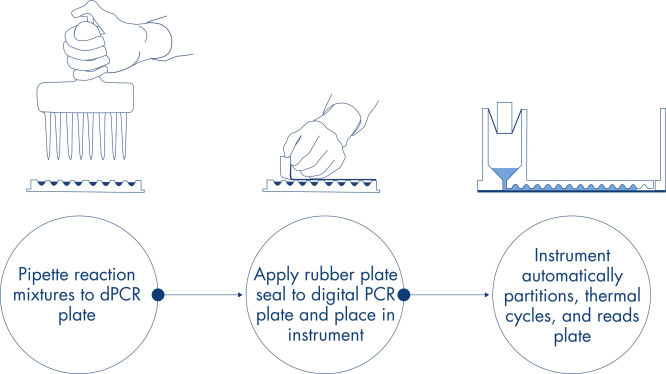
In nur 3 einfachen Schritten erhalten Sie in ca. 2 Stunden das gewünschte dPCR-Ergebnis: Pipettieren und laden, Experiment durchführen, Ergebnisse auswerten.

Das Prinzip der dPCR-Reaktion in den Nanoplatten finden Sie hier beschrieben.

Verfahren

Genau wie bei qPCR-Experimenten umfasst die Probenvorbereitung die Überführung von Master-Mix, Sonden und Primern in eine 96- oder 24-Well-Nanoplatte, gefolgt von der Zugabe der Proben. Das System integriert Partitionierung, Thermocycling und Bildgebung in nur einem vollautomatischen Gerät, mit dem Sie in weniger als 2 Stunden von der Probe zum Ergebnis gelangen. Mit der Software Suite lassen sich Auswertungen durchführen, die die Konzentration in Kopien pro Mikroliter von Ihrer Zielsequenz sowie von Qualitätskontrollen wie positiven Proben oder NTC liefern. Diese Analyse kann auch auf Remote-Computer innerhalb desselben lokalen Netzwerks (LAN) ausgeweitet werden.

Anwendungen

Zusammen mit den QIAcuity Nanoplates und QIAcuity PCR Kits ermöglichen die QIAcuity-Geräte digitale PCR-Anwendungen, darunter:

  • Nachweis seltener Mutationen
  • Analyse von Kopienzahlvariationen
  • Genexpressionsanalyse
  • Pathogennachweis
  • Genotypisierung
  • miRNA-Forschung
  • Zell- und Gentherapie


Software

Die mit dem Gerät gelieferte und auf einem separaten Computer installierte QIAcuity Software Suite steuert ein oder mehrere QIAcuity-Geräte, die entweder direkt mit einem Gerät verbunden sind oder ein vorhandenes lokales Netzwerk (LAN) nutzen. Mit der QIAcuity Software Suite können digitale PCR-Experimente, Proben und Reaktionsgemische definiert, Nanoplatten zugeordnet und auf das QIAcuity-Gerät übertragen werden. Nach dem Gerätelauf können die Daten analysiert, Berichte erstellt und die Daten zur externen Auswertung exportiert werden. Die Software bietet vielfältige Template-Funktionen, mit denen Sie wiederkehrende Plattenlayouts und Plattenlaufparameter leicht zugänglich machen und so Ihre Erfahrung mit der digitalen PCR weiter verbessern können.

Bei Integration in ein lokales Netzwerk dient der Computer, auf dem die QIAcuity Software Suite installiert ist, als Server, auf den andere Computer als Clients über das LAN zugreifen können. So können mehrere Benutzerinnen und Benutzer von anderen Räumen oder Büros aus auf die Software zugreifen und Daten in einem Standardbrowser analysieren, ohne dass die Software auf mehreren Computern installiert werden muss oder Zugriff und Austausch von Daten über Internetverbindungen nötig sind.

Services

Schützen Sie Ihr Gerät mit den vielfältigen Servicelösungen von QIAGEN. Erfahren Sie mehr über einen spezifischen Servicevertrag, der zu Ihren Anforderungen passt.

Ergänzende Daten und Abbildungen

Kits & Consumables

​dPCR accessories
Master mixes & reagents
Assays & kits
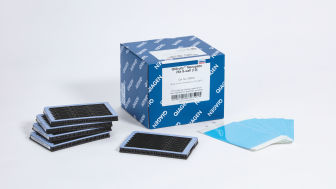
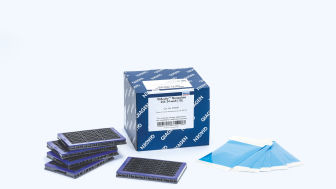
Nanoplate Seals (11) image
Cat. No.: 250099
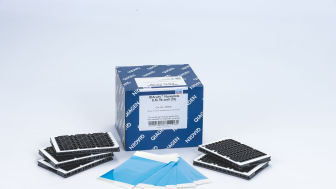
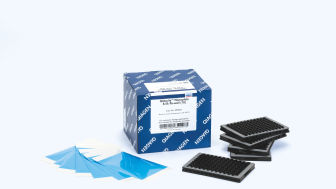
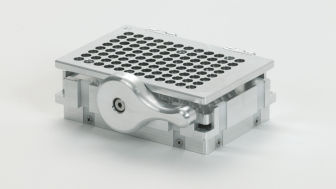
Nanoplate Tray (2) image
Cat. No.: 250098

Service-Pläne

QIAcuity One 2plex, Full Agreement

Kat.-Nr. / ID.   9245362

Reparaturservice vor Ort, einschließlich Anfahrts- und Personalkosten sowie Ersatzteile für den Zeitraum von 1 Jahr. Reaktionszeit von zwei Werktagen. Enthält eine geplante Wartung während der Laufzeit des Vollvertrags.

QIAcuity One, Preventive Subscription

Kat.-Nr. / ID.   9245355

Ein Einsatz für eine geplante Wartung vor Ort (Planned Maintenance, PM), einschließlich Anfahrts- und Personalkosten sowie Ersatzteile. Enthält 10 % Rabatt auf Reparaturservices während der Laufzeit der Vereinbarung für präventive Wartung.

QIAcuity Four, Preventive Subscription

Kat.-Nr. / ID.   9245356

Ein Einsatz für eine geplante Wartung vor Ort (Planned Maintenance, PM), einschließlich Anfahrts- und Personalkosten sowie Ersatzteile. Enthält 10 % Rabatt auf Reparaturservices während der Laufzeit der Vereinbarung für präventive Wartung.

QIAcuity Eight, Preventive Subscription

Kat.-Nr. / ID.   9245357

Ein Einsatz für eine geplante Wartung vor Ort (Planned Maintenance, PM), einschließlich Anfahrts- und Personalkosten sowie Ersatzteile. Enthält 10 % Rabatt auf Reparaturservices während der Laufzeit der Vereinbarung für präventive Wartung.

QIAcuity One 2plex, Core Agreement

Kat.-Nr. / ID.   9245358

Ein Reparaturservice vor Ort, einschließlich Anfahrt, Arbeitsaufwand und Ersatzteile für den Zeitraum von 1 Jahr. Reaktionszeit innerhalb von 5 Werktagen. Beinhaltet eine planmäßige Wartung während der Laufzeit des Core-Agreement-Vertrags.

QIAcuity One 5plex, Core Agreement

Kat.-Nr. / ID.   9245359

Ein Reparaturservice vor Ort, einschließlich Anfahrt, Arbeitsaufwand und Ersatzteile für den Zeitraum von 1 Jahr. Reaktionszeit innerhalb von 5 Werktagen. Beinhaltet eine planmäßige Wartung während der Laufzeit des Core-Agreement-Vertrags.

QIAcuity Four, Core Agreement

Kat.-Nr. / ID.   9245360

Ein Reparaturservice vor Ort, einschließlich Anfahrt, Arbeitsaufwand und Ersatzteile für den Zeitraum von 1 Jahr. Reaktionszeit innerhalb von 5 Werktagen. Beinhaltet eine planmäßige Wartung während der Laufzeit des Core-Agreement-Vertrags.

QIAcuity Eight, Core Agreement

Kat.-Nr. / ID.   9245361

Ein Reparaturservice vor Ort, einschließlich Anfahrt, Arbeitsaufwand und Ersatzteile für den Zeitraum von 1 Jahr. Reaktionszeit innerhalb von 5 Werktagen. Beinhaltet eine planmäßige Wartung während der Laufzeit des Core-Agreement-Vertrags.

QIAcuity One 2plex, Basic Agreement

Kat.-Nr. / ID.   9245401

Reparaturservice vor Ort, einschließlich Anfahrts- und Personalkosten sowie Ersatzteile für den Zeitraum von 1 Jahr. Reaktionszeit von fünf Werktagen. Enthält eine geplante Wartung während der Laufzeit des Basisvertrags.

QIAcuity One 5plex, Basic Agreement

Kat.-Nr. / ID.   9245402

Reparaturservice vor Ort, einschließlich Anfahrts- und Personalkosten sowie Ersatzteile für den Zeitraum von 1 Jahr. Reaktionszeit von fünf Werktagen. Enthält eine geplante Wartung während der Laufzeit des Basisvertrags.

QIAcuity One 5plex, Full Agreement

Kat.-Nr. / ID.   9245363

Reparaturservice vor Ort, einschließlich Anfahrts- und Personalkosten sowie Ersatzteile für den Zeitraum von 1 Jahr. Reaktionszeit von zwei Werktagen. Enthält eine geplante Wartung während der Laufzeit des Vollvertrags.

QIAcuity Four, Full Agreement

Kat.-Nr. / ID.   9245364

Reparaturservice vor Ort, einschließlich Anfahrts- und Personalkosten sowie Ersatzteile für den Zeitraum von 1 Jahr. Reaktionszeit von zwei Werktagen. Enthält eine geplante Wartung während der Laufzeit des Vollvertrags.

QIAcuity Eight, Full Agreement

Kat.-Nr. / ID.   9245365

Reparaturservice vor Ort, einschließlich Anfahrts- und Personalkosten sowie Ersatzteile für den Zeitraum von 1 Jahr. Reaktionszeit von zwei Werktagen. Enthält eine geplante Wartung während der Laufzeit des Vollvertrags.

QIAcuity One, Installation und Training

Kat.-Nr. / ID.   9245352

Vor-Ort-Service, der die Einrichtung der Gerätehardware und Systemsoftware sowie ein praktisches Anwendungstraining für bis zu vier Labormitarbeitende umfasst, um eine reibungslose Integration in die Laborabläufe sicherzustellen.

QIAcuity Four, Installation und Training

Kat.-Nr. / ID.   9245353

Vor-Ort-Service, der die Einrichtung der Gerätehardware und Systemsoftware sowie ein praktisches Anwendungstraining für bis zu vier Labormitarbeitende umfasst, um eine reibungslose Integration in die Laborabläufe sicherzustellen.

QIAcuity Eight, Installation und Training

Kat.-Nr. / ID.   9245354

Vor-Ort-Service, der die Einrichtung der Gerätehardware und Systemsoftware sowie ein praktisches Anwendungstraining für bis zu vier Labormitarbeitende umfasst, um eine reibungslose Integration in die Laborabläufe sicherzustellen.

Ressourcen

Operating Software (1)
"

Version 11

The Volume Precision Factor (VPF) offers a unique feature to secure precision of concentration results obtained from a QIAcuity dPCR run. 

In general, Nanoplates provide partitions of fixed sizes that enable a very precise way of sample concentration calculation. Potential variation of partition sizes in Nanoplate batches, caused by different microstructure molding forms, can be addressed by applying the batch specific VPF. Furthermore, the VPF includes well-specific volume information and therefore further increases precision of concentration calculation in each well of the Nanoplates.

"
Protocols (18)
The QIAcuity dPCR System, complemented by the QIAcuity Software Suite version 2.5 and higher, offers a powerful solution for determining DNA integrity and stability. Analyzing up to 5 targets simultaneously enables accurate and precise integrity assessment. The importance of determining genome integrity becomes particularly evident in analyzing viral vectors such as AAVs, which are known for their susceptibility to packaging errors. Moreover, dPCR is a valuable tool for assessing DNA stability, providing valuable insights into storage and processing impacts.
Here we demonstrate how to optimize your assays on a microfluidic nanoplate-based digital PCR system, the QIAcuity, and provide recommendations for a seamless transfer. Moreover, the QIAcuity dPCR workflow is very similar to qPCR.
Digital PCR (dPCR) is a powerful technique that detects and quantifies ultra-rare mutations in a high background of wild-type cfDNA down to 0.1% variant allele frequency. Here, we describe end-to-end manual and automated workflows that enable accurate detection and absolute quantification of ultra-rare PIK3CA variants in cfDNA using the QIAcuity Digital PCR System.
The QIAcuity dPCR System, complemented by the QIAcuity Software Suite version 2.5 and higher, offers a powerful solution for determining DNA integrity and stability. Analyzing up to 5 targets simultaneously enables accurate and precise integrity assessment. The importance of determining genome integrity becomes particularly evident in analyzing viral vectors such as AAVs, which are known for their susceptibility to packaging errors. Moreover, dPCR is a valuable tool for assessing DNA stability, providing valuable insights into storage and processing impacts.
With the cellenONE-QIAcuity workflow, we achieved high-throughput absolute quantification of low-abundance targets at the single-cell level. cellenONE’s single-cell isolation platform enabled real-time and 100% accurate single-cell isolation without compromising viability and transcript expression. This allowed us to use the exact number of intact cells for RT-dPCR reactions. Moreover, the elimination of the RNA purification step significantly reduced hands-on time, and QIAcuity’s probe-based chemistry allowed the multiplexing of up to five targets in a one-step RT-dPCR format with no or minimal optimization.
Here we compared the performance of qPCR and the nanoplate dPCR techniques. The digital PCR method on the QIAcuity significantly improved precision when measuring copy number states and sensitivity of mutation detection through absolute quantification and reduced standard error. This is advantageous in various applications, including copy number variation analysis, small fold-change and rare mutation detection.
Here, we present a workflow that combines two technologies, cellenONE and QIAcuity Digital PCR, which accelerate and streamline high-throughput analyses of target copy numbers in cultured cells. The workflow starts with detecting and sorting defined populations of cells as well as individual cells using cellenONE, followed by multiplexing dPCR on the QIAcuity platform. Copy number variations of target regions are then analyzed using the QIAcuity Software Suite, providing an intuitive and fast interpretation of results.
Here, we present a highly efficient, high-throughput workflow that combines two technologies, cellenONE and QIAcuity Digital PCR, to accurately analyze miRNAs in well-defined individual cells and populations of cells.
Q-Solution is an innovative and versatile PCR additive that works in part by lowering the melting temperature of DNA. Adjusting template melting properties can be useful when interrogating DNA with high-GC content or with complex secondary structures, such as adeno-associated virus (AAV) genomes. Q-Solution has additional properties that can be used to mitigate the carryover of various PCR inhibitors. This application note will highlight a few examples of how the Q-Solution Kit can be used in QIAcuity workflows.
The goal of this work was to compare performance of quantitative PCR (qPCR) and digital PCR (dPCR) in the quantification of gene expression and Wolbachia abundances in Nasonia parasitoid wasps.
The QIAcuity digital PCR system combined with the QIAcuity One-Step Viral RT-PCR Kit enables precise detection and quantitation of vector-borne viruses in mosquitoes. The results presented in this comparison study showed that digital PCR is a powerful tool for absolute quantitation of low abundant targets and is a more reliable detection method than qPCR. Multiplexing allows detection and quantitation of multiple targets in a single reaction more efficiently by increasing sample throughput at a reduced cost per target.
This study tested a workflow for quantitation and qualification of AAV samples using a duplex assay on the QIAcuity dPCR instrument targeting both an insert (GFP) and the viral backbone (AAV2-ITR). With very low intra-assay and inter-assay CVs <6.5%, we demonstrate one of the main benefits of dPCR: reproducibility.
The QIAgility instrument is a liquid handler designed for automating PCR setup. For compatibility with the QIAcuity, we developed an adapter to secure up to two nanoplates onto the deck of the QIAgility. Using the QIAgility software, we have optimized a protocol that works for all nanoplate types and QIAcuity applications. Here we report the performance of a front end automated QIAgility dPCR nanoplate setup procedure for use with the QIAcuity dPCR system.
Here we provide an integrated rAAV genome titer method using the QIAcuity Digital PCR (dPCR) System with detailed parameters for high assay performance. Using this optimized method for pre-PCR handling of in-process rAAV samples, the results demonstrated that QIAcuity dPCR system generates the same level of accuracy and precision as the current gold standard ddPCR system but with much faster sample-to-result times (2 hours vs 7 hours) and higher overall throughput and scalability.
Here we report the use of saliva samples in combination with dPCR as a suitable alternative to screen for individuals infected with SARS-CoV-2.
Scientific Posters (15)
Technical Information (31)

Compliance with 21 CFR Part 11 involves both technical (i.e., hardware and software) and procedural requirements. This document explains how the QIAcuity system contributes to fulfilling those technical requirements.

A new temperature gradient functionality to determine the optimal primer annealing temperature of a digital PCR assay


For Version 1.2

December 2025

Guidance on resolving audit trail logging issues in QIAcuity Software Suite versions 3.1 and 3.2

July 2024

Note about a known issue of the remaining PostgreSQL database after updating to the QIAcuity Software Suite version 2.5.0.0 and 2.5.0.1

User Manuals (25)
User manual for QIAcuity instruments and QIAcuity Software 3.0
User manual for QIAcuity instruments and QIAcuity Software 2.1
Extension to the QIAcuity User Manual for QIAcuity Software version 3.1.1
User manual for QIAcuity instruments and QIAcuity Software 3.1
QIAcuity Safety Instructions and Quick-Start Guide
PDF (6.4MB)
Download
May 2025
User manual for QIAcuity instruments and QIAcuity Software 2.0
QIAcuity User Manual
PDF (9.8MB)
Download
User manual for QIAcuity instruments and QIAcuity Software 1.2
User manual for QIAcuity instruments and QIAcuity Software 2.5
QIAcuity backup and restore scripts for QIAcuity Software Suite versions 2.0, 2.1.7, 2.1.8, and 2.2


User manual for QIAcuity instruments and QIAcuity Software 3.2
Extension to the QIAcuity User Manual for QIAcuity Software version 3.2
User manual for QIAcuity instruments and QIAcuity Software 2.1.8
For QIAcuity Software Suite version 3.1 or higher
QIAcuity backup and restore scripts for QIAcuity Software Suite version 2.5
User manual for QIAcuity instruments and QIAcuity Software 2.2
For QIAcuity Software Suite version 3.0
For QIAcuity User Manual – Updated QIAcuity Nanoplate Partition Volumes
For QIAcuity Software Suite 1.2: Updating VPF for archived or exported plates
Updating QIAcuity Software Suite 1.1.3 and Control Software 0.5.2.18 to QIAcuity Software 2.0
Network connection of QIAcuity instruments
For software version 3.1.1.0
Safety Data Sheets (1)
Download Safety Data Sheets for QIAGEN product components.
Certificates of Analysis (1)

FAQ

Is it possible to change voltage set-up from 110V to 230V on the QIAcuity instruments?

This is not needed. The QIAcuity is equipped with a flexible power supply technology and operates within a range of 100–240V AC, 50/60 Hz, 1500 VA (max). 

FAQ-3761
Can I see error codes on the instrument touchscreen?

The instrument software GUI shows error codes including a description and information how to resolve the error. The instrument touchscreen shows an alarm icon in the upper right corner that turns red in case of an instrument failure. Accessing the System Status in the Tool tab allows users to clear errors. Rebooting of the instrument is required to complete the removal of the error.  Please do not skip this step. You may always contact QIAGEN Technical Services in case of any question. 

FAQ-3763
What is the scope of a regular maintenance of the QIAcuity?

The user manual contains instructions on how to perform a regular cleaning and decontamination, and how to replace air filters on the QIAcuity instruments. A regular maintenance reduces the dust in the instrument and therefore minimizes the presence of dust particles on the nanoplate, which might interfere with the plate analysis.

FAQ-3765
What is the impact of not applying the latest VPF? Can I reanalyze previously obtained results after installing the latest VPF?

If you had run a nanoplate for which the installed VPF misses the specific factor, the software will notify you. If you then analyze without the specific VPF, the impact depends on the variation of the partition volume of the new Nanoplate batch compared to the latest. Typically this variation is ±6–7% (approx. 5% CV over the entire plate). The analysis may be repeated after updating the VPF file. After installing the latest VPF and re-analysis of the run, a copy of the plate is generated in the QIAcuity Software Suite including the new results. 

FAQ-3769
Can I see on the QIAcuity Software Suite report file if the VPF (Volume Precision Factor) has been used or not?

Yes, the report includes a notification if the matching VPF was missing and, therefore, not applied to the analysis. If the matching VPF was applied there is no notification on the report. 

FAQ-3770
Is it necessary to reanalyze a plate with VPF (Volume Precision Factor) that was already processed using a QIAcuity instrument that was purchased in 2020?

If you had analyzed your nanoplates without VFP, the impact depends on the variation of the partition volume of the new nanoplate batch compared to the latest. The VPF reduces the CV from approximately 5% to 2%. We recommend to reanalyze results in case the data originated from different wells (e.g., copy number variations or gene expression data sets for which the reference sample was measured in a different well). Results obtained across different plates should also be r-analyzed. A reanalysis is not required for assay data that were analyzed within the same well (e.g., mutation rate determination using two channels within the same well).

FAQ-3771
Can I prepare a dPCR reaction directly in QIAcuity Nanoplate?

A standard PCR plate is required to set up dPCR reaction before transferring it to the nanoplate to ensure a proper mixing of the reaction mix before partitioning. 

FAQ-3774
Can I use a custom master mix instead of a QIAGEN master mix?

QIAGEN master mixes are optimized for nanoplate microfluidics and are recommended to be used with our dPCR system. They also include an optimized reference dye required for proper analysis.

FAQ-3777
How to prepare DNA prior to dPCR?

All DNA samples used in reaction mixes should show similar quality and quantity, which can easily be assessed using UV spectrophotometry. DNA samples with an average length of ≥20 kb (e.g., genomic DNA purified via spin column with silica membrane) should be fragmented by restriction digestion before partitioning. Enzymatic fragmentation of larger DNA ensures an even distribution of template throughout the QIAcuity Nanoplate, which in turn leads to an accurate and precise quantification.

FAQ-3778
What are the storage conditions and expiry date of QIAcuity consumables?

The QIAcuity Probe PCR Kit should be stored immediately upon receipt at –30 to –15°C in a constant-temperature freezer and protected from light. The QIAcuity Probe PCR master mix can also be stored protected from light at 2–8°C. Components are stable for 12 months, unless otherwise indicated on the label. 
The QIAcuity EG PCR Kit should be stored immediately upon receipt at –30 to –15°C in a constant-temperature freezer and protected from light. The QIAcuity EG PCR master mix can also be stored protected from light at 2–8°C. Components are stable for 6 months, unless otherwise indicated on the label. 
The QIAcuity Nanoplates does not have expiry date and are stable for at least 1 year when stored at RT. 

FAQ-3780
Can I use the QIAcuity Nanoplate in more than one runs?

The plate is designed for a single use run. For example, even if only 30 samples are loaded into the 96-well plate, a whole plate will be sealed by the roller. It can't be unsealed and used for another run. The QIAcuity Software won’t allow to set up a separate experiment for the same nanoplate to avoid that previously processed plates being not partitioned a second time.

FAQ-3781
Can I optimize a dPCR assay on the QIAcuity using gradient temperature?

An essential temperature gradient functionality was introduced with software version 2.5. When updating older software versions to 2.5, each QIAcuity instrument will offer the temperature gradient and may be used to find the best cycling temperature for new dPCR assays. When running a QIAcuity Four or a QIAcuity Eight, all plates may have their own temperature profile, including the option for a temperature gradient.

FAQ-3783
What is the VPF (Volume Precision Factor)?

The VPF provides a set of well-specific and molding form-specific factors used to specify the exact reaction volume of a nanoplate, thus increasing the concentration calculation of each well. 

FAQ-3784
When and how often do I need a new VPF (Volume Precision Factor)?

 In general, nanoplates provide partitions of fixed sizes that enable a very precise way of sample concentration calculation. If a new molding form is used for nanoplate manufacturing, potential variation of partition sizes can be addressed by applying the molding form-specific VPF. Thus, each time a new molding form is used, a new VPF is created and made available. Currently, the VPF is updated once every 3–6 months.

FAQ-3785
Is a standard curve needed in dPCR?

In dPCR we measure the absolute concentration of targets at endpoint reaction. Concentrations of unknowns can be determined based on dPCR results observed (number of negatives, number of positives, and partition volume analyzed).

FAQ-3786