PAXgene Blood ccfDNA Tubes (100)

For collection of whole blood samples and stabilization of ccfDNA

S_4788_PAXgene_Blood_0106_new

✓ 24/7 automatic processing of online orders

✓ Knowledgeable and professional Product & Technical Support

✓ Fast and reliable (re)-ordering

PAXgene Blood ccfDNA Tubes (100) icon_0368_ls_gen_eco_friendly-s

Cat no. / ID.   768115

100 blood collection tubes (10 ml). To be used in conjunction with the QIAamp MinElute ccfDNA Kit, the QIAamp Circulating Nucleic Acid Kit (50) or the QIAsymphony PAXgene Blood ccfDNA Kit (192)
MX$24,854.00
Log in To see your account pricing.
For Research Use Only. Not for use in diagnostics procedures. No claim or representation is intended to provide information for the diagnosis, prevention, or treatment of a disease.

✓ 24/7 automatic processing of online orders

✓ Knowledgeable and professional Product & Technical Support

✓ Fast and reliable (re)-ordering

Features

  • Single-tube collection, stabilization, transport and storage
  • Immediate stabilization of circulating, cell-free DNA (ccfDNA)
  • Sample transport and storage at room temperature for up to 10 days
  • Standardized preanalytical processing of samples

Product Details


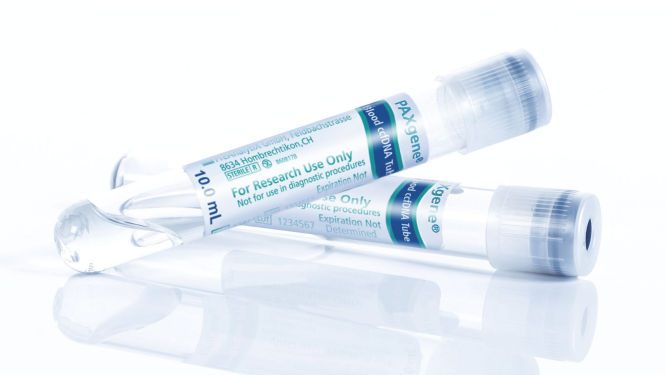
The PAXgene Blood ccfDNA Tube is a plastic, closed, evacuated tube for the collection, anticoagulation, transport and storage of human whole blood samples and the stabilization of ccfDNA. When the tube is used in conjunction with the QIAsymphony PAXgene Blood ccfDNA Kit, the QIAGEN QIAamp MinElute ccfDNA Kit or the QIAamp Circulating Nucleic Acid Kit, high-quality ccfDNA can be isolated for use in downstream analytical assays.

Performance

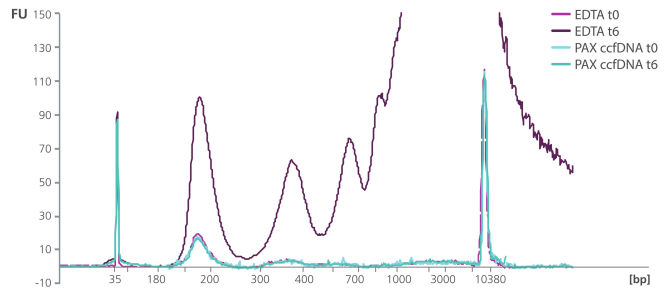
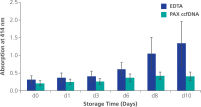
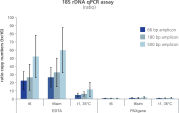
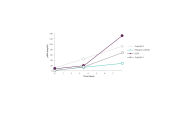
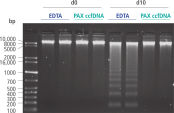
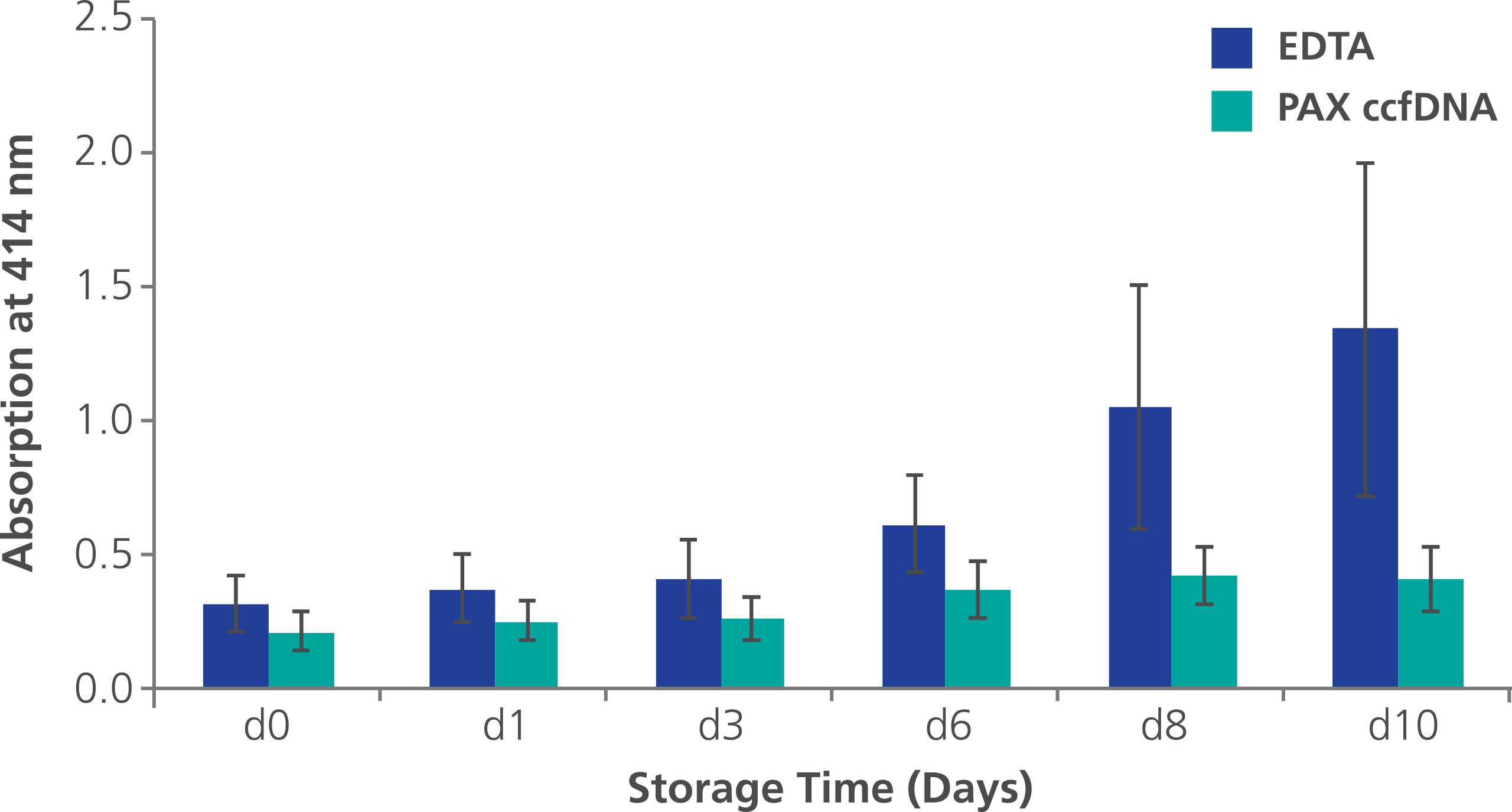
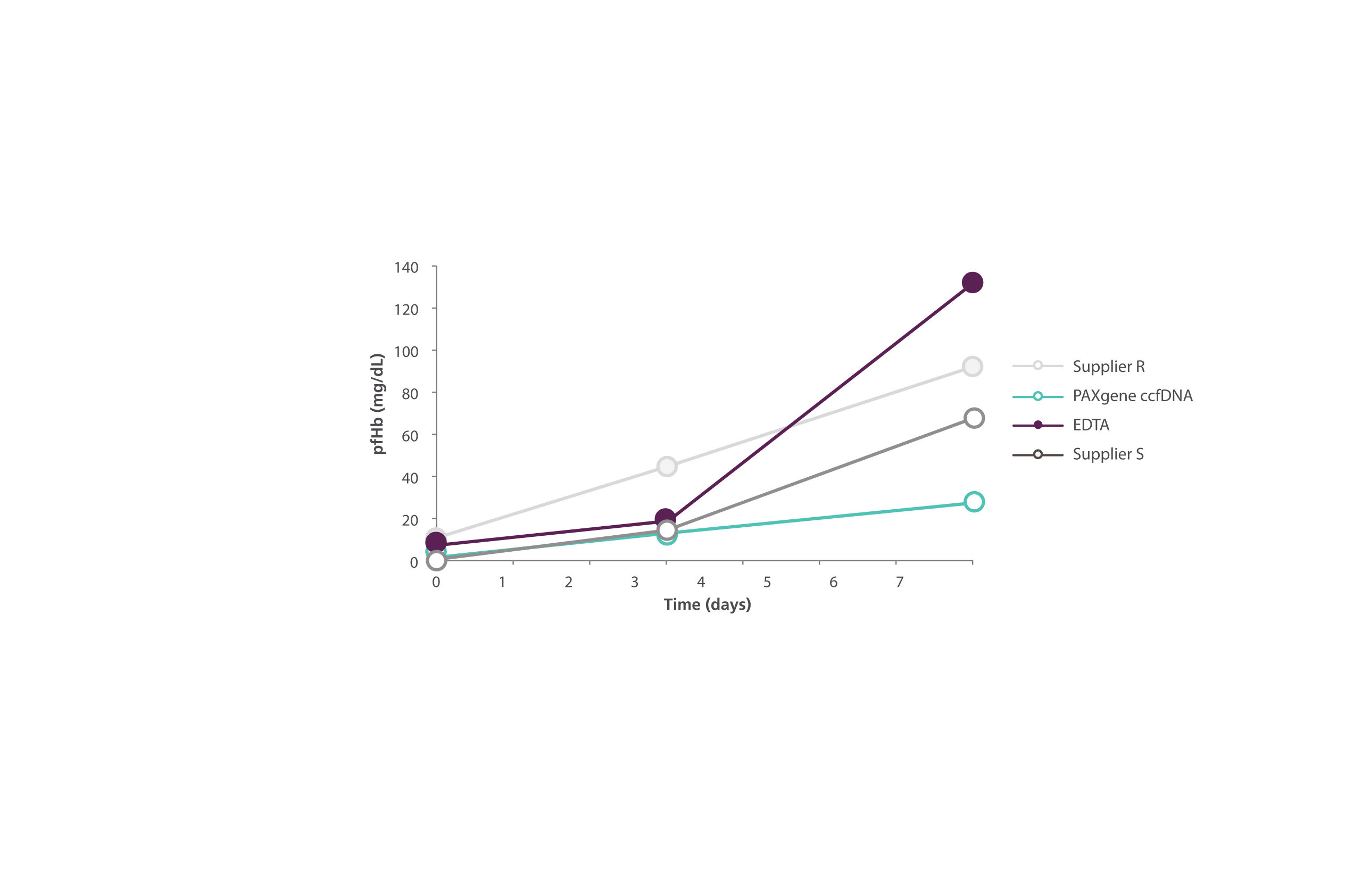
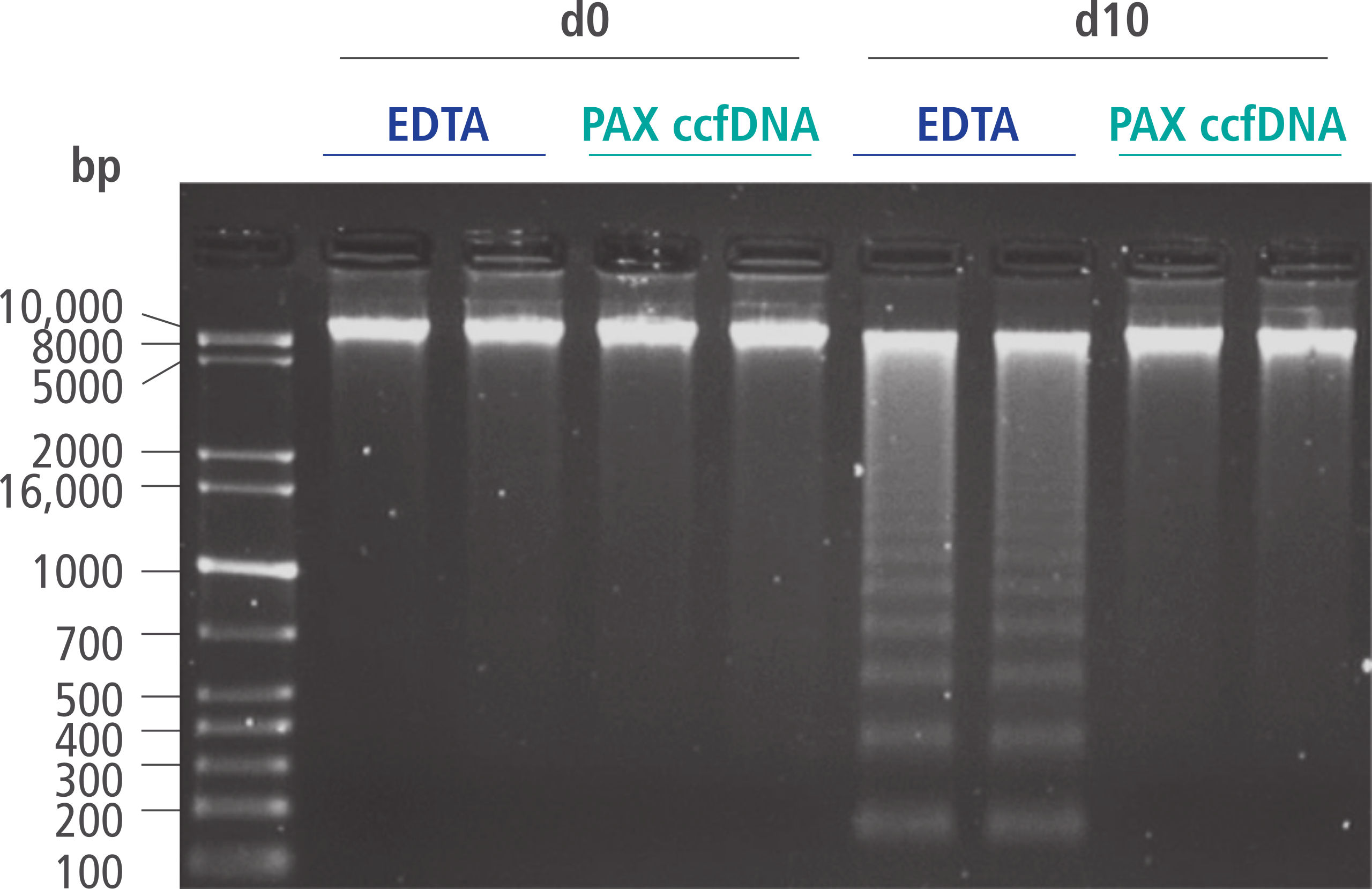
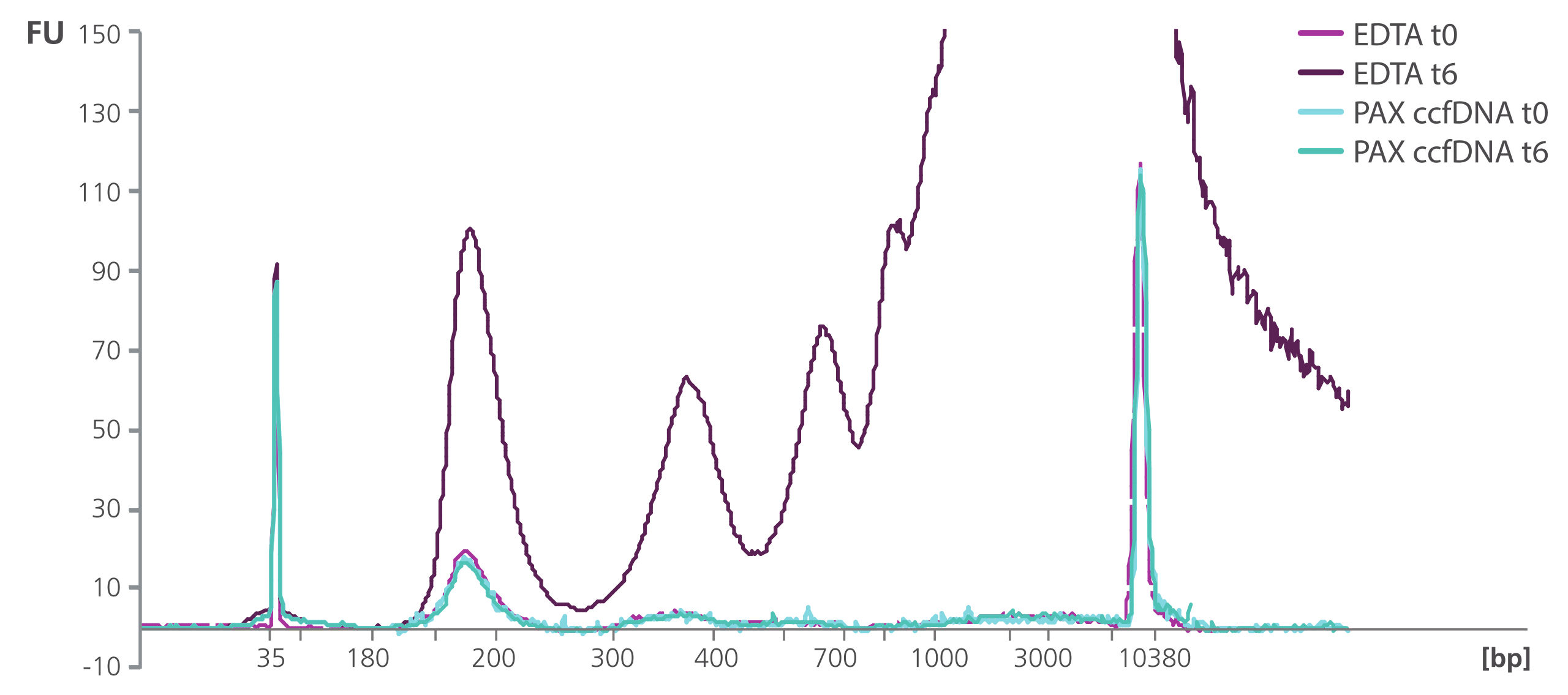
PAXgene Blood ccfDNA Tubes simplify the collection and processing of whole blood for subsequent purification of circulating, cell-free DNA (ccfDNA). The tube additive stabilizes blood cells (see " PAXgene Blood ccfDNA stabilization helps prevent hemolysis allowing distinct separation of plasma" and " PAXgene Blood ccfDNA stabilization minimizes hemolysis compared to alternative solutions") and blocks apoptosis (see " PAXgene Blood ccfDNA stabilization helps prevent apoptosis and fragmentation of gDNA"). Consequently, using PAXgene Blood ccfDNA Tubes for whole blood collection, storage and transport helps prevent the release of intracellular DNA into plasma (see " PAXgene Blood ccfDNA stabilization helps prevent release of gDNA into plasma"). ccfDNA levels are stable for up to 10 days at temperatures up to 25°C, 7 days at temperatures up to 30°C, or 3 days at temperatures up to 37°C prior to processing, so blood samples can be transported and stored to process plasma later.
Plasma generated from whole blood collected into PAXgene Blood ccfDNA Tubes and processed with the QIAsymphony PAXgene Blood ccfDNA Kit, the QIAGEN QIAamp MinElute ccfDNA Kit or the QIAamp Circulating Nucleic Acid Kit, yields high-quality ccfDNA for downstream analytical assays, including but not limited to PCR-based assays and next-generation sequencing (NGS).

Principle

The PAXgene Blood ccfDNA Tube is a plastic, closed, evacuated tube for the collection, anticoagulation, transport and storage of human whole blood samples and the stabilization of ccfDNA. The tube contains an additive that anticoagulates blood and stabilizes blood cells via a non-crosslinking stabilization solution. This helps prevent the release of intracellular DNA into the plasma and maintains constant ccfDNA levels during sample storage before processing.

Procedure

The PAXgene Blood ccfDNA Tube allows collection of 10 ml whole blood into a closed, evacuated system. Using standard venipuncture technique, blood is collected into an evacuated tube that contains 1.5 ml cell stabilization additive, resulting in a ratio of 0.15 ml additive per 1 ml blood. Isolation of ccfDNA from plasma is carried out using the QIAsymphony PAXgene Blood ccfDNA Kit, the QIAamp MinElute ccfDNA Kit or the QIAamp Circulating Nucleic Acid Kit.

Applications

ccfDNA purified from plasma generated from whole blood collected into PAXgene Blood ccfDNA Tubes can be used in a wide range of downstream applications, including:

  • PCR, including digital, multiplex and quantitative real-time PCR
  • Pharmacogenomic studies
  • SNP genotyping
  • Next-generation sequencing

Supporting data and figures

Specifications

FeaturesSpecifications
Tube size16 x 100 mm
StabilizationUp to 10 days at temperatures up to 25°C, 7 days at temperatures up to 30°C, or 3 days at temperatures up to 37°C. Note: Do not store blood-filled tubes below 2°C.
Draw volume10 ml
Label typePaper
Quantity100 tubes/case
Closure type/colorPearl white BD Hemogard/Blue stopper
Additive/concentrationAdditive 1.5 ml

Resources

Brochures & Guides (5)
Our improved noninvasive paternity testing workflow delivers answers with greater confidence
This fact sheet explains the inclusion of QIAsymphony PAXgene Blood ccfDNA Kit and PAXgene Saliva 
Collectors in our Go Greener program.
This fact sheet explains the inclusion of PAXgene Collection and Stabilization Products in our Go Greener program.
Scientific Posters (12)
Safety Data Sheets (1)
Kit Handbooks (2)
PAXgene Blood ccfDNA Tube (RUO) Handbook
Application Notes (4)
Effect of preanalytical factors on analyte quality as shown with the QIAxcel Connect capillary gel electrophoresis system

IATA-conform transport of whole blood samples in PAXgene Blood ccfDNA Tubes – a simulation and functional test

Demonstrated 3-in-1 workflow for the simultaneous extraction of circulating tumor cell RNA, ccfDNA and leukocyte-derived gDNA from a single blood sample collected and stored in a PAXgene Blood ccfDNA Tube (RUO)

Digital PCR (dPCR) is a powerful technique that detects and quantifies ultra-rare mutations in a high background of wild-type cfDNA down to 0.1% variant allele frequency. Here, we describe end-to-end manual and automated workflows that enable accurate detection and absolute quantification of ultra-rare PIK3CA variants in cfDNA using the QIAcuity Digital PCR System.
Safety Data Sheets (External Websites) (1)
Safety Data Sheets for PreAnalytiX products sold by BD are available for download from the BD website. Go to the site and search with the catalog number to find your SDS.
Certificates of Analysis (1)

FAQ

Do I need to use a blood collection set with the PAXgene Blood ccfDNA Tube?
Yes. Further information on phlebotomy technique with the PAXgene Blood ccfDNA Tube can be found in the PAXgene Blood ccfDNA Tube Product Circular under the Resources tab.
FAQ-3626
Why is a blood collection set required to collect blood into the PAXgene Blood ccfDNA Tube?
When used in accordance with instructions, the blood collection set eliminates the possibility of patient contact with the reagent in the tube due to backflow of blood.
FAQ-3628
Can reagent from the PAXgene Blood ccfDNA Tube flow back into the patient’s arm?
If the instructions for use are followed, there is no possibility of backflow during phlebotomy and thus, no possibility of reagent going into the patient’s arm.
FAQ-3629
Can I use a different brand blood collection set with the PAXgene Blood ccfDNA Tube?
Yes, as long as the phlebotomy instructions included with the PAXgene Blood ccfDNA Tubes are properly followed.
FAQ-3630
What is the blood draw volume of the PAXgene Blood ccfDNA Tube
The blood draw volume is 10 ml and the stabilization reagent volume is 1.5 ml. Thus, a filled tube holds a volume of 11.5 ml.
FAQ-3631
What is the reagent in the PAXgene Blood ccfDNA Tube?
The PAXgene Blood ccfDNA Tube contains a proprietary formulation that prevents blood coagulation and the release of genomic DNA from blood cells into plasma. Contents of the tube may cause irritation to the eyes, respiratory system and skin. Please refer to the PAXgene Blood ccfDNA Tube Product Circular. For additional information, visit www.preanalytix.com or review the Safety Data Sheet under the Resources tab.
FAQ-3632
What is the shelf life of unused PAXgene Blood ccfDNA Tubes?
The expiration date is printed on the tube label and on the shelf carton. 
FAQ-3633
How should unused PAXgene Blood ccfDNA Tubes be stored?
Store PAXgene Blood ccfDNA Tubes at room temperature (15–25°C) and protect them from direct sunlight.
FAQ-3634
Are there special considerations for phlebotomy when using the PAXgene Blood ccfDNA Tube (blood collection set, discard tube, positioning of the tube, issues with short draws, etc.)?

Yes. Following a standard phlebotomy protocol, blood is collected into the evacuated tube using a blood collection set and a standardized needle holder that can accommodate a 16 mm diameter tube. Make sure that blood has stopped flowing into the tube before removing the tube from the holder.

For more information on phlebotomy technique, please refer to the PAXgene Blood ccfDNA Tube Product Circular under the Resources tab.
FAQ-3635
Are PAXgene Blood ccfDNA Tubes sterile?
Yes, the inside of PAXgene Blood ccfDNA Tubes is sterilized during production.
FAQ-3636
Can I use plasma from underfilled PAXgene Blood ccfDNA Tubes?
A complete 10 ml blood draw ensures optimal results. However, depending on the downstream application and target ccfDNA fragment size, tubes filled with as little as 6.5 ml whole blood can be used without adversely affecting results.
FAQ-3638
How long can whole blood stabilized in PAXgene Blood ccfDNA Tubes be stored at room temperature?
Whole blood drawn into PAXgene Blood ccfDNA Tubes can be stored at 15–25°C for up to 7 days.
FAQ-3639
Can whole blood in PAXgene Blood ccfDNA Tubes be stored at temperatures above 25°C?
Whole blood drawn into PAXgene Blood ccfDNA Tubes can be stored for at least 24 hours at 35°C. Higher temperatures will lead to lysis of blood cells and release of genomic DNA into plasma.
FAQ-3640
Can whole blood in PAXgene Blood ccfDNA Tubes be stored at temperatures below 15°C?
Yes. Whole blood in PAXgene Blood ccfDNA Tubes can be stored at 8–15°C for up to 7 days. Storing blood in PAXgene Blood ccfDNA Tubes below room temperature does not extend stability. 
FAQ-3641
Can whole blood be frozen in PAXgene Blood ccfDNA Tubes?
No. Freezing blood drawn into PAXgene Blood ccfDNA Tubes results in lysis of red and white blood cells and release of genomic DNA.
FAQ-3642
Is double centrifugation required for plasma processing?
No. However, a second centrifugation step helps remove traces of buffy coat that may be accidentally transferred when aspirating plasma after the first centrifugation step.
FAQ-3643
How long and at which temperature can plasma generated from whole blood in PAXgene Blood ccfDNA Tubes be stored?
Plasma generated from whole blood collected into PAXgene Blood ccfDNA Tubes can be stored at 28°C for up to 14 days. We recommend freezing plasma at 20°C or 80°C for longer storage periods (long-term storage studies are ongoing).
FAQ-3644
How should I thaw frozen plasma samples?
Thaw the tubes at room temperature (15–25°C). To minimize the formation of cryoprecipitates, do not thaw at lower temperatures (e.g., 4°C). Alternatively, thaw plasma for 30 minutes at 30°C to completely avoid the formation of cryoprecipitates.
FAQ-3645
What should I do if cryoprecipitates form while thawing a frozen plasma sample?

If cryoprecipitates cannot be resolved completely by vortexing, the sample should be centrifuged to prevent precipitates from blocking the column. To ensure that no cfDNA is co-precipitated,  centrifugation can be performed at a lower speed (at 6,800xg for 3 minutes at room temperature, as stated in the Protocol Sheet for the QS DSP Circulating DNA Kit). 


FAQ-3646
Which plasma volumes can I process with the QIAsymphony PAXgene Blood ccfDNA protocols?
The normal protocols enable processing 2.4 or 4.8 ml plasma. Other volumes can be accommodated using customized protocols. 
FAQ-3648
How many extractions can I perform with a QIAsymphony PAXgene Blood ccfDNA Kit, using the 2.4 ml or the 4.8 ml protocols?
The number of extractions that can be performed with a kit is independent of sample volume. A kit contains sufficient reagents for 192 extractions.
FAQ-3649
How long after first use can a reagent cartridge be stored for further use?
When closed properly with the provided strips and stored at room temperature (15–25°C), a reagent cartridge can be used up to 6 weeks after the initial run.
FAQ-3650
What is the shelf life of the QIAsymphony PAXgene Blood ccfDNA Kit?
The expiration date is printed on the kit label and encoded in the bar code of the reagent cartridges.
FAQ-3651
For what type of sample material is the QIAsymphony PAXgene Blood ccfDNA Kit intended?
The QIAsymphony PAXgene Blood ccfDNA Kit is designed to be used with plasma generated from whole blood collected into PAXgene Blood ccfDNA Tubes.
FAQ-3652
Which tubes are recommended for the QIAsymphony sample rack
The recommended sample input format is the 14 ml Falcon® polystyrene round bottom tube 17 x 100 mm supplied by Corning (formerly supplied by BD).
FAQ-3653
Which protocol line should I use to process plasma samples?
The QIAsymphony PAXgene Blood ccfDNA Kit can be sued with 2 protocol lines. The standard protocols (STA) predominantely isolate small ccfDNA fragments. The large fragment protocols (LAF) efficiently co-purify large and small ccfDNA fragments. Both lines include a protocol for 2.4 ml and another for 4.8 ml plasma input.
FAQ-3654
Which elution volumes are available with the QIAsymphony PAXgene Blood ccfDNA Kit?
The elution volume of the standard protocols (STA) is fixed at 60 µl. The large fragment protocols (LAF) enable elution in 3 different volumes: 60, 100 and 150 µl.
FAQ-3655
Does the QIAsymphony PAXgene Blood ccfDNA Kit also allow eluting ccfDNA in less than 60 µl?
Yes, a customized protocol for elution with 50 µl is available on request.
FAQ-3656
How should eluates produced with the PAXgene Blood ccfDNA System be stored?
Eluates should be stored at 20°C (long-term storage studies are ongoing).
FAQ-3657
Which downstream applications have been tested with ccfDNA purified from whole blood collected and processed with the PAXgene Blood ccfDNA System?
To date, ccfDNA from blood samples collected and processed using the PAXgene Blood ccfDNA System have been successfully tested in PCR, including multiplex qPCR, and NGS applications.
FAQ-3658