QIAamp DNA FFPE Advanced Kit – FFPE Tissue DNA Extraction

福尔马林固定石蜡包埋 (formalin-fixed paraffin-embedded, FFPE) 组织的下一代 DNA 提取

S_1029_0_QIAampDNAFFPEAdvancedKit
想首次尝试此解决方案吗?
立即联系我们的团队,为您的 QIAamp DNA FFPE Advanced Kit (50) 试用版试剂盒索取报价。

QIAamp DNA FFPE Advanced Kit (50)

目录编号 / ID.   56604

用于 50 次制备:QIAamp UCP MinElute 离心管、采样管、脱蜡液、蛋白酶 K、RNA 酶 A、无核酸酶水和缓冲液
MX$9,466.00
登录 要查看您的账户定价。
Product试剂盒组成
QIAamp DNA FFPE Advanced Kit (50)
QIAamp DNA FFPE Advanced UNG Kit (50)
Uracil-N-Glycosylase
QIAamp DNA FFPE Advanced Kit 旨在用于分子生物学应用。这些产品不能用于疾病诊断、预防和治疗。
想首次尝试此解决方案吗?
立即联系我们的团队,为您的 QIAamp DNA FFPE Advanced Kit (50) 试用版试剂盒索取报价。

特点

  • 可扩增 DNA 的高回收率
  • 不使用二甲苯或类似溶剂进行脱蜡
  • 在 DNA 提取过程中使用尿嘧啶-N-糖基化酶 (uracil-N-glycosylase, UNG) 执行尿嘧啶(脱氨基胞嘧啶)-人为引入突变去除步骤
  • 用于 PCR、数字 PCR (digital PCR, dPCR) 和下一代测序 (next-generation sequencing, NGS) 的即用型 DNA

产品详情

利用 QIAamp DNA FFPE Advanced Kit 的无二甲苯、免洗脱蜡、双裂解方案和超洁净生产 (ultra-clean production, UCP) 离心柱技术,提高您从 FFPE 组织中回收优质 DNA 的能力。

使用该试剂盒的可选 UNG 消化法去除核酸的 C→U 转换,从而优化回收的 DNA 以用于 NGS 分析。

您还可以在 QIAcube Connect 上自动化进行 QIAamp DNA FFPE Advanced 实验方案。

绩效

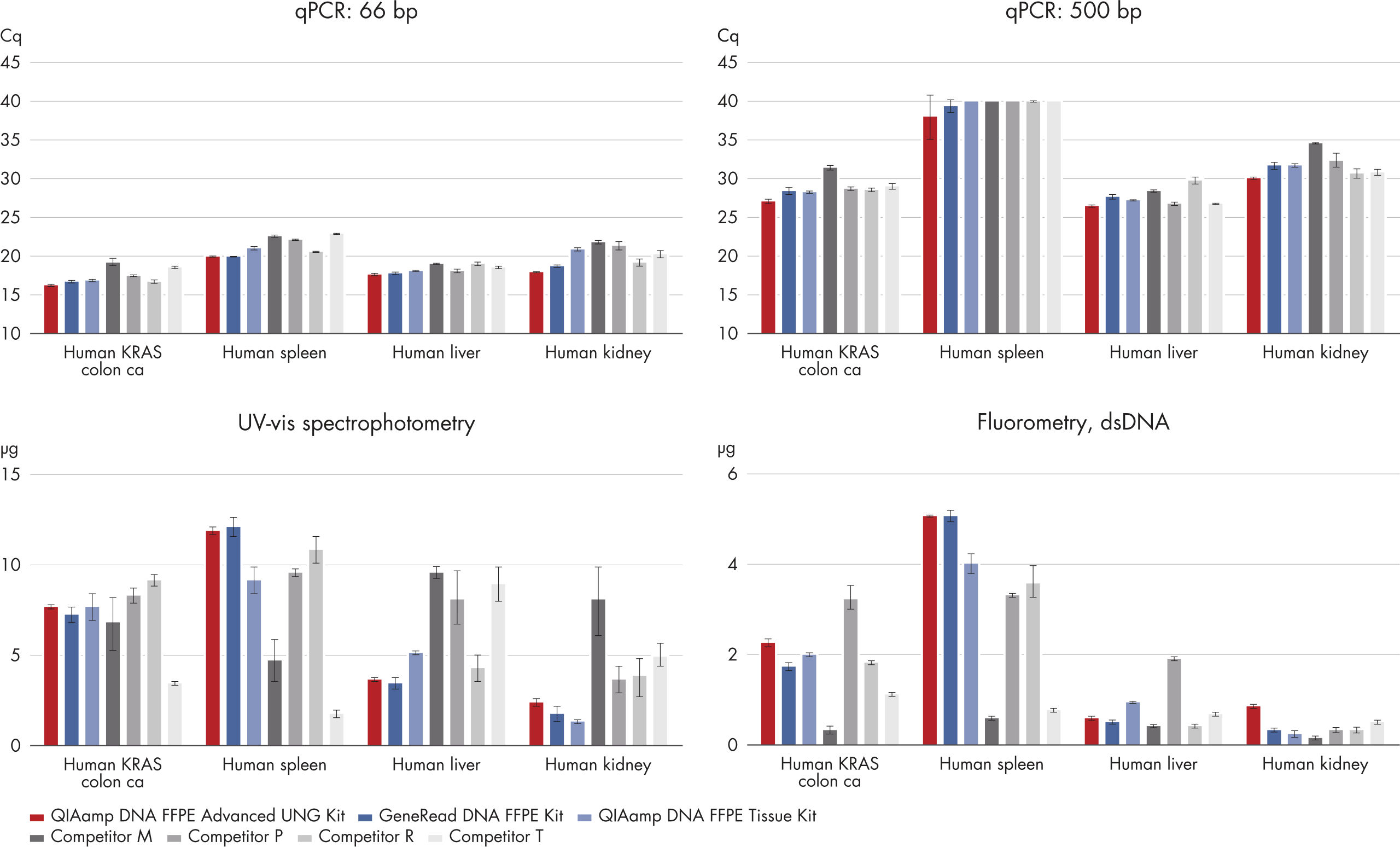
FFPE DNA 定量的一个特点是,不同的方法会得出不同的结果,紫外-可见光或荧光测定值高并不一定意味着 PCR 性能良好。

由于 real-time PCR 或定量 PCR (quantitative PCR, qPCR) 是 FFPE 最常见的下游应用之一,QIAamp DNA FFPE Advanced Kit 针对 qPCR 进行了优化。

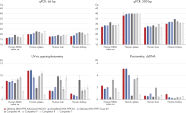
无论测得的紫外-可见光或荧光值是多少,QIAamp DNA FFPE Advanced Kit 在 qPCR 定量下表现出的 PCR 性能始终优于其他受测产品(请参阅图“ 针对 PCR 性能进行了优化”)。
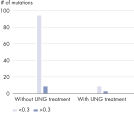
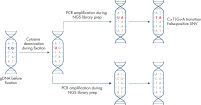
QIAamp DNA FFPE Advanced UNG Kit 还非常适合纯化用于 NGS 分析的 DNA,因为它解决了 FFPE 样本中因胞嘧啶脱氨基作用而常见的人为 C→T/G→A 转换问题(请参阅“ 人为 C→T/G→A 转换”)。
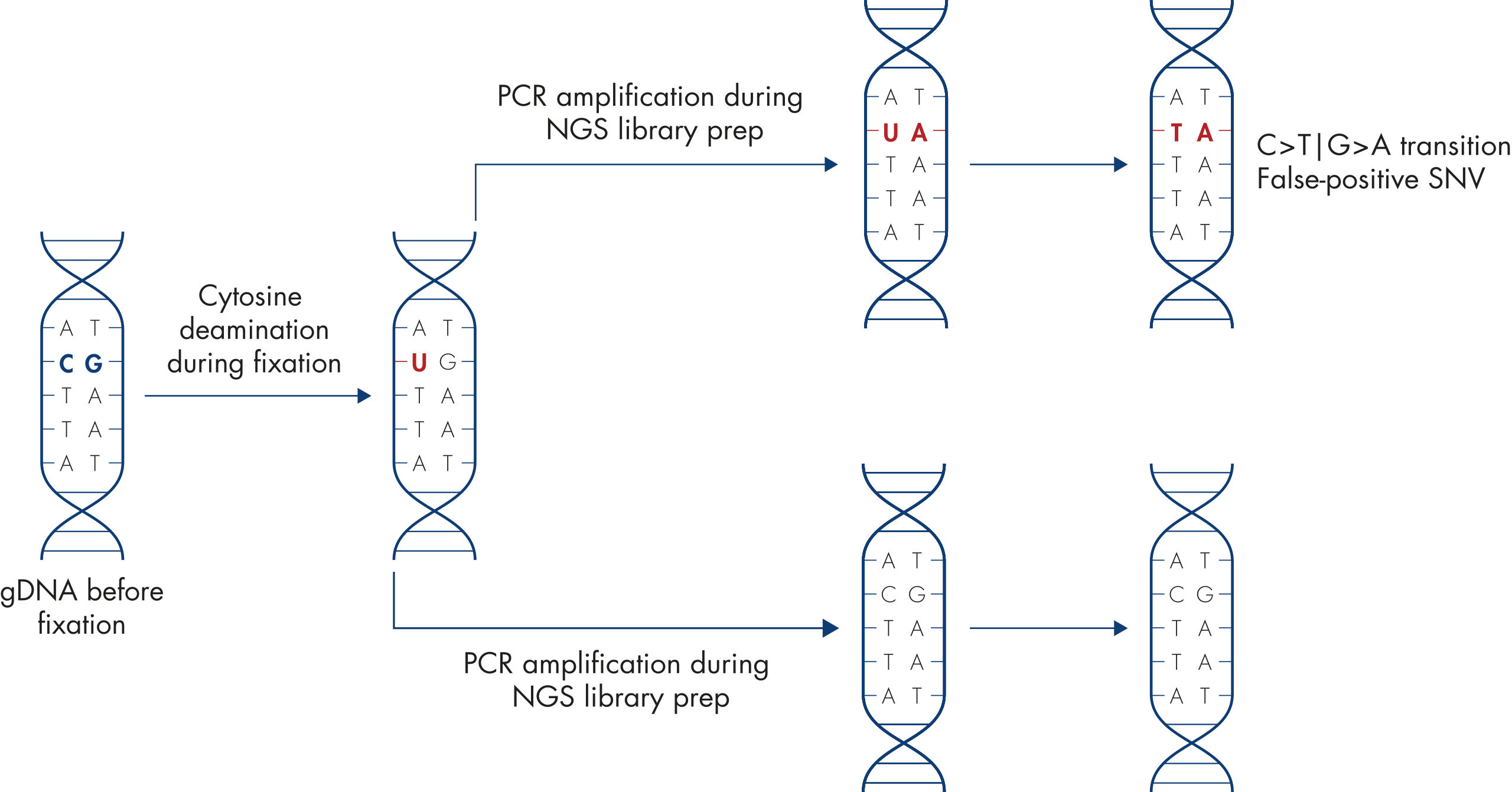
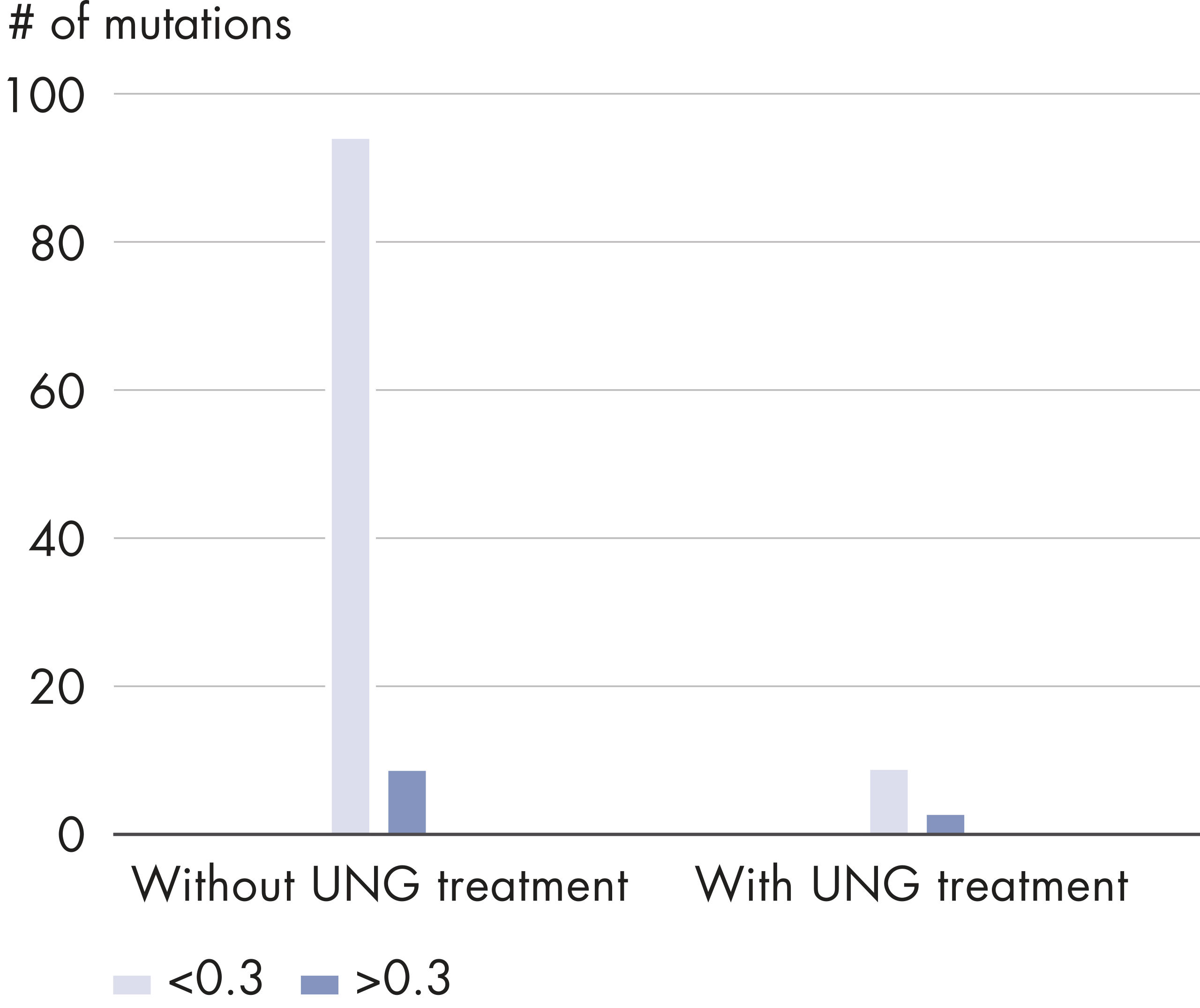
通过在 DNA 分离过程中进行基于 UNG 的尿嘧啶消化,QIAamp DNA FFPE Advanced UNG 方案可以减少 NGS 中单核苷酸变异 (single-nucleotide variant, SNV) 的假阳性报告(请参阅图“ 大幅减少人为 C→T | G→A 转换”)。
原理

从 FFPE 组织中制备 DNA 时面临三大挑战:

  • 因投入样本有限和 DNA 受损而致的产量低
  • 因福尔马林诱导交联而导致 DNA 不可扩增
  • 脱氨基胞嘧啶人为引入突变可能导致 NGS 突变分析结果错误

QIAamp DNA FFPE Advanced Kit 通过两种方式从有限的样本投入中最大限度提高 DNA 产量:

  • 实施两步裂解程序,即使是难以裂解的样本也能确保从中提取大量 DNA
  • 通过使用 Deparaffinization Solution 取代溶剂型进行脱蜡,可以免去初始裂解前的所有洗涤步骤,从而尽量降低损失稀缺样本材料的风险

去除交联进一步提高了可扩增 DNA 的回收率(请参阅图“ 针对 PCR 性能进行了优化”)。

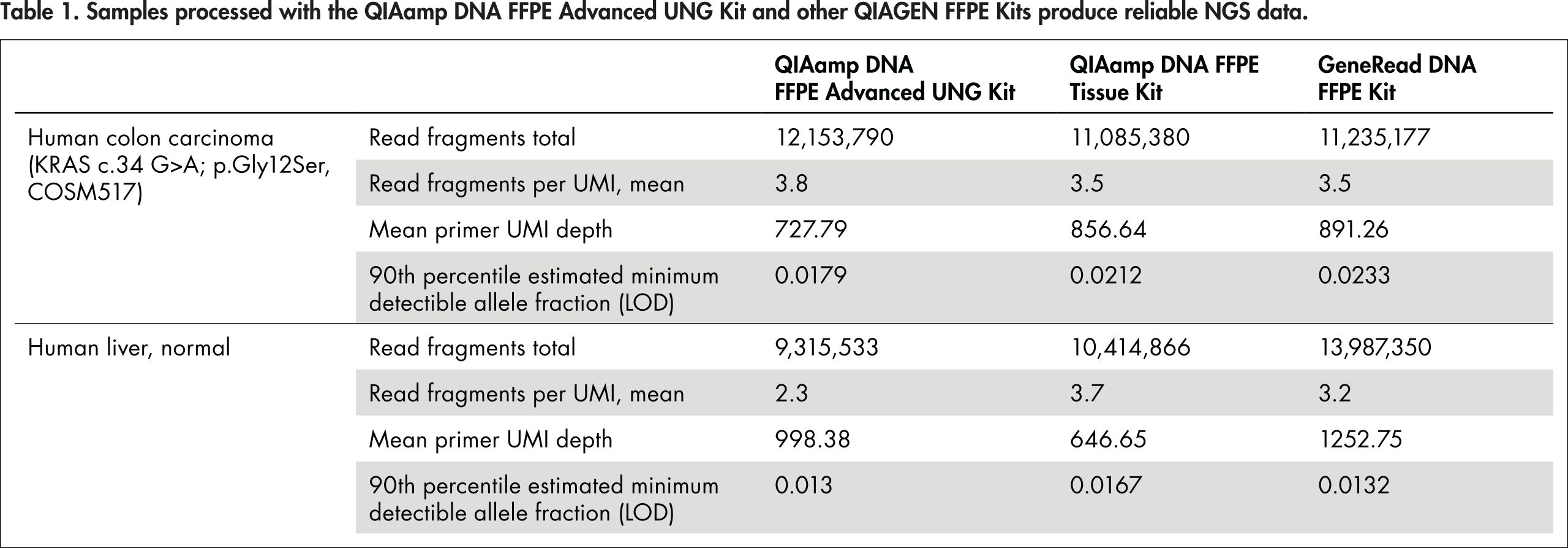
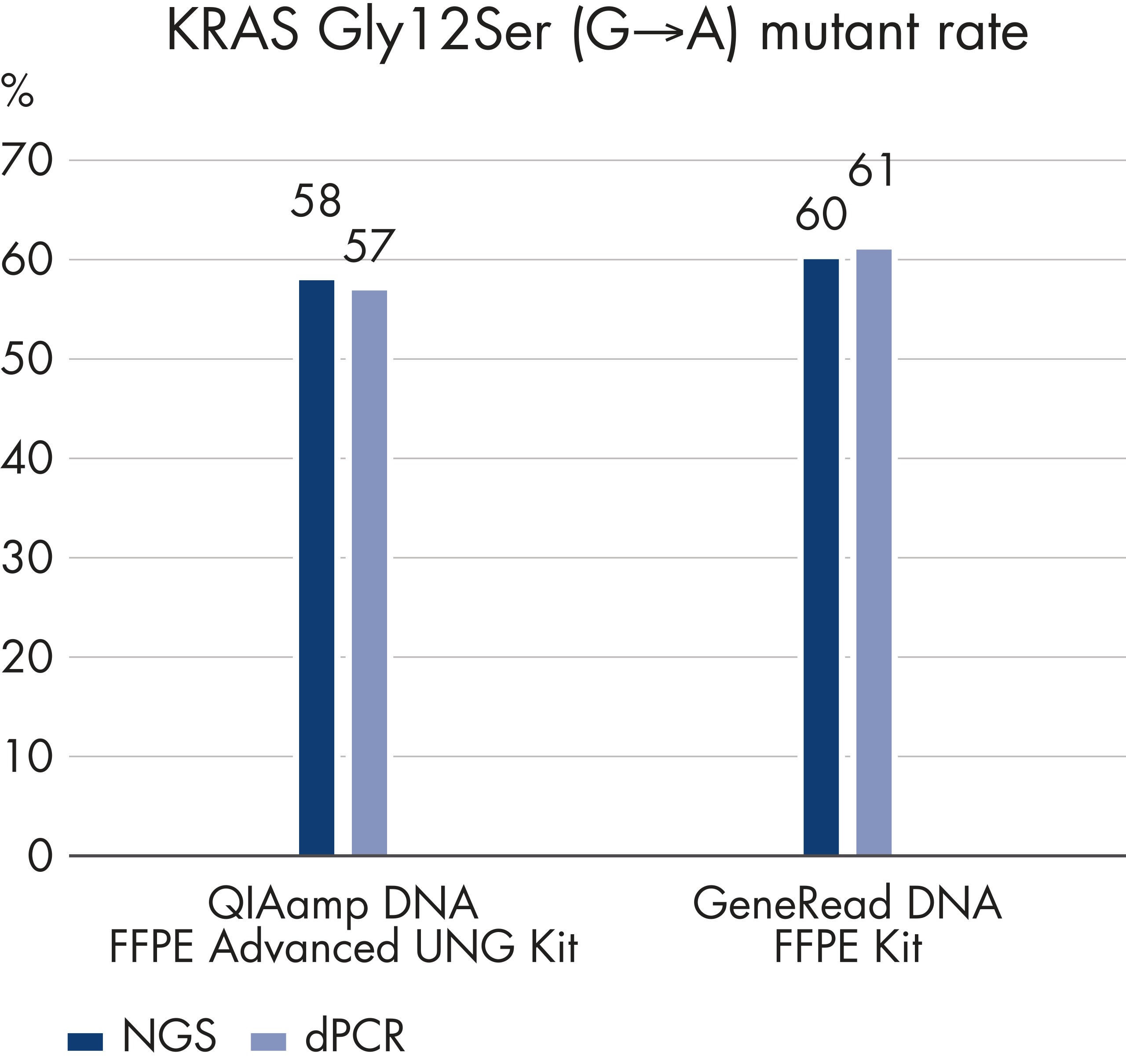
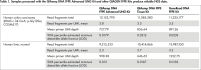
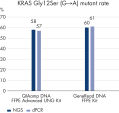
可选择在第二次裂解前进行 UNG 处理,以去除脱氨基胞嘧啶人为引入突变,从而使 DNA 特别适合 NGS 分析(请参阅表“ 已针对 NGS 引发”,以及图“ 可靠的 dPCR 和 NGS 结果”和“ 大幅减少人为 C→T | G→A 转换”)。

程序

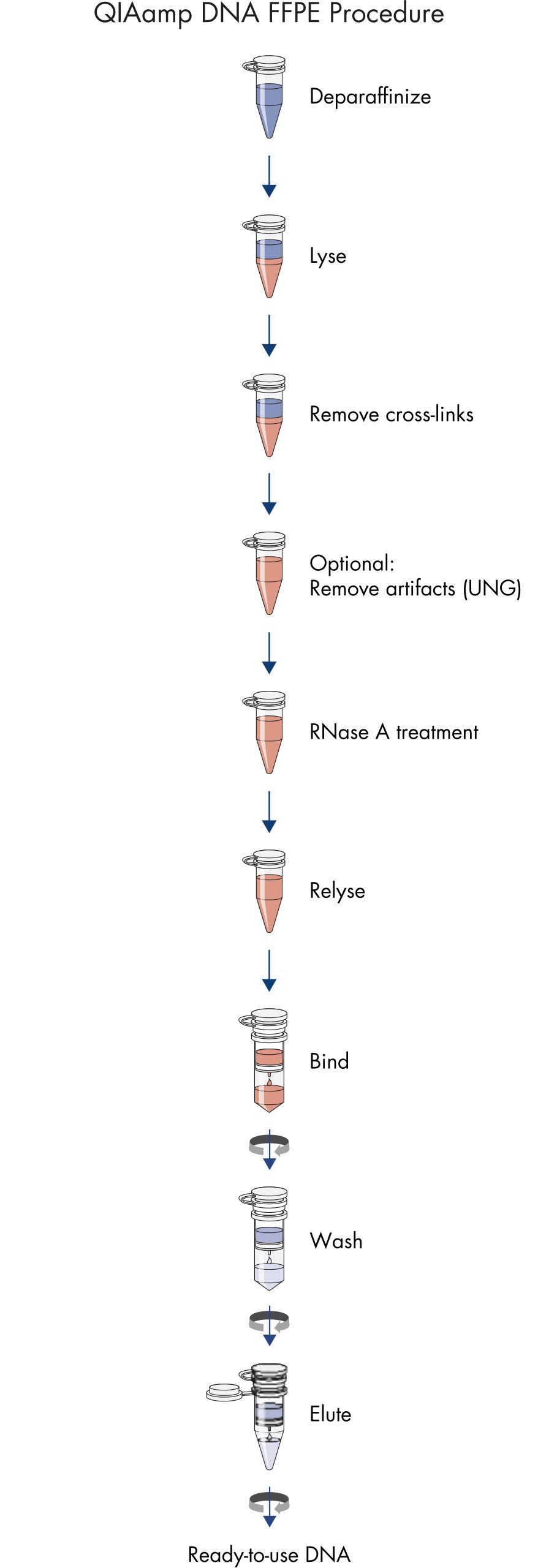
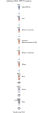
QIAamp DNA FFPE Advanced 程序包括一个经优化脱蜡步骤、两个裂解步骤(其间进行去交联和可选的人为引入突变去除)以及标准的结合-洗涤-洗脱步骤(请参阅图“ QIAamp DNA FFPE Advanced 工作流程”)。

应用

使用 QIAamp DNA FFPE Advanced Kit 从 FFPE 提取的 DNA 可立即用于 PCR、dPCR 或 NGS,也可在 -30 至 -15°C 下存放。

辅助数据和图表

规格

特点规格
ApplicationsPCR、数字 PCR、下一代测序
Elution volume20–100 µl
Format离心柱
Main sample type福尔马林固定石蜡包埋 (formalin-fixed paraffin-embedded, FFPE) 组织样本
Processing手动或使用 QIAcube Connect 自动操作
Purification of total RNA, miRNA, poly A+ mRNA, DNA or protein基因组 DNA
Sample amount组织切片,每个厚度为 5-10 µm,总体积为 4 mm3
Technology硅胶膜技术

资源

产品介绍与指南 (3)
Sample to Insight solutions for successful molecular analysis
试剂盒操作手册 (1)
应用与实验方案 (2)
安全数据表 (2)
Download Safety Data Sheets for QIAGEN product components.
快速启动实验方案 (1)
Safety Data Sheets (1)
Certificates of Analysis (1)

常见问答

Is the DNA extracted with the QIAamp DNA FFPE Advanced Kits suitable for downstream applications that require more intact DNA such as long range PCR (>1 kb) and long read DNA sequencing?
DNA from FFPE samples is often fragmented, yielding DNA with a broad size distribution depending on multiple factors such as fixation and storage conditions.

The QIAamp DNA FFPE Advanced Kits provide an optimized workflow for extraction of DNA for use in short amplicon PCR, dPCR and next-generation sequencing analysis using targeted DNA panels. 
In case FFFPE samples are of high quality and allow the extraction of more intact DNA we offer a supplementary protocol for downstream applications that require larger DNA fragments. These applications include for instance large amplicon PCR (>0,5kb) and long read DNA sequencing.
High DNA integrity can be presumed if formalin fixation was less than 24 hours and the sample has been stored at low temperature (4-8°C or - 20°C) or for a short period of time (e.g. up to a few weeks). For these samples the  Supplementary Protocol “extraction of more intact DNA from FFPE tissue material using the QIAamp DNA FFPE Advanced Kits with Buffer LF” is suitable as it protects and best preserves the DNA size distribution present in the original FFPE sample during DNA extraction.
Please contact TechService to inquire about the supplementary protocol and the availability of Buffer LF.
FAQ-153891
What are recommended stopping points in the procedure of the QIAamp DNA FFPE Advanced Kits?
After 90°C incubation for cross-link removal sample lysates can be stored at 4-8°C for up to one week and at -20°C or -80°c for up to 4 weeks. The upper blue phase of Deparaffinization Solution should be removed before storage. Before proceeding with the workflow after storage thaw frozen samples at room temperature for 30 minutes or allow refrigerated (4-8°C) samples to equilibrate to room temperature for 15-30 minutes.
FAQ-153892
Can samples be lysed overnight with Proteinase K in the QIAamp DNA FFPE Advanced procedure?
If it is more convenient either the first or the second Proteinase K lysis step in the QIAamp DNA FFPE Advanced workflow can be performed overnight. This will not affect the DNA quality but also not increase yields.
FAQ-153893
Can the second Proteinase K lysis step in the QIAamp DNA FFPE Advanced procedure be carried out at lower temperatures than 65°C?
A temperature range of 56°C - 68°C works fine for the second Proteinase K lysis step. However, we recommend following the instructions in the QIAamp DNA FFPE Advanced Handbooks and perform the second lysis step at 65°C.
FAQ-153894
What is the difference of buffer FTB versus Buffer ATL?
Buffer FTB provides optimized lysis conditions, and additionally allows the specific removal of deaminated cytosine residues by the enzyme Uracil-N-Glycosylase (UNG) in the QIAamp DNA FFPE Advanced UNG workflow.
FAQ-153895
Can the 2nd Prot K step be omitted?
The 2nd Proteinase K step improves lysis efficiency and yields, in particular for difficult-to-lyse tissue material. Hence, omission of this step may result in decreased yields.
FAQ-153896
What size of DNA can be expected?

Size distribution of the extracted DNA can vary significantly and first and foremost strongly depends on the DNA quality present in the original FFPE sample. Formalin-fixation, paraffin-embedding and storage conditions are factors that affect the DNA size distribution and may cause significant fragmentation of nucleic acids. To limit the extent of nucleic acid fragmentation, be sure to:

  • Fix tissue samples in 4%–10% formalin as quickly as possible after surgical removal.
  • Use a fixation time of 14–24 h (longer fixation times lead to more severe DNA fragmentation, resulting in poor performance in downstream assays).
  • Thoroughly dehydrate samples prior to embedding (residual formalin can inhibit proteinase K digestion)
  • Store FFPE tissue samples at 4-8°C
FAQ-153897