Blood & Cell Culture DNA Kit

用于从血液和培养细胞中分离多达 20 µg、100 µg 或 500 µg 的高分子量 DNA

S_1084_5_GEN_V2

✓ 全天候自动处理在线订单

✓ 博学专业的产品和技术支持

✓ 快速可靠的(再)订购

血液和细胞培养物 DNA 小提试剂盒 (25)

目录编号 / ID.   13323

25 个 QIAGEN Genomic-tip 20/G、QIAGEN 蛋白酶、缓冲液
Kit缓冲液
Blood & Cell Culture DNA Kit
Genomic DNA Buffer Set
离心柱类型
20/G
100/G
500/G
Blood & Cell Culture DNA Kit 旨在用于分子生物学应用。这些产品不能用于疾病诊断、预防和治疗。

✓ 全天候自动处理在线订单

✓ 博学专业的产品和技术支持

✓ 快速可靠的(再)订购

特点

  • 可靠分离大小高达 150 kb 的高分子量 DNA
  • 无需苯酚或氯仿提取
  • 方便地并行处理多个样本

产品详情

Blood & Cell Culture DNA Kit 提供重力流阴离子交换吸头和缓冲液,用于从多种生物样本中高效分离基因组 DNA。纯化 DNA 大小可高达 150 kb,平均大小为 50–100 kb。

需要为酵母和细菌样本购买 Genomic DNA Buffer Set(目录编号 19060)。

绩效

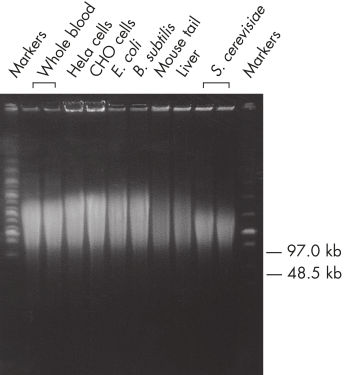
QIAGEN Genomic-tip 程序非常温和,DNA 剪切可以忽略不计。使用 QIAGEN Genomic-tip 纯化的 DNA 大小可达 150 kb,平均长度为 50–100 kb(请参阅图“大小高达 150 kb 的基因组 DNA”)。DNA 不含任何污染物,如 RNA、蛋白质和代谢物,并且 A260/A280 比值在 1.7 到 1.9 之间。

所获 DNA 片段尺寸显著大于常规方法,特别适用于在不同平台上为下一代测序 (next-generation sequencing, NGS) 构建高质量文库,已被多家核心实验平台推荐使用。

原理

Blood & Cell Culture DNA Kit 中的 QIAGEN Genomic-tip 采用独特的 QIAGEN 阴离子交换技术从多种生物样本中纯化高分子量 DNA,不含苯酚或氯仿。裂解缓冲液针对不同类型的样本进行了优化,可即时变性核酸酶、组蛋白和 DNA 结合蛋白等蛋白质,并有效灭活潜在感染性病毒颗粒。在缓冲液提供的 pH 值和低盐条件下,DNA 会与离心柱中的 QIAGEN 树脂结合。与此同时,蛋白质、碳水化合物和代谢物等其他细胞成分穿流而过。纯化 DNA 在高盐缓冲液中洗脱。Genomic-tip 靠重力流工作,无人看管也不会干涸。这可将手动操作时间降至最低,使该程序成为同时处理多个样本的理想选择。

程序

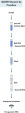
首先裂解样本(机械破坏组织样本),同时在适当的裂解缓冲液中使蛋白质变性(请参阅流程图“QIAGEN Genomic-tip 程序”)。然后加入 QIAGEN 蛋白酶或蛋白酶 K,经过适当的孵育期后,将裂解物加载到 QIAGEN Genomic-tip 上。DNA 与离心柱结合,而其他细胞成分则穿流而过。按照洗涤步骤去除任何残留污染物后,用异丙醇洗脱并沉淀纯净的高分子量 DNA。对于血液和培养细胞,整个过程的手动操作时间仅为 30 分钟。

Blood & Cell Culture DNA Kit 是即用型试剂盒,包含从血液和培养细胞中纯化高分子量 DNA 所需的全部组件。

应用

使用 Blood & Cell Culture DNA Kit 纯化的 DNA 非常适合用于以下应用:

  • 一代测序和 NGS 测序
  • 长读数测序
  • RFLP 分析
  • 基因靶向分析
  • 转基因动物筛选
  • DNA 指纹研究
  • PCR 扩增

特点 Blood & Cell Culture DNA Mini Kit Blood & Cell Culture DNA Midi Kit Blood & Cell Culture DNA Maxi Kit
应用 PCR、RFLP、印迹法、筛选 PCR、RFLP、印迹法、筛选 PCR、RFLP、印迹法、筛选
洗脱体积 0.1–2 ml 0.1–2 ml 0.1–2 ml
格式 Genomic-tip Genomic-tip Genomic-tip
主要样本类型 血液、细胞 血液、细胞 血液、细胞
处理 手动 手动 手动
总 RNA、miRNA、poly A+ mRNA、DNA 或蛋白质的纯化 DNA DNA DNA
样本量 1 ml/5 x 106 5 ml/2 x 107 20 ml/1 x 108
技术 阴离子交换技术 阴离子交换技术 阴离子交换技术
产量 15–20 µg 80–100 µg 350–400 µg

辅助数据和图表

资源

快速启动实验方案 (1)
安全数据表 (2)
Download Safety Data Sheets for QIAGEN product components.
试剂盒操作手册 (1)
Safety Data Sheets (1)
Certificates of Analysis (1)

文献

Lack of telomerase RNA gene hTERC expression in alternative lengthening of telomeres cells is associated with methylation of the hTERC promoter.
Hoare SF; Bryce LA; Wisman GB; Burns S; Going JJ; van der Zee AG; Keith WN;
Cancer Res; 2001; 61 (1):27-32 2001 Jan 1 PMID:11196173
GATA-3 is an important transcription factor for regulating human NKG2A gene expression.
Marusina AI; Kim DK; Lieto LD; Borrego F; Coligan JE;
J Immunol; 2005; 174 (4):2152-9 2005 Feb 15 PMID:15699146

常见问答

How do I safely inactivate biohazardous flow-through material?

Always dispose of potentially biohazardous solutions according to your institution’s waste-disposal guidelines. Although the lysis and binding buffers in QIAamp, DNeasy, and RNeasy kits contain chaotropic agents that can inactivate some biohazardous material, local regulations dictate the proper way to dispose of biohazards. DO NOT add bleach or acidic solutions directly to the sample-preparation waste. Guanidine hydrochloride in the sample-preparation waste can form highly reactive compounds when combined with bleach.
Please access our Material Safety Data Sheets (MSDS) online for detailed information on the reagents for each respective kit.

FAQ-12
Does the Epitect Bisulfite Kit also work on DNA extracted from plants?

Bisulfite conversion of unmethylated cytosines into uracils with the EpiTect Bisulfite Kit works on DNA irrespective of the source organism. The DNA template needs to be of high purity for efficient conversion. We recommend to use genomic DNA extracted with our DNA isolation kits for clinical or animal and plant samples as a template for the EpiTect Bisulfite Kit.

FAQ-1209
What is the size of genomic DNA that is obtained with QIAGEN Genomic-tips?
Genomic DNA purified using QIAGEN Genomic-tips ranges in size from 20–150 kb, with an average length of 50–100 kb. Vortexing the lysate for about 20 seconds may reduce the size of the genomic DNA slightly to 20–130 kb, but can help to improve flow rates.
FAQ-142
Do you have a protocol for the purification of DNA from fruit flies?

Using Gentra Puregene Cell kit:


• Purification of archive-quality DNA from up to 30 Drosophila melanogaster using the Gentra Puregene Cell Kit (PG20)

• Purification of archive-quality DNA from 100 Drosophila melanogaster using the Gentra Puregene Cell Kit (PG21)

• Purification of archive-quality DNA from 300–700 Drosophila melanogaster using the Gentra Puregene Cell Kit (PG22)


Using the QIAGEN Genomic tips:

• Isolation of genomic DNA from flies using the QIAGEN Genomic-tip 100/G (QG05)

FAQ-1970
What is the composition of Buffer G2?

Buffer G2 is a component of QIAGEN Blood & Cell Culture DNA Kits, but is also provided with several other kits (e.g., for automation on the EZ1 Advanced instrument). Usually Buffer G2 is used in combination with Proteinase K or QIAGEN Protease for efficient lysis.

Buffer G2 (General Lysis Buffer ) consists of: 800 mM guanidine hydrochloride; 30 mM Tris•Cl, pH 8.0; 30 mM EDTA, pH 8.0; 5% Tween 20; 0.5% Triton X-100.

How to prepare Buffer G2: Dissolve 76.42 g guanidine hydrochloride, 11.17g Na2EDTA•2H2O, and 3.63 g Tris base in 600 ml distilled water. Add 250 ml 20% Tween 20 solution and 50 ml 10% Triton X-100 solution. Adjust the pH to 8.0 with NaOH. Adjust the volume to 1 liter with distilled water.

FAQ-2943
What is the composition of Buffer B1?

Buffer B1 is used in combination with lysozyme or lysostaphin and proteinase K for the efficient lysis of bacteria prior to DNA purification using QIAGEN Genomic-tips. Please note this buffer is not recommended for any purification procedures using QIAGEN’s silica-membrane-based spin columns.

Buffer B1 (Bacterial Lysis Buffer 1) consists of 50 mM Tris•Cl pH 8.0; 50 mM EDTA pH 8.0; 0.5% Tween 20; 0.5% Triton-X100.

How to prepare Buffer B1: Dissolve 18.61 g Na2EDTA•2H2O and 6.06 g Tris base in 800 ml distilled water. Add 50 ml 10% Tween 20 solution and 50 ml 10% Triton X-100 solution. Adjust the pH to 8.0 with HCl. Adjust the volume to 1 liter with distilled water.

FAQ-2944
What is the composition of Buffer B2?

Buffer B2 is used in combination with Buffer B1, lysozyme or lysostaphin and Proteinase K for efficient lysis of bacteria prior to DNA purification using QIAGEN Genomic-tips. Genomic-tips are gravity-flow, anion-exchange columns. Please note this buffer is not recommended for any purification procedures using QIAGEN’s silica-membrane-based spin columns.

Buffer B2 (Bacterial Lysis Buffer 2) consists of 3 M guanidine hydrochloride, 20% Tween 20.

How to prepare Buffer B2: Dissolve 286.59 g guanidine hydrochloride in 700 ml distilled water. Add 200 ml 100% Tween 20. Adjust the volume to 1 liter with distilled water. pH does not need to be adjusted.

FAQ-2945
How do I perform a DNA precipitation to concentrate my sample?
  • Add 1/10 volume of 3 M Na-Acetate pH 5.2, and 2 to 2.5 volumes of ice-cold 100% ethanol to the DNA sample
  • Mix, and store at –20°C for at least 1 h to precipitate the DNA
  • Recover the precipitated DNA by centrifugation at full speed in a microcentrifuge for 15–20 min
  • Pour off the ethanol and wash the pellet twice with room-temperature 70% ethanol
  • Allow the DNA pellet to air-dry
  • resuspend the DNA in a suitable volume of sterile TE buffer or distilled water
FAQ-305
What do you recommend for the cleanup of genomic DNA (gDNA)?

Using QIAGEN Genomic-tips

Protocol for DNA cleanup using Genomic-tips can be found in the 'Special Applications' section of the QIAGEN Genomic DNA Handbook.


Using QIAamp DNA Micro kit

Up to 10ug of gDNA can be cleaned using the cleanup protocol in the QIAamp DNA Micro Handbook.


Using Gentra Puregene Reagents

Gentra Puregene Handbook has protocols for removal of proteins and RNA from purified gDNA in Appendix C and Appendix D respectively.

FAQ-618
What can be used as an alternative to the A260 measurement for quantification of small amounts of RNA and DNA?

Small amounts of RNA and DNA may be difficult to measure spectrophotometrically. Fluorometric measurements, or quantitative RT-PCR and PCR are more sensitive and accurate methods to quantify low amounts of RNA or DNA.

Fluorometric measurements are carried out using nucleic acid binding dyes, such as RiboGreen® RNA Quantitation Reagent for RNA, and PicoGreen® DNA Quantitation Reagent for DNA (Molecular Probes, Inc.).

FAQ-728
Do you have a protocol for the isolation of genomic DNA from frozen clotted blood?

Yes, we have the following protocols:

  • Isolation of genomic DNA from frozen clotted whole blood using the QIAGEN Genomic-tip 100/G (QG02). TEST

You will need to prepare the required buffers according to the recipes in Appendix A of the QIAGEN Genomic DNA Handbook, or you can purchase the Genomic DNA Buffer Set containing pre-made solutions. Alternatively, the QIAGEN Blood & Cell Culture Midi Kit, containing Genomic-tips 100/G and buffers, can be used.

  • Purification of archive-quality DNA from clotted whole blood using Clotspin Baskets and the Gentra Puregene Blood Kit (PG03).
  • Purification of archive-quality DNA from clotted whole blood using the Gentra Puregene Tissue Kit or Gentra Puregene Mouse Tail Kit (PG04).
  • Purification of DNA from clotted blood using the FlexiGene DNA Kit (FG01).
FAQ-900
Do you have a protocol for isolation of genomic DNA from insects?

Yes, we have the following protocols:

  • Isolation of genomic DNA from mosquitoes or other insects using the QIAGEN Genomic tip (QG06).
  • Purification of total DNA from insects using the DNeasy Blood & Tissue Kit (DY14).
FAQ-904
Do you have a protocol for the isolation of genomic DNA from fungi?

Yes, we have the following protocols:

  • Isolation of genomic DNA from fungi (culture and blood) using the QIAamp DNA Mini Kit (QA09).
  • Isolation of genomic DNA from plants and filamentous fungi using the QIAGEN Genomic-tip (QG08).
FAQ-911