
dPCR RNA-Plex Assay (250)
Cat no. / ID. 250336
One tube with dried-down assay, dye (fluorophore) configurable, 250 reactions (12 µl reaction in Nanoplate 8.5K)
Browse product options to see pricing
Size
dPCR RNA-Plex Assay (250)
dPCR RNA-Plex Assay (750)
| Popular Products | GeneGlobe ID |
|---|---|
| dPCR RNA-Plex Assay Human CLDN22 | DRH0002068 |
| dPCR RNA-Plex Assay Human LOC101927469 | DRH0002095 |
| dPCR RNA-Plex Assay Human LOC124900611 | DRH0002089 |
| dPCR RNA-Plex Assay Human C2CD4A | DRH0002032 |
| dPCR RNA-Plex Assay Human EBLN2 | DRH0001993 |
Features
- Choose from 110,000+ predesigned mRNA and lncRNA assays for human, mouse and rat targets, optimized for multiplex RT-dPCR workflows
- Design experiments for analysis of up to 12 RNA targets in a single reaction
- Generate more data per run, reduce cost per data point and preserve precious samples through multiplexing
- Build multiplex experiments with greater confidence using multiplexing setup guides and wet-lab-tested reference genes
- Achieve simple and fast RT-dPCR workflow for RNA expression analysis on QIAcuity
Product Details
QIAGEN dPCR RNA-Plex Assays enable accurate RNA expression analysis on QIAcuity, with more than 110,000 predesigned assays for human, mouse and rat mRNA and lncRNA targets. Analyze up to 12 targets per reaction to generate more data while reducing sample use and cost per data point. With multiplex setup guides and wet-lab-tested reference genes obtain simple multiplex RT-dPCR workflows and increase the confidence in your data.
Each ready-to-use assay contains target-specific primers and can be ordered with one of six dyes (FAM, MEX, ROX, Cy5, Cy5.5 or ATTO550) for flexible singleplex or multiplex RT-dPCR workflows. Multiplexing helps generate more gene expression data from limited sample material while reducing the number of individual reactions required. Our multiplex setup guides and wet-lab-tested reference gene combinations help you set up multiplex experiments.
Use the dPCR RNA-Plex Assays flexibly:
| Starting material | Workflow | Reverse transcription | Compatible kit |
|---|---|---|---|
| RNA | One-step RT-dPCR | Reverse transcription and dPCR are performed in the same workflow | QIAcuity OneStep High Multiplex Probe PCR Kit |
| cDNA | Two-step RT-dPCR | RNA is reverse-transcribed to cDNA before dPCR | QIAcuity High Multiplex Probe PCR Kit |
Performance
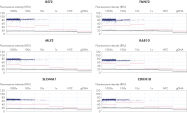
dPCR RNA-Plex Assays enable accurate and consistent RNA quantification across a broad dynamic range. Optimized assay designs provide clear signal separation and low background, supporting confident automated data analysis. Transcript-targeted designs help minimize interference from genomic DNA.
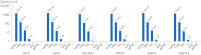
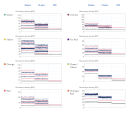
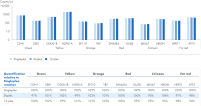
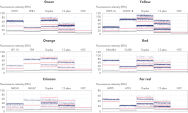
dPCR RNA-Plex Assays are optimized for consistent performance across different plex levels. The assays deliver reliable RNA quantification in high-order multiplex reactions, with consistent results compared with lower-plex configurations (see Supporting data and figures). In addition, dPCR RNA-Plex Assays can be combined with existing hydrolysis probe assays, enabling the continued use of validated or custom-designed assays while expanding studies with new RNA-Plex targets.
Principle
dPCR RNA-Plex Assays use a universal reporter concept that separates target recognition from signal generation. Target specificity is defined by the primer and mediator probe design, while an established set of universal reporters provides a standardized framework for signal generation. This architecture simplifies the development and quality control of complex multiplex assays.
The mediator-reporter system was developed and evaluated with a multistep bioinformatic approach, starting with thousands of candidate mediator sequences to identify orthogonal and compatible sequences with minimal potential for cross-interactions. Selected mediator-reporter configurations were then experimentally tested and optimized for:
- Signal generation
- Target-dependent reporter activation
- Low intrinsic NTC background
Incorporation of LNA modifications further supports specificity, accuracy and robust assay multiplex performance.
In addition to an optimized reporter framework, dPCR RNA-Plex Assays were developed with an advanced in silico design algorithm specifically for RNA targets, applying stringent design criteria for specificity, sensitivity and multiplex compatibility. The design approach considers all types of possible interactions across the assay system, including:
- Primer dimers
- Interactions between primers
- Interactions between mediator probes and reporters
- Reporter stem interactions
- Mediator interactions with target sequences
Whenever possible, exon-spanning assay designs avoid co-amplification of any contaminating genomic DNA in a sample. For some targets, such as for single-exon genes, exon-spanning designs are not possible. In these cases, genomic DNA-derived signal can be reduced by incorporating restriction enzymes that are active at room temperature in QIAcuity reaction mixes and that do not cleave cDNA/RNA hybrids.
dPCR RNA-Plex Assays offer a selection of wet-lab tested assays. These assays are experimentally evaluated on the QIAcuity Digital PCR System for:
- Signal strength and clear separation of positive and negative partitions
- Low background signal and limit of blank
- Linear quantification across a 4-log dynamic range
- Quantification accuracy
- Robustness against genomic DNA background
- Performance in multiplex reactions
Procedure
Select dPCR RNA-Plex Assays for your targets of interest in GeneGlobe and choose the appropriate dyes for your experiment. To select the right reference gene for your experiment please use the "How to choose reference genes for gene expression analysis" (see Resources). You can find a selection of wet-lab tested reference genes in the table below. For multiplex experiments, use our supporting multiplex setup guides to assess assay combinations and configure your workflow (see Resources).
For one-step RT-dPCR, analyze RNA directly using QIAcuity OneStep High Multiplex Probe PCR Kit. For two-step RT-dPCR, first reverse-transcibe RNA to cDNA and then use QIAcuity High Multiplex Probe PCR Kit for digital PCR.
Load the prepared reactions onto a QIAcuity Nanoplate and run them on a QIAcuity Digital PCR System. Partitioning, amplification, detection and data analysis are integrated into the QIAcuity instrument for streamlined RNA expression analysis.
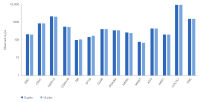
Table 2. Reference genes available in the QIAcuity dPCR RNA-Plex Assay portfolio.
Genes are categorized by average expression level in human tissues (high: >1,000 nTPM; medium-high: 100-1,000 nTPM; medium: 10-100 nTPM; low: 1-10 nTPM). Average expression values are based on log-normalized GTEx RNA-seq data (nTPM) across 51 human tissues.
| Common gene name | Expression group | Human averaged NGS expression [nTPM] | Human GeneGlobe Assay ID | Mouse GeneGlobe Assay ID | Rat GeneGlobe Assay ID |
|---|---|---|---|---|---|
| RPS29 | High | 1915.170781 | DRH0118164 | DRM0114305 | DRR0112408 |
| RPL32 | High | 1371.794805 | DRH0118161 | DRM0114302 | DRR0112405 |
| RPL18 | High | 1093.448645 | DRH0118159 | DRM0114300 | DRR0079733 |
| DDX17 | High Medium | 168.367290 | DRH0118127 | DRM0114268 | DRR0112375 |
| TRAPPC1 | High Medium | 108.250971 | DRH0118174 | DRM0114314 | DRR0112418 |
| EIF3I | High Medium | 106.148211 | DRH0118131 | DRM0114272 | DRR0112378 |
| HNRNPH3 | Medium | 65.172400 | DRH0118136 | DRM0114277 | DRR0112383 |
| SNRPA | Medium | 44.819499 | DRH0118170 | DRM0114311 | DRR0112414 |
| SNW1 | Medium | 35.090660 | DRH0118171 | DRM0114312 | DRR0112415 |
| PAF1 | Medium | 34.464959 | DRH0118146 | DRM0114287 | DRR0112391 |
| DDX23 | Medium | 29.866645 | DRH0118128 | DRM0114269 | DRR0112376 |
| MAEA | Medium | 27.112640 | DRH0118141 | DRM0114282 | DRR0112386 |
| PUM1 | Medium | 26.022273 | DRH0118153 | DRM0114294 | DRR0112398 |
| PPIE | Medium | 22.392089 | DRH0118151 | DRM0114292 | DRR0112396 |
| MTREX | Medium | 18.763062 | DRH0118144 | DRM0114285 | DRR0112389 |
| RNF20 | Medium | 17.647555 | DRH0118156 | DRM0114297 | DRR0112401 |
| TAF11 | Medium | 13.835139 | DRH0118172 | DRM0114313 | DRR0112416 |
| RNF216 | Medium | 12.158566 | DRH0118157 | DRM0114298 | DRR0112402 |
| PDCD7 | Medium | 11.890181 | DRH0118148 | DRM0114289 | DRR0112393 |
| SLC35E1 | Low | 8.098024 | DRH0118169 | DRM0114310 | DRR0112413 |
| ARFGEF2 | Low | 7.563072 | DRH0118122 | DRM0114265 | DRR0112370 |
| SCFD2 | Low | 5.435229 | DRH0118166 | DRM0114307 | DRR0112410 |
| GPATCH2 | Low | 4.407855 | DRH0118133 | DRM0114274 | DRR0112380 |
| KIN | Low | 2.229007 | DRH0118140 | DRM0114281 | DRR0112385 |
Applications
dPCR RNA-Plex Assays support quantitative mRNA and lncRNA expression analysis across a broad range of research applications. Their multiplex capability is particularly valuable for studies requiring simultaneous analysis of multiple expression markers, limited sample material or reliable comparison across experimental conditions.
Typical applications include:
- Biomarker and translational research, including RNA-seq validation and targeted analysis of expression signatures
- Functional genomics, including knockdown, knockout and overexpression studies
- RNA therapeutics research, including transgene expression and pharmacodynamic markers
- Pathway and signaling studies
- Complex cell models and differentiation studies, including those using stem cells and organoids
Supporting data and figures
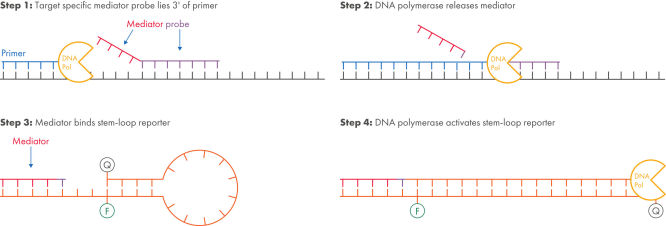
Principle of QIAcuity dPCR RNA-plex Assay system.
Step 1: A target-specific mediator probe hybridizes immediately downstream of a PCR primer on the target sequence. Step 2: During primer extension, DNA polymerase cleaves the mediator probe, releasing a short mediator molecule. Step 3: The released mediator subsequently hybridizes to a universal stem-loop reporter labeled with a fluorophore and quencher. Step 4: Extension by DNA polymerase separates the fluorophore from the quencher, generating a fluorescent signal. As with hydrolysis probe assays, fluorescence is generated only when the correct target sequence is amplified, providing highly specific detection. Unlike hydrolysis probe assays, however, fluorescence is produced through activation of a universal reporter rather than direct cleavage of a target-specific fluorescent probe.
Specifications
| Features | Specifications |
|---|---|
| Applications | RNA expression analysis of mRNA and lncRNA targets using QIAcuity digital PCR |
| Features | Predesigned assays for human, mouse and rat mRNA and lncRNA targets; universal reporter system with configurable fluorescent dye; dried-down assay components; compatible with singleplex and multiplex workflows; supports up to 12 RNA targets per reaction |
| Technology | Digital PCR with RNA-Plex assay chemistry based on a universal reporter system |
Resources
Kit Handbooks & Protocols (2)
Safety Data Sheets (1)
Certificates of Analysis (1)
Scientific documents (3)
Validation & Technical Documentation (1)
FAQ
Which RNA targets are available as dPCR RNA-Plex Assays?
Can I combine RNA-Plex Assays with my own assays?
Can I use dyes other than those supplied with RNA-Plex Assays?
How many targets can I multiplex?
How do I transition from conventional multiplexing to amplitude-based multiplexing?
When is a custom cross talk matrix recommended?
Can I use a generic cross talk matrix?
Can I detect DNA and RNA targets in the same reaction?
Which master mixes and reverse transcription workflows are supported?
Can I detect specific splice variants?
Can RNA-Plex Assays detect lncRNA targets?
What reference genes should I use?
Can I detect RNA from FFPE tissue, biofluids, or swab samples?
Can I quantify highly abundant and low-abundance transcripts in the same reaction?
My target is highly abundant and partitions appear overloaded. What should I do?
My measured transcript copy number is higher or lower than expected. Why?
Why are results different from qPCR, NGS, or another detection system?
What can I do if my assay does not discriminate RNA from genomic DNA?
My sample contains genomic DNA. Can I still quantify mRNA specifically?
How should I handle a rainy assay?
How can I improve a low signal-to-noise ratio?
I do not observe any positive signal. How can I verify a true negative result?
I observe positive signal in my NTC?