Taq PCR Master Mix Kit

Taq PCR Master Mix Kit is a 2x solution of Taq DNA polymerase, dNTPs, MgCl2 and PCR buffer to simplify your workflow, reduce contamination risk and improve throughput and reproducibility

S_1281_3_LS_OEM_Taq_PCR_Master_Mix_Kit_1000U
Need bulk, customized or optimized products for commercial purposes? We also offer support with logistics, compliance and more. Reach out to cooperate with QIAGEN Strategic Partnerships & OEM

Taq PCR Master Mix Kit (1000 U)

Cat no. / ID.   201445

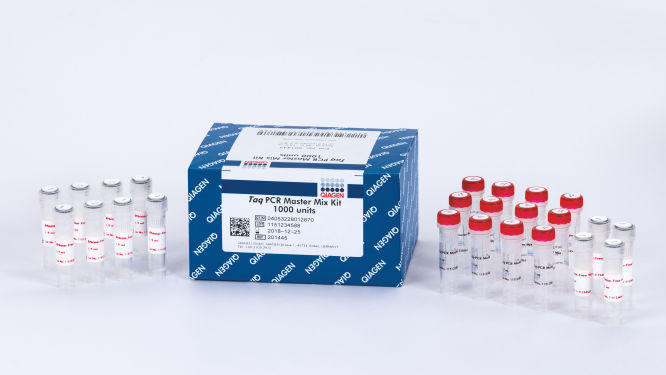
12 x 1.7 mL Taq PCR Master Mix containing 1000 units Taq DNA Polymerase, 12 x 1.7 mL Distilled water
€797.00
Log in To see your account pricing.
Quantity
1000 U
250 U
*Offer valid on orders placed from December 1, 2025, to March 31, 2026, or while stocks last. Offer void where prohibited and cannot be combined with any other promotion. Offer is only valid in the following countries: Australia, Austria, Belgium, Canada, Denmark, Finland, France, Germany, Italy, Luxembourg, Netherlands, New Zealand, Norway, Poland, South Africa, Sweden, Switzerland, United Kingdom, United States of America. Freight and delivery costs are not included. It is the customer's responsibility to ensure that acceptance of this offer will not violate any internal policies of the customer's organization and applicable laws and regulations.
The Taq PCR Master Mix Kit is intended for molecular biology applications. This product is not intended for the diagnosis, prevention, or treatment of a disease.
Need bulk, customized or optimized products for commercial purposes? We also offer support with logistics, compliance and more. Reach out to cooperate with QIAGEN Strategic Partnerships & OEM

Features

  • Master mix format for easy PCR reaction setup
  • Fewer pipetting steps minimizes the risk of errors and contamination
  • Increased PCR throughput and enhanced reproducibility
  • PCR Buffer formulated for minimal optimization
  • Easy-to-follow PCR protocol


Product Details

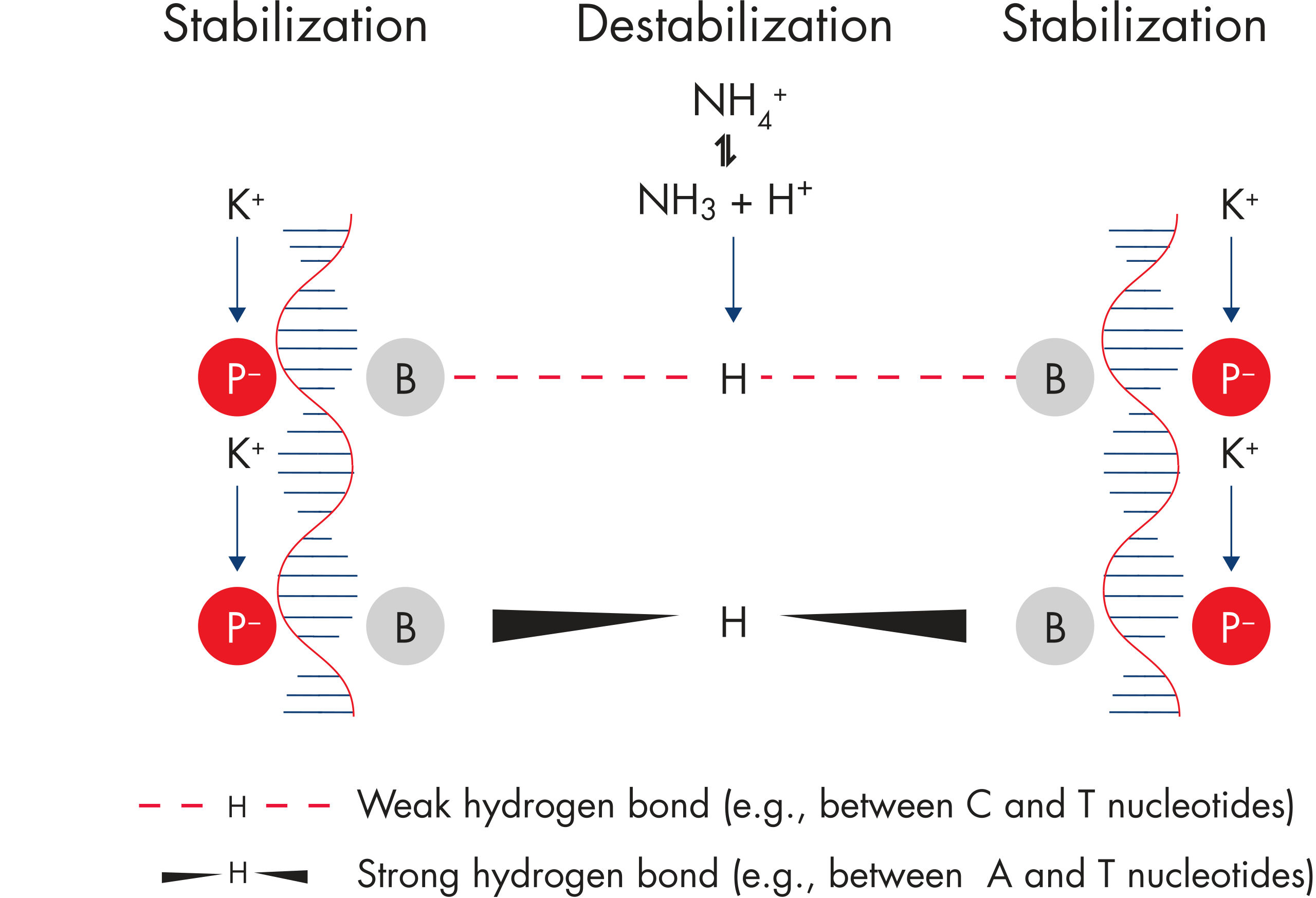
PCR Master Mix Kit is a ready-to-use, 2x concentrated solution containing Taq DNA polymerase, dNTPs and MgCl2 at optimal concentrations plus PCR Buffer combining KCl and (NH4)2SO4. Taq PCR Master Mix Kit simplifies workflows by requiring only the addition of template DNA, primers and water. The master mix format reduces pipetting steps, increasing throughput and reproducibility, while reducing the risk of contamination. The buffer formulation further promotes efficiency by reducing or eliminating the need to optimize a PCR by varying annealing temperature or Mg2+ concentration.

PCR Master Mix Kit can be stored at 2–8°C for up to 2 months, allowing even faster PCR setup by eliminating thawing time.

Performance

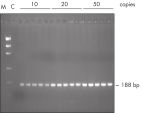
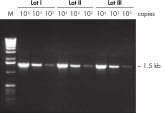
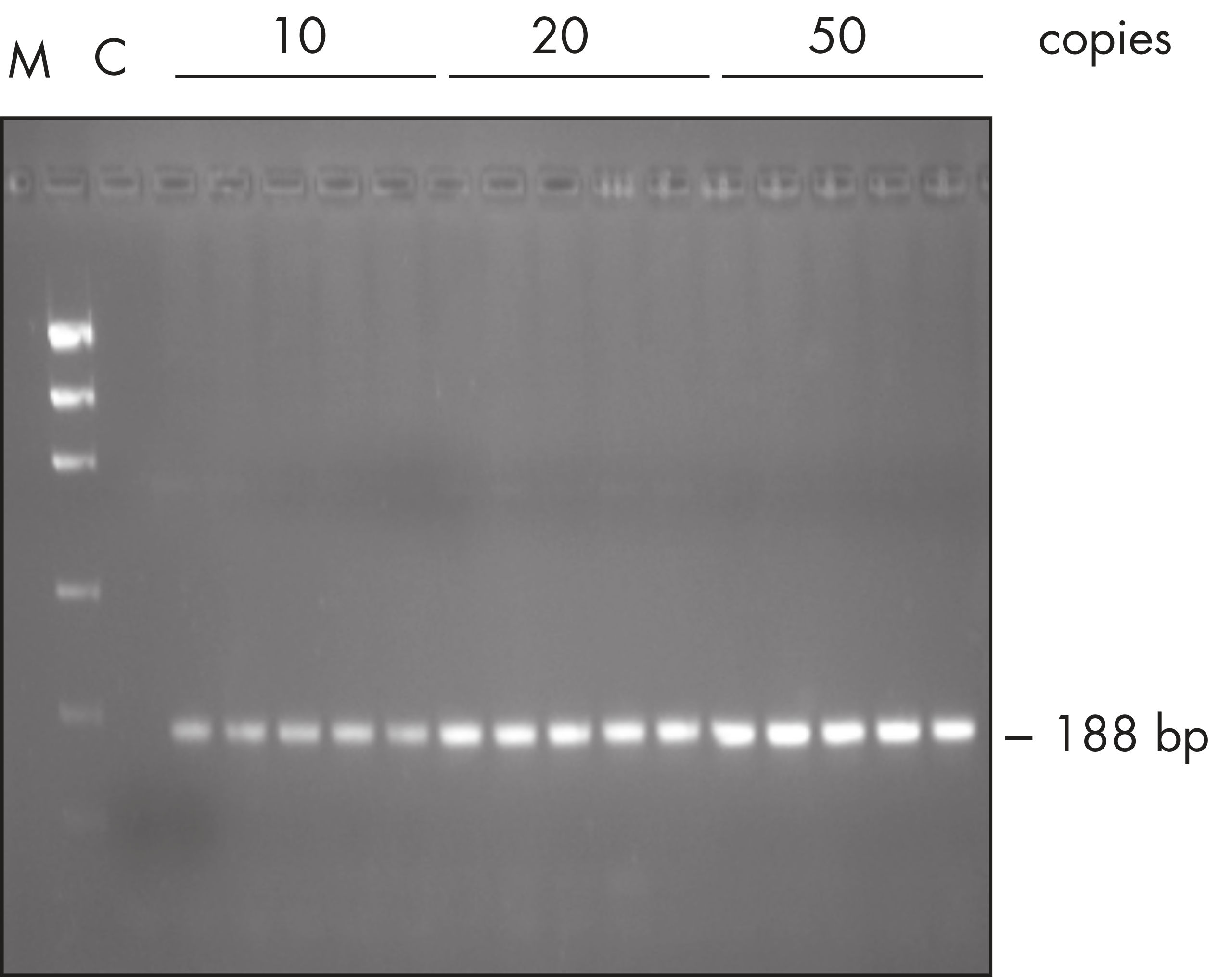
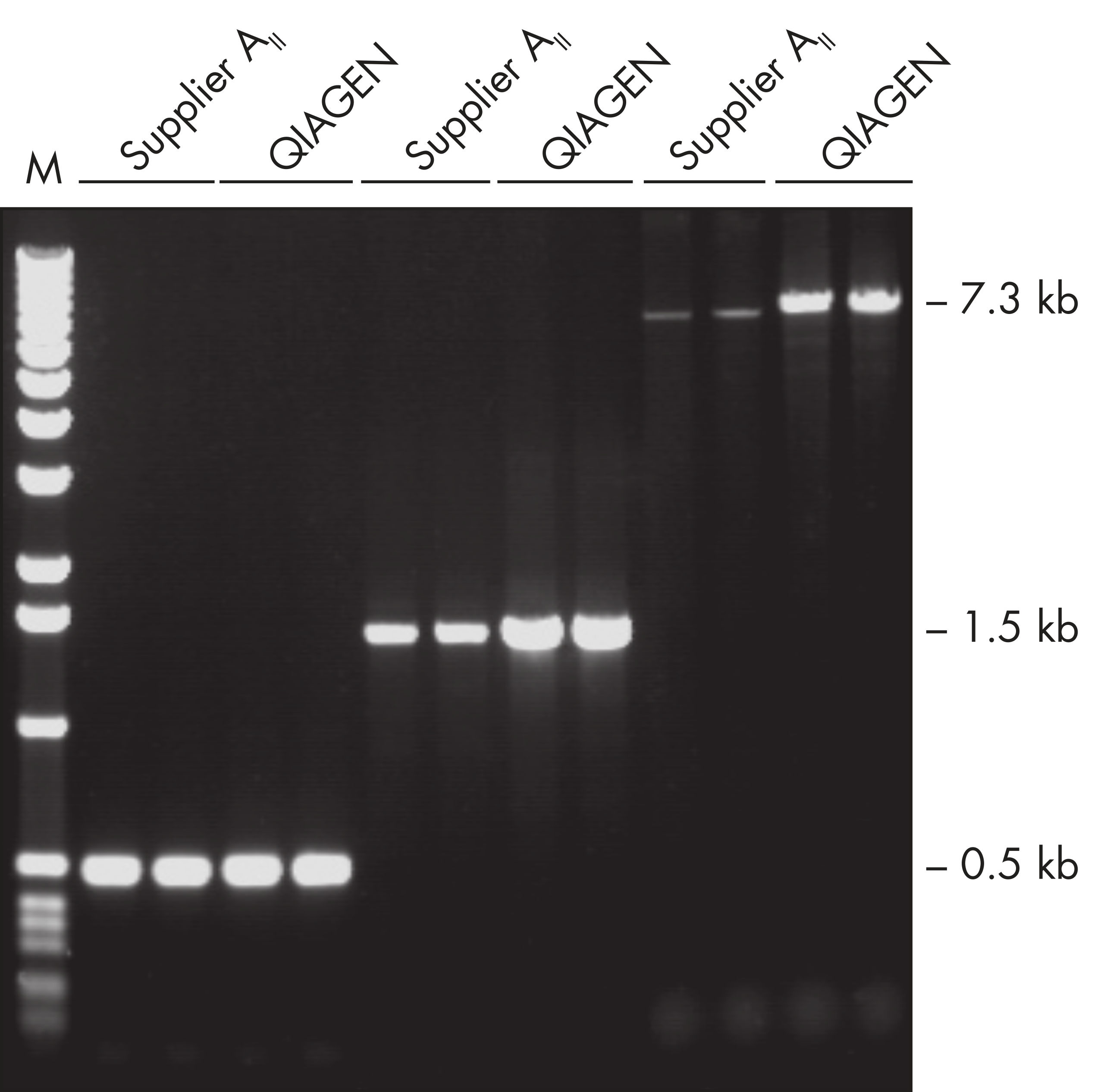
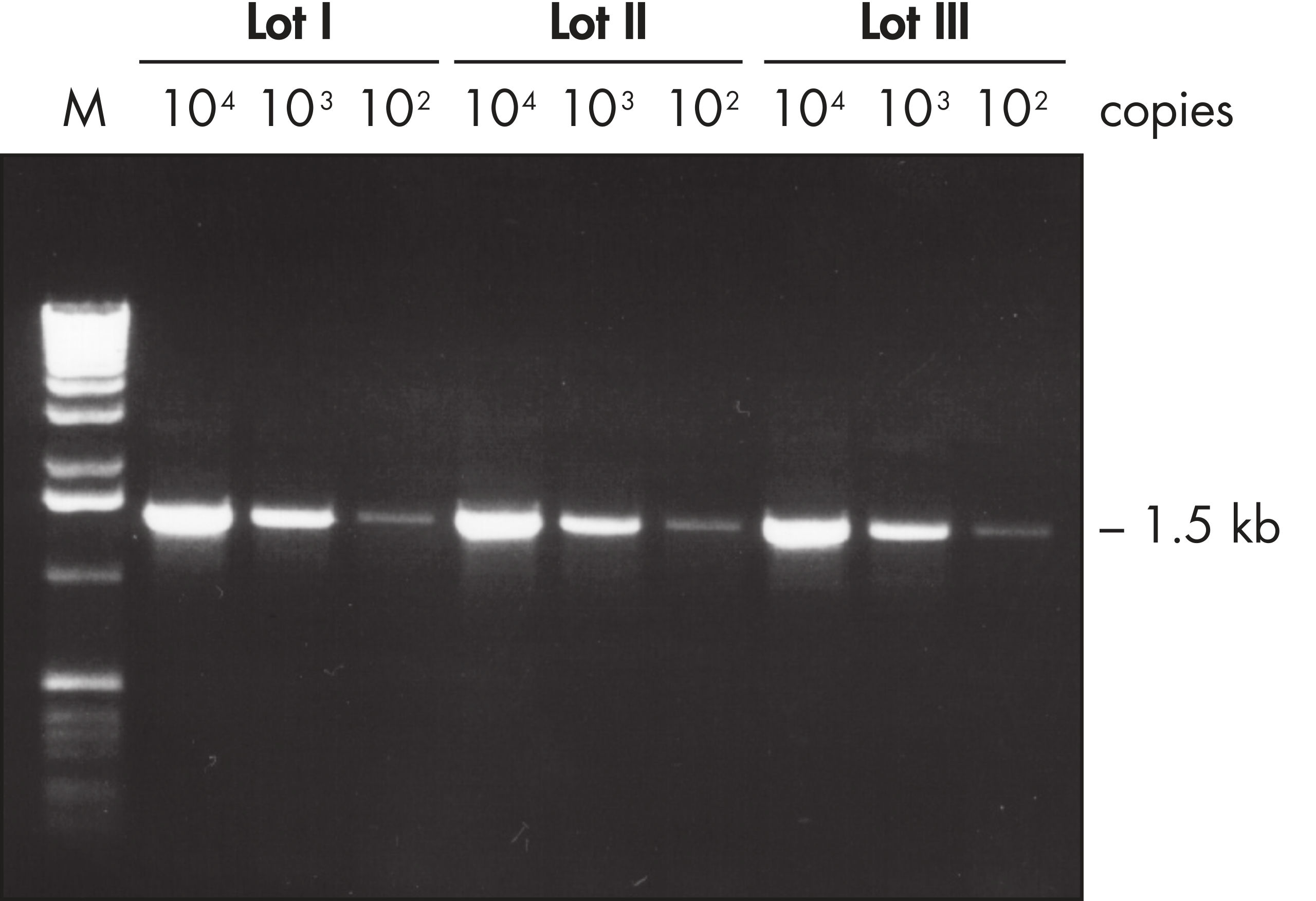
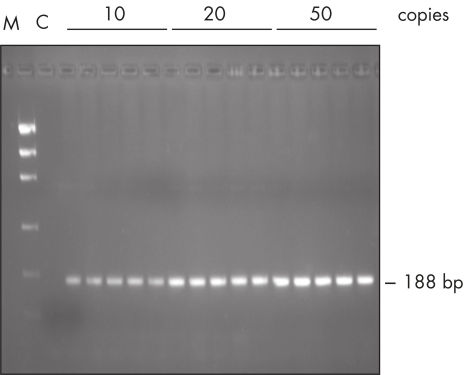
The convenient master mix format of Taq PCR Master Mix Kit minimizes pipetting errors ensuring PCR results are highly reproducible (see figure " Reproducible PCR").

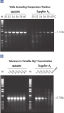
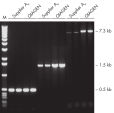
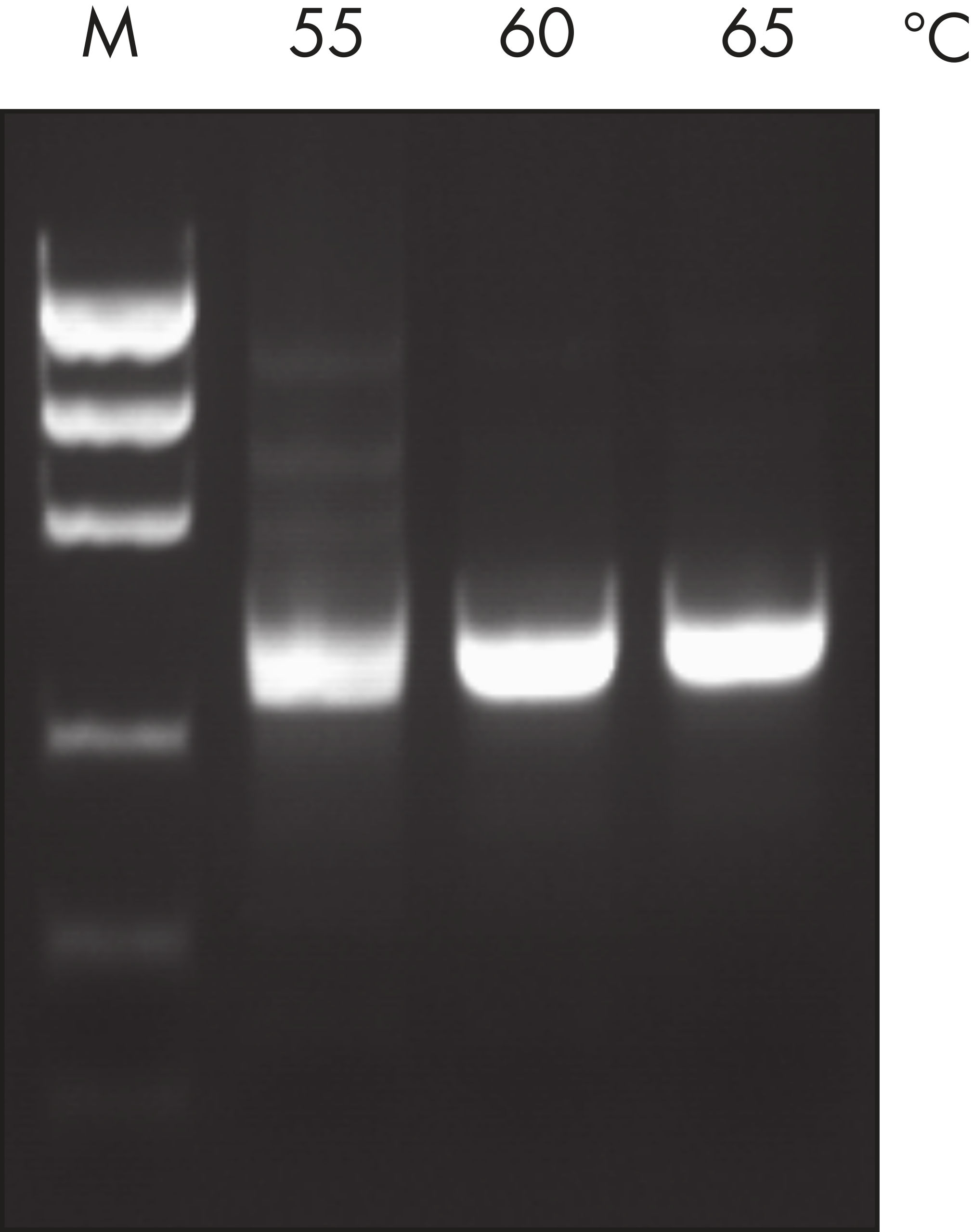
Amplification with PCR Master Mix Kit is highly specific even with widely differing primer – template systems (see figure " Tolerance of different primer Tm values").

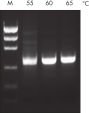
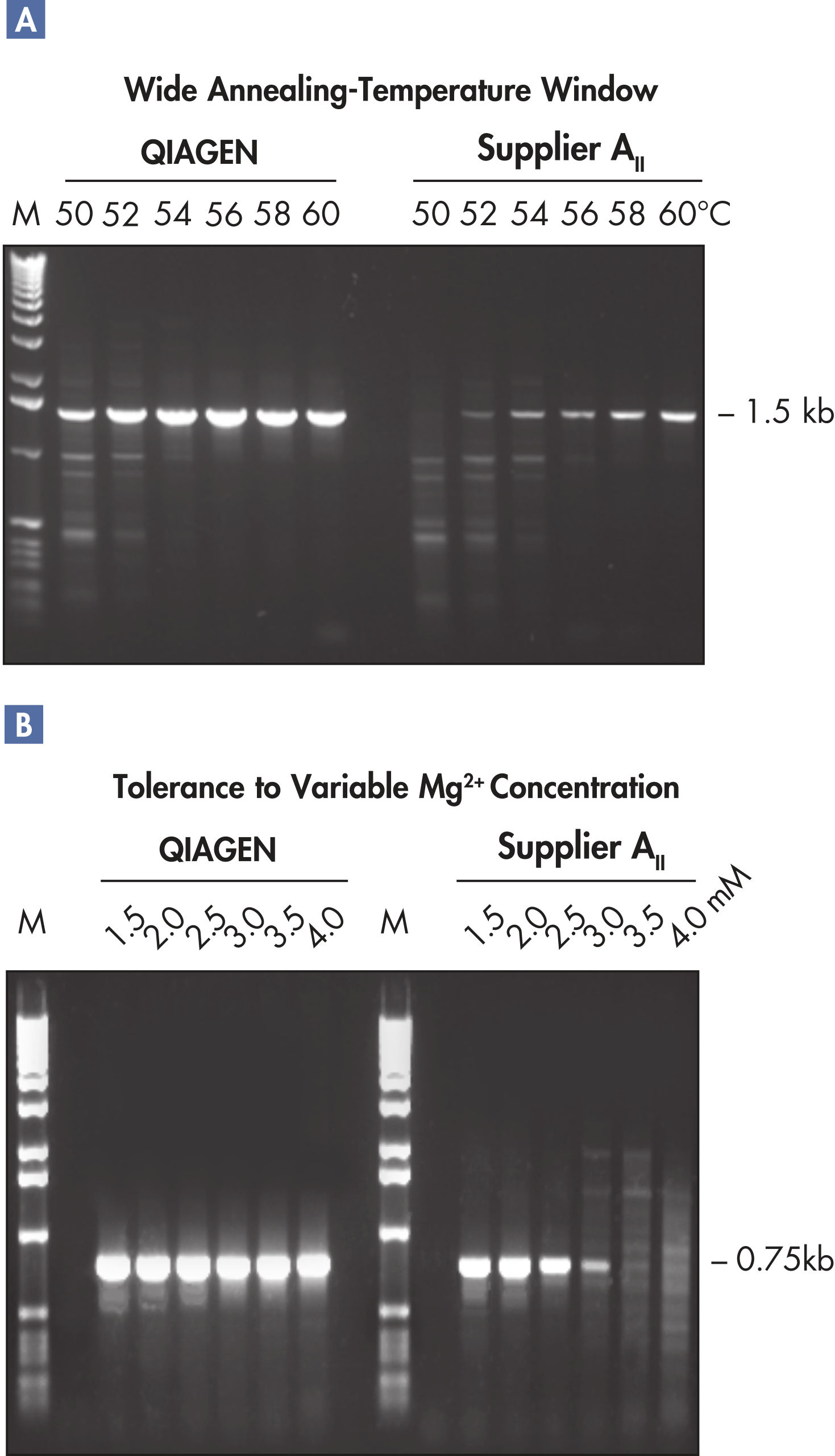
PCR Buffer included in PCR Master Mix Kit reduces the need for optimization of PCR by procedures that vary the annealing temperature (see figures " Wide annealing temperature window") or the Mg2+ concentration (see figure “ Tolerance to a wider range of annealing temperatures and variable magnesium concentration").


Principle

Taq PCR Master Mix Kit is a ready-to-use premixed 2x solution that includes Taq DNA Polymerase, MgCl2, ultrapure dNTPs and PCR Buffer at optimized concentrations. Only primers and template DNA need to be added to set up PCR. The convenient format of master mix for PCR minimizes pipetting errors ensuring highly reproducible PCR results (see figure " Reproducible PCR"). 

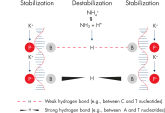
PCR Buffer comprises a balanced combination of KCl and (NH4)2SO4 and provides stringent primer-annealing conditions over a wider range of annealing temperatures and Mg2+ concentrations than conventional PCR buffers. Optimization of PCR is reduced and may not be required (see figures " Wide annealing temperature window" and " Tolerance to a wider range of annealing temperatures and variable magnesium concentration").


Procedure

Taq PCR Master Mix Kit ensures specific amplification and PCR success at the first attempt. Only DNA primers, template DNA and water need to be added to the ready-to-use 2x master mix solution. 

PCR Master Mix Kit:

  • Simplifies PCR set up
  • Provides greater convenience
  • Minimizes pipetting errors and risk of contamination
  • Increases PCR throughput
  • Reduces time spent on optimization
  • Makes PCR fast, straightforward and easy

An easy-to-follow protocol is provided with the kit.

Applications

Taq PCR Master Mix Kit is suitable for standard and specialized applications, including:
  • General PCR
  • RT-PCR
  • Screening
  • PCR-based DNA fingerprinting (VNTR, STR and RAPD)

Supporting data and figures

Specifications

FeaturesSpecifications
ApplicationsPCR, RT-PCR, DNA fingerprinting
dNTP's includedYes (in Master mix)
MastermixYes
Reaction typePCR amplification
Enzyme activity5' -> 3' exonuclease activity
Real-time or endpointEndpoint
Sample/target typeGenomic DNA and cDNA
Single or multiplexSingle
With/without hotstartWithout hotstart

Resources

Brochures and Guides (4)
Addressing critical factors and new solutions
Second edition — innovative tools

Catalyze confidence in every reaction

Kit Handbooks (1)
For standard and specialized PCR applications with minimal optimization
Safety Data Sheets (1)
Download Safety Data Sheets for QIAGEN product components.
Certificates of Analysis (1)

Publications

Isolation and identification of Rickettsia massiliae from Rhipicephalus sanguineus ticks collected in Arizona.
Eremeeva ME; Bosserman EA; Demma LJ; Zambrano ML; Blau DM; Dasch GA;
Appl Environ Microbiol; 2006; 72 (8):5569-77 2006 Aug PMID:16885311
Population dynamics within a microbial consortium during growth on diesel fuel in saline environments.
Kleinsteuber S; Riis V; Fetzer I; Harms H; Müller S;
Appl Environ Microbiol; 2006; 72 (5):3531-42 2006 May PMID:16672500
PCR-based tandem epitope tagging system for Escherichia coli genome engineering.
Cho BK; Knight EM; Palsson BO;
Biotechniques; 2006; 40 (1):67-72 2006 Jan PMID:16454042
Genetic analysis of RpL38 and RpL5, two minute genes located in the centric heterochromatin of chromosome 2 of Drosophila melanogaster.
Marygold SJ; Coelho CM; Leevers SJ;
Genetics; 2004; 169 (2):683-95 2004 Nov 1 PMID:15520262
Cyclin C/cdk3 promotes Rb-dependent G0 exit.
Ren S; Rollins BJ;
Cell; 2004; 117 (2):239-51 2004 Apr 16 PMID:15084261

FAQ

How comparable is CoralLoad gel loading dye contained in various QIAGEN PCR Kits to Sigma Red?

CoralLoad gel tracking dye contained in Taq, HotStarTaq, TopTaq DNA Polymerase and TopTaq Master Mix Kits separates into 2 fragment-size dependent colors (orange and red) when loaded onto an agarose gel. Sigma Red buffer only has one color which is harder to visualize.


FAQ-1644
What kind of PCR products can be cloned with the QIAGEN PCR Cloning Kit?

PCR products that will be cloned using the QIAGEN PCR Cloning Kit should be generated using a thermostable DNA Polymerase without proofreading activity, such as Taq DNA Polymerase. Such polymerases attach a single A overhang to their reaction products, which can hybridize to the U overhang of the pDrive Cloning Vector. For efficient addition of an A overhang during the PCR procedure, we recommend a final extension step for 10 min at 72°C as described in the standard protocols of the Taq PCR- and HotStarTaq PCR handbook.


FAQ-165
How can one determine the optimal annealing temperature for a specific PCR assay?

To determine the optimal annealing temperature for a PCR assay, a Temperature Gradient experiment should be performed. To do this, you will set up several PCR reactions in duplicate for the same primer/template combination, using the same PCR chemistry, and subject each of the reactions to a slightly different annealing temperature within a specified range. If a thermal cycler with a temperature gradient function can be used, you can simply program a temperature range for adjacent wells in the cycling block. If no cycler with a gradient function exists in your lab, you will either have to perform duplicate reactions at different temperatures in different machines (if available), or back to back in the same machine.


FAQ-288
What makes QIAGEN's 10x Taq and HotStarTaq DNA Polymerase PCR buffer superior?
The QIAGEN 10x Taq and HotStarTaq DNA Polymerase PCR buffer contains a uniquely balanced combination of KCl and (NH4)2SO4. It provides stringent primer-annealing conditions over a wider range of annealing temperatures and Mg2+ concentrations than conventional PCR buffers.
FAQ-566
What should the starting template DNA quality and quantity be for PCR?

Both the quality and quantity of nucleic acid starting template affect PCR, in particular the sensitivity and efficiency of amplification. PCR sensitivity and efficiency can be reduced by the presence of impurities in nucleic acid preparations or in biological samples. These PCR inhibitors are completely removed when template is prepared using QIAGEN Kits for nucleic acid purification. Please refer to the Brochure "Maximizing PCR and RT-PCR success" for additional information.

The optimal primer–template ratio has to be determined empirically. If too little template is used, primers may not be able to find their complementary sequences. Too much template may lead to an increase in mispriming events. Generally, no more than 1 ug of template DNA should be used per PCR reaction. As an initial guide, spectrophotometric and molar conversion values for different nucleic acid templates are listed below.


Spectrophotometric conversions for nucleic acid templates

1 A260 unit* Concentration (ug/ml)
Double-stranded DNA 50
Single-stranded DNA 33
Single-stranded RNA 40

*Absorbance at 260 nm = 1


Molar conversions for nucleic acid templates

Nucleic Acid Size pmol/ug Molecules/ug
1 kb DNA 1000 bp 1.52 9.1 x 10¹¹
pUC 19 DNA 2686 bp 0.57 3.4 x 10¹¹
pTZ18R DNA 2870 bp 0.54 3.2 x 10¹¹
pBluescript II DNA 2961 bp 0.52 3.1 x 10¹¹
Lambda DNA 48,502 bp 0.03 1.8 x 10¹⁰
Average mRNA 1930 nt 1.67 1.0 x 10¹²
Genomic DNA      
Escherichia coli 4.7 x 106* 3.0 x 10-4 1.8 x 10⁸**
Drosophila melanogaster 1.4 x 108* 1.1 x 10-5 6.6 x 10⁵**
Mus musculus (mouse) 2.7 x 109* 5.7 x 10-7 3.4 x 10⁵**
Homo sapiens (human) 3.3 x 109* 4.7 x 10-7 2.8 x 10⁵**

* Base pairs per haploid genome

** For single-copy genes

FAQ-74
Can QIAGEN's Taq- and HotstarTaq DNA Polymerases be used for cycle sequencing?
Taq DNA Polymerase and HotStarTaq DNA Polymerase are compatible with cycle sequencing. However, our buffer system is not optimized for this purpose. Optimization of reaction conditions is therefore required when using these Polymerases for cycle sequencing. Unfortunately, we do not have any protocols for this application. An initial activation of the enzyme is necessary if HotStarTaq DNA Polymerase is used.
FAQ-741
Have you tested the effect of inhibitors on PCR performance?

Yes. Please see Table 3 in our brochure Maximizing PCR and RT-PCR success. We tested the effects of different inhibitory substances in a number of PCR systems. We also analyzed the effect of including different volumes of reverse transcription (RT) reaction mixtures in PCR. Please see the table below for a list of commonly encountered template impurities and their inhibitory effects on PCR.


Impurities showing inhibitory effects on PCR

Substance Inhibitory concentration
SDS >0.005% (w/v)
Phenol >0.2% (v/v)
Ethanol >1% (v/v)
Isopropanol >1% (v/v)
Sodium Acetate ≥5 mM
Sodium Chloride ≥25 nM
EDTA ≥0.5 mM
Hemoglobin ≥1 mg/ml
Heparin ≥0.15 i.U./ml
Urea >20 mM
RT reaction mixture ≥15%


FAQ-818
Do you have a protocol for polyacrylamide gel analysis of oligonucleotides?
Yes, please follow the Supplementary Protocol 'Polyacrylamide_gel_analysis_of_oligonucleotides' (PCR03).
FAQ-961