
✓ 24/7 automatic processing of online orders
✓ Knowledgeable and professional Product & Technical Support
✓ Fast and reliable (re)-ordering
Attractene Transfection Reagent (1 ml)
Cat no. / ID. 301005
Attractene Transfection Reagent for up to 660 transfections in 24-well plates
Log in To see your account pricing.
Quantity
1 ml
4 ml ( 4 x 1ml)
The Attractene Transfection Reagent is intended for molecular biology applications. This product is not intended for the diagnosis, prevention, or treatment of a disease.
✓ 24/7 automatic processing of online orders
✓ Knowledgeable and professional Product & Technical Support
✓ Fast and reliable (re)-ordering
Features
- Highly efficient DNA transfection with extremely low cytotoxicity
- Rapid Fast-Forward Protocol
- Reagent of choice for all adherent cells and sensitive cells
- Ideal for cotransfection and vector-based RNAi
- Free of animal-derived components
Product Details
Attractene Transfection Reagent represents the next generation in lipid technology, ensuring highly efficient DNA transfection of eukaryotic cells. Attractene Reagent is a nonliposomal lipid that enables transfection of all adherent cells, including difficult-to-transfect cell types such as HaCaT, MonoMac6, and HCT116, and some suspension cell types (Jurkat, K562). It is also highly suitable for cotransfection of DNA with siRNA or miRNA mimics or inhibitors.
Performance
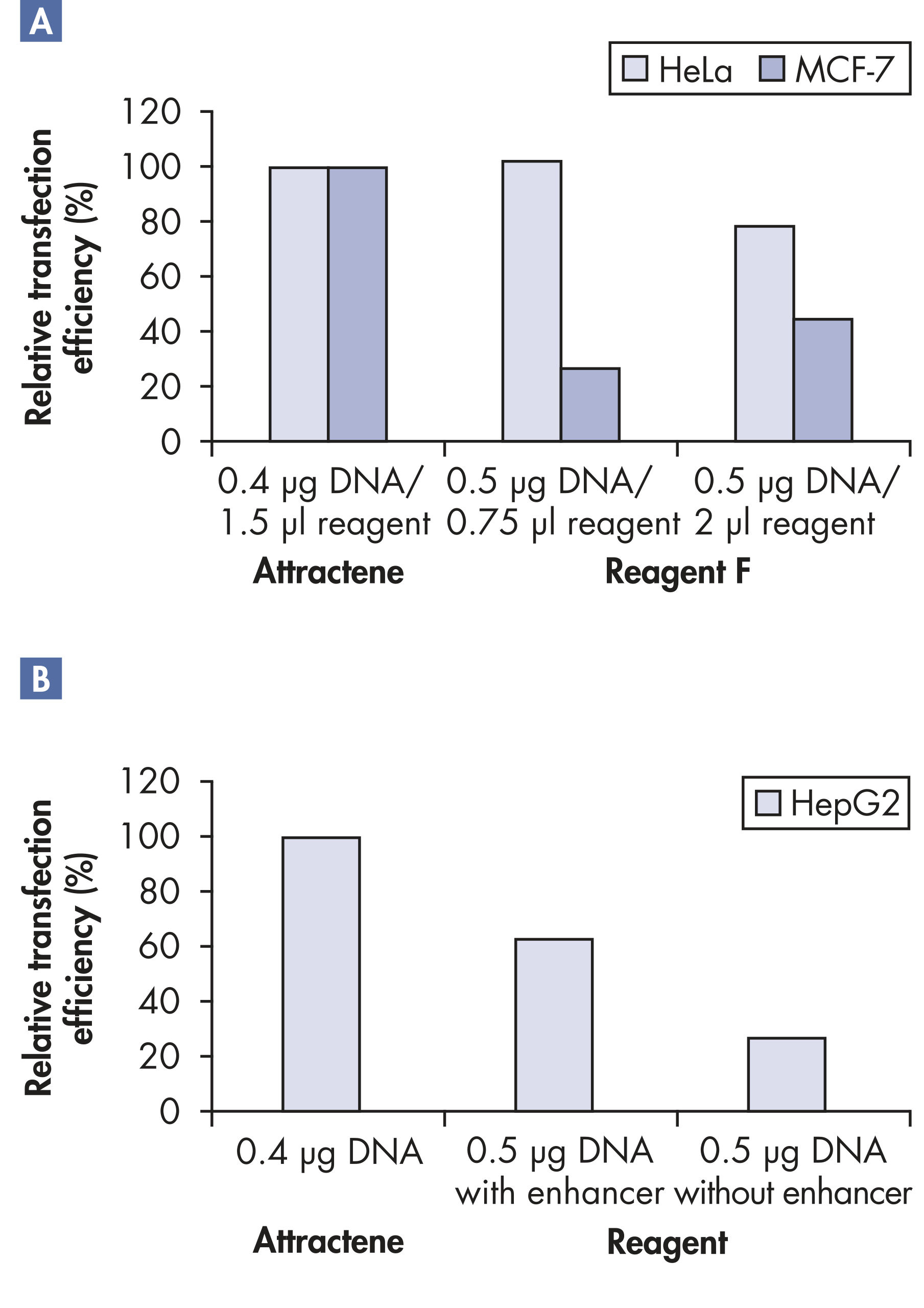
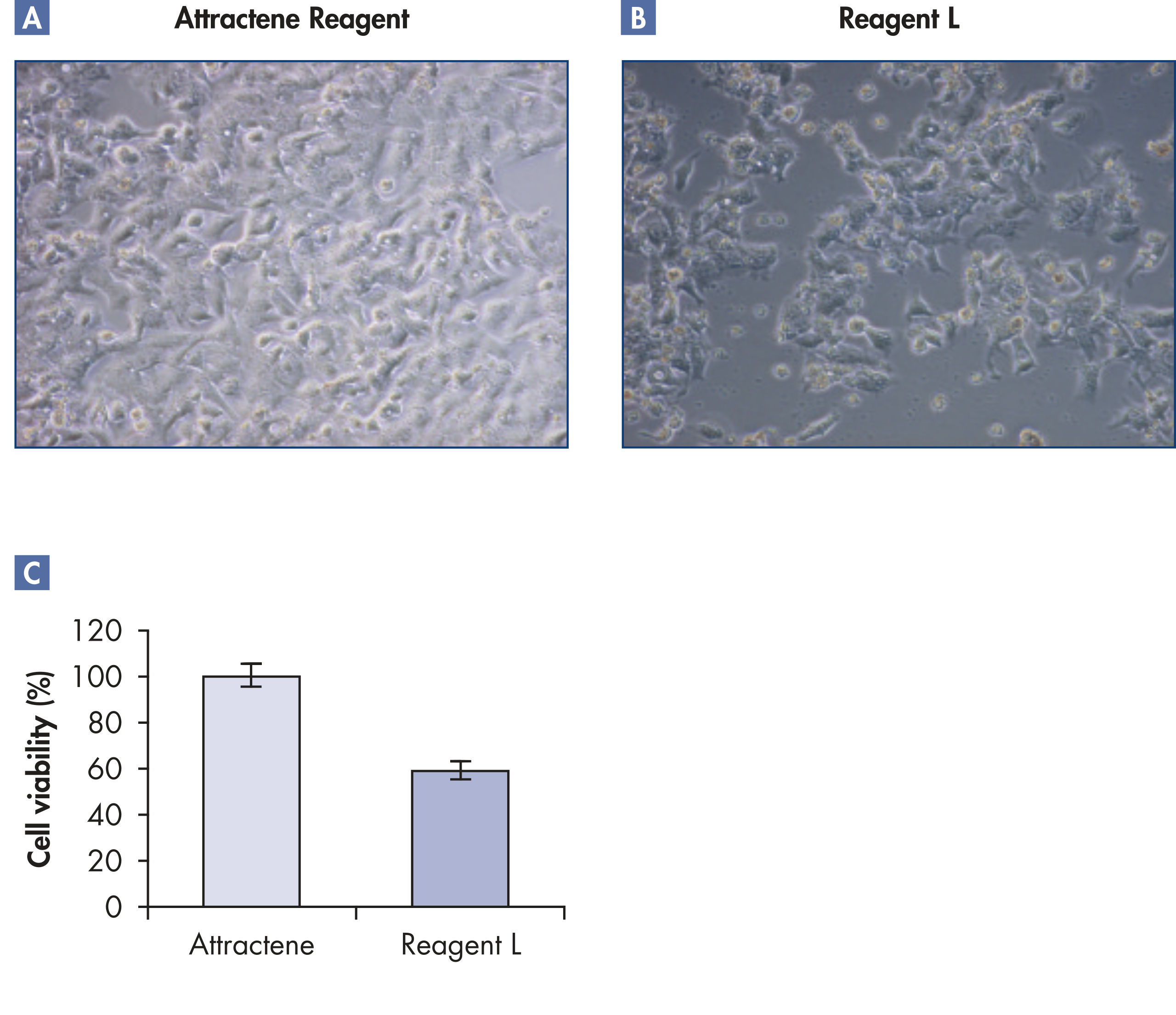
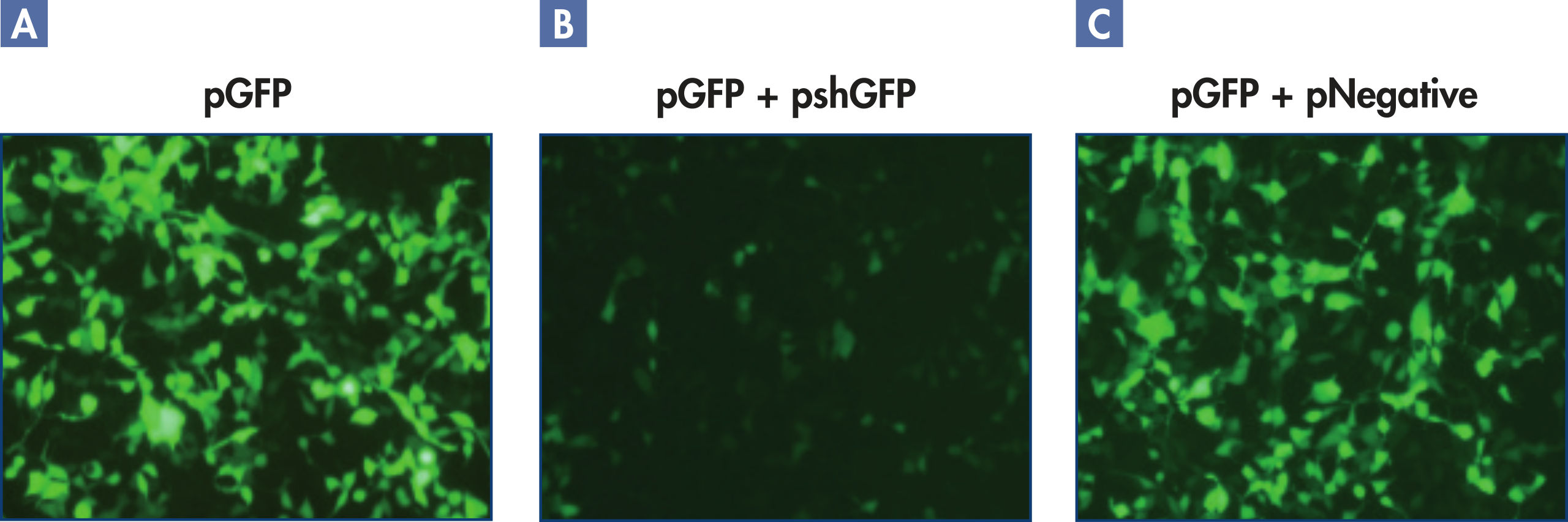
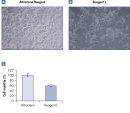
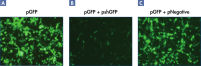
Attractene Reagent provided higher transfection efficiency than alternative reagents when transfection was performed without any optimization following the recommended conditions provided in the handbooks (see figure " Attractene Reagent outperforms alternative reagents"). Cytotoxicity must be kept to a minimum to ensure that results are due to the nucleic acid transfected and not the transfection process itself. Attractene Reagent ensures exceptionally low cytotoxicity (see figure " Healthy cells after transfection using Attractene Reagent"). Using Attractene Reagent ensures that transfection of shRNA (short-hairpin RNA) vectors for gene silencing experiments can be achieved with high efficiency (see figure " Effective knockdown after shRNA vector transfection").
Principle
Attractene Reagent is a nonliposomal lipid which enables highly efficient DNA transfection of some suspension cell types (Jurkat, K562), and adherent cells, including difficult-to-transfect cell types such as HaCaT, MonoMac6, and HCT116. Attractene Reagent consistently provides higher transfection efficiency than alternative reagents under a range of experimental conditions. This feature allows flexible handling and ease of use for many experimental setups such as using automated platforms and transfection at high- or low-throughput levels. It is also highly suitable for cotransfection of DNA with siRNA or miRNA mimics or inhibitors. Using Attractene Reagent ensures exceptionally low cytotoxicity, which is critical to successful transfection experiments.
Procedure
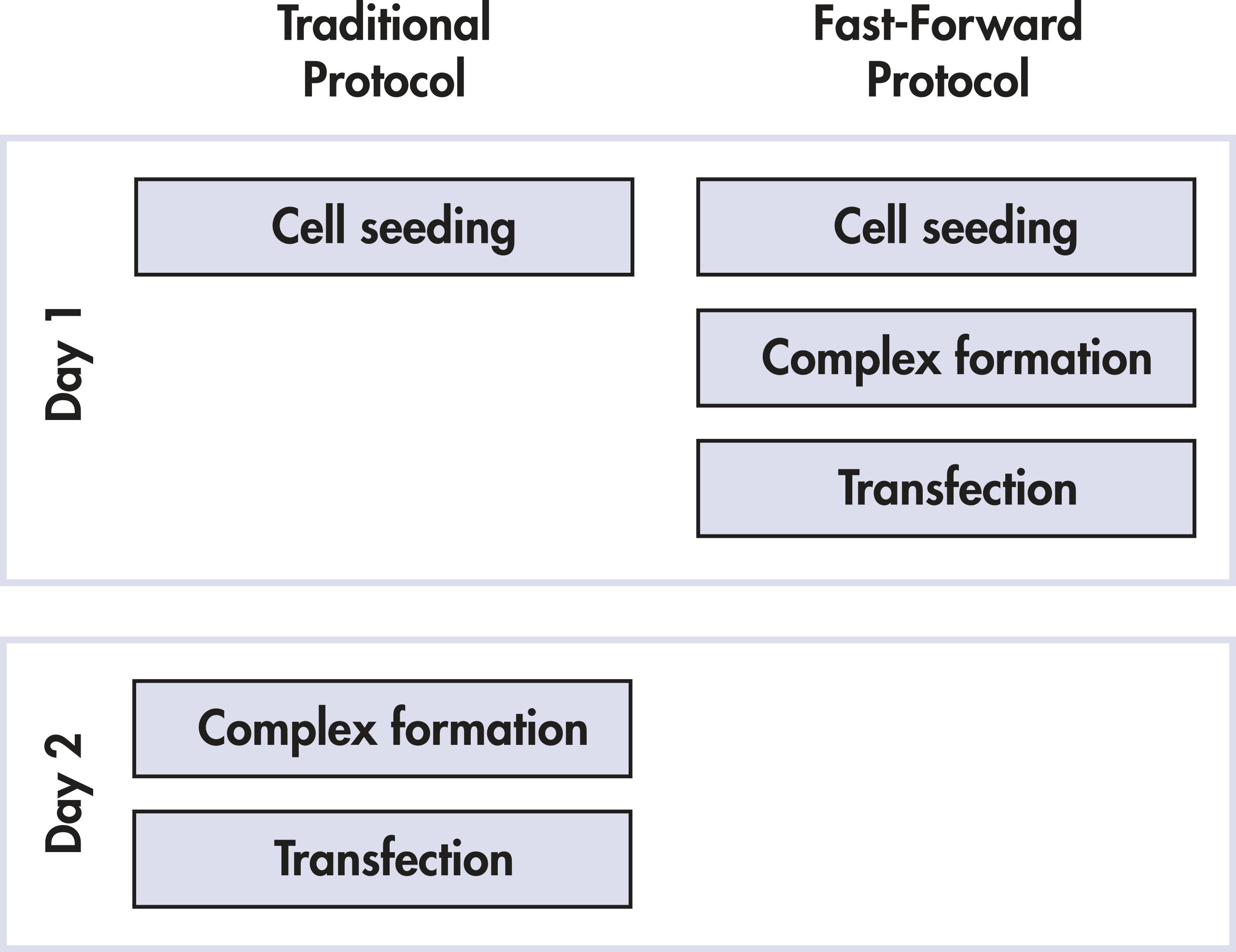
Attractene Transfection Reagent is highly suited for rapid fast-forward DNA transfection. In Fast-Forward Protocols, cells are seeded and transfected on the same day (see figure " Flexible, rapid Fast-Forward Protocols"). This is quicker, saves labor, and increases experimental flexibility compared to protocols where cells are seeded the day before transfection.
Cell type-specific protocols at the TransFect Protocol Database
In addition to the protocols provided in the Attractene Transfection Reagent Handbook, you can find protocols to suit your cell type and plate/dish format using QIAGEN's TransFect Protocol Database. The database provides exactly the protocol needed, saving time and effort. Simply enter the cell type and nucleic acid of interest to receive a QIAGEN transfection protocol to print out or download in convenient PDF format. Use of the TransFect Protocol Database is free of charge and no registration is required.
Applications
Attractene Transfection Reagent can be used for a range of transfection applications, including transient or stable transfection, or cotransfection of multiple DNA constructs, and cotransfection of DNA with siRNA or miRNA mimics or inhibitors. Attractene Transfection Reagent can be used in:
- Functional genomics
- High-throughput DNA transfection
- Gene silencing
Supporting data and figures
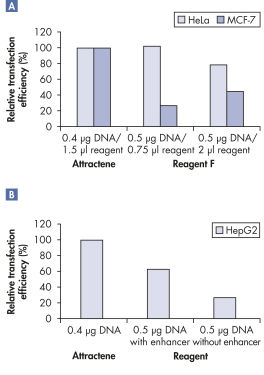
Attractene Reagent outperforms alternative reagents.
DNA (pGFP which expresses green fluorescent protein) was transfected into the cell types indicated using Attractene Reagent according to the conditions recommended in the handbook. Transfection was also performed with [A] Reagent F using 2 reagent volumes recommended by the manufacturer or [B] Reagent L according to the manufacturer's recommendations, with and without the enhancer provided. Transfection efficiency was estimated by counting the number of fluorescent cells by FACS analysis. Transfection efficiency is expressed relative to efficiency using Attractene Reagent which was set at 100%.
Specifications
| Features | Specifications |
|---|---|
| Applications | Plasmid transfection, shRNA vector transfection, protein overexpression, reporter studies, RNAi experiments |
| Number of possible transfections | up to 660 transfections in 24-well plates / 1 ml reagent |
| Cell type | All cell types including sensitive and difficult to transfect cells |
| Nucleic acid | DNA |
| Transfection type | Transient transfection, stable transfection, plasmid co-transfection |
| Technology | Cationic lipid based transfection reagent |
| Controls | Not included |
| Features | Highly efficient transfection with lowest toxicity. Rapid fast forward transfection protocol. Free of animal-derived components. Transfection in the presence of serum. |
Resources
Brochures & Guides (1)
Kit Handbooks & Protocols (1)
Specialized Protocols (1)
Safety Data Sheets (1)
Certificates of Analysis (1)
FAQ
Which transfection reagent is recommended for transfection of the miScript Target Protectors?
What is the most reliable transfection reagent for delivering shRNA plasmids and siRNA to cells in culture?
What transfection method should I use with the SureSilencing shRNA Plasmids?
Can I use RNAiFect for co-transfection of plasmid DNA and siRNA?
Do you have a protocol for co-transfection of adherent cells with siRNA and plasmid DNA?